
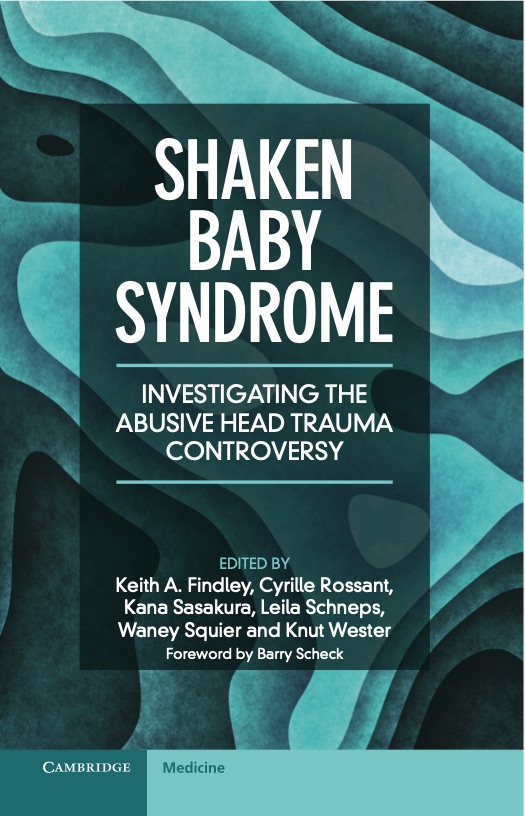
A bold new book from Cambridge University Press assembles, in one passionate collection, the fundamental arguments for reconsidering 50 years of shaken baby convictions, Shaken Baby Syndrome: Investigating the Abusive Head Trauma Controversy.
The authors, 32 experts with impeccable credentials from a range of medical, mathematical, scientific, and legal specialties, bring both years of experience and a fresh, international perspective to the debate.
One chapter, for example, opens with a personal anecdote from retired Norwegian neurosurgeon Knut Wester, who has a scientific interest in external hydrocephalus. Asked his opinion in a shaking case, he writes, he was surprised to receive images that looked like a familiar presentation of Benign External Hydrocephalus (BEH) complicated by bleeding. His report convinced the court to drop the charges. Then he was asked his opinion in a second case, and again the images looked like BEH with bleeding. Swedish neuroradiologist Johan Wikström, Wester’s co-author on this chapter, shares his own parallel experience, all as a preface to their examination of the medical and statistical facts suggesting that BEH can be and often is misdiagnosed as SBS/AHT.
In a companion chapter, the two collaborate with pediatric neurologist Joseph Scheller in the US on a groundbreaking survey of neuro-imaging in the child-abuse literature. Their findings appear in this book for the first time anywhere. The implications, as the authors write, are “frightening.”
The book also brings a level of rigorous mathematical analysis to the SBS/AHT research I’ve never seen before.
A chapter by mathematician Leila Schneps at the French National Center for Scientific Research (Centre national de la recherche scientifique), for example, explores the logical and numerical errors in a seminal 1991 article [1] from the Children’s Hospital in San Diego, in which researchers advised that parents who report “short indoor falls” to explain serious injuries are lying.
Schneps has already published a broader look at the short-fall literature [2], where she found one study [3] that not only reported a few deaths following short falls but noted that some of the children could have been saved with prompt medical attention. In this book, Schneps takes a deeper dive into the San Diego analysis, concluding, “These articles claiming that short falls cannot cause serious harm are not only dangerous, but they are wrong.”
Similarly, British mathematician Norman Fenton and Australian health-information technologist Scott McLachlan devote their chapter to a “causal Bayesian network model,” to examine the methodology of the “Cardiff study” [4], a meta-analysis that combined data from six individual studies to build a tool for confirming a shaking diagnosis based on medical findings.
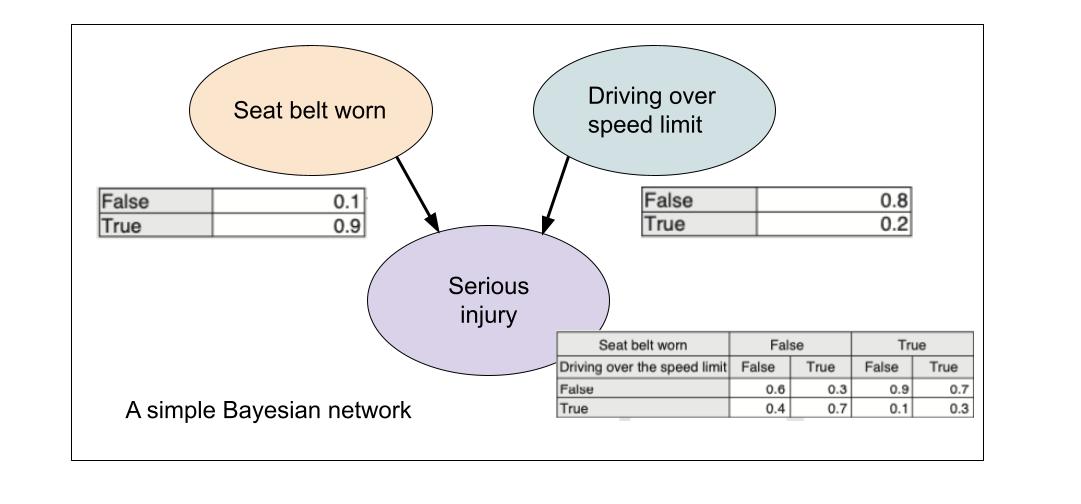
In its conclusion, the Cardiff paper offered itself as a rebuttal to Deborah Tuerkheimer’s 2009 law review article positing that the scientific underpinnings of shaking theory had crumbled. Rather, the Cardiff authors wrote in 2011, their analysis “confirms the association of AHT with specific combinations of clinical features.” Fenton and McLachlan’s modeling, however, reports “strong biases and errors” built into that work.
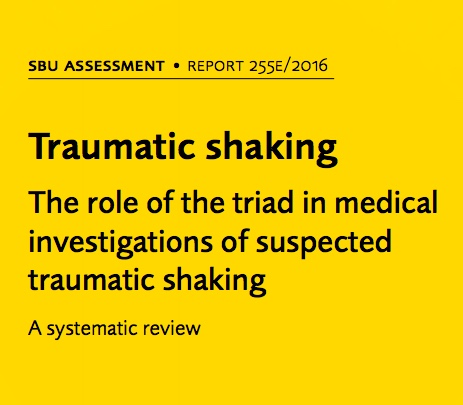
Meanwhile, medical ethicist Niels Lynøe and forensic medicine specialist Anders Erikssøn contributed a chapter on their own examination of the SBS controversy, inspired by the “massive and surprisingly critical international reaction” to a literature review they worked on in 2014-2016 for the independent Health Technology Assessment authority in Sweden (SBU in English).
Lynøe and Erikssøn had served on a team of SBU research experts who looked only at the study designs in the SBS literature, focusing on the question: ”With what certainty can it be claimed that the triad, subdural hematoma, retinal hemorrhages and encephalopathy, is attributable to isolated traumatic shaking (i.e. when no external signs of trauma are present)?”
Citing the prevalence of circular reasoning in the studies, the team concluded that there was “insufficient evidence on which to assess the diagnostic accuracy of the triad,” triggering a flood of denunciations from the community of child abuse experts. After studying the content of the literature, and the criticisms of their work, Lynøe and Erikssøn now report that proponents of SBS theory disagree with skeptics not only about whether and how shaking leads to the triad but about “whether there is a controversy over SBS/AHT at all.” Having experienced the controversy first hand, they suggest that this denial may be “a symptom of a crisis within the prevailing AHT research field.”
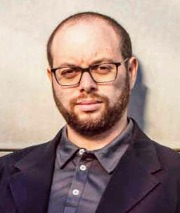
Key to pulling together this international team was French neuroscience researcher and software engineer Cyrille Rossant, whose son was diagnosed as a shaken baby seven years ago—see his blog posting about his experience. (If you or a family member has been interrogated in one of these cases, please see my earlier posting about Rossant’s request for letters.)
The book also includes veteran voices in the arena—like Innocence Project founder Barry Scheck, who defended “Boston nanny” Louise Woodward in the case that brought shaken baby into the headlines in 1997. Scheck’s foreword offers a readable summary of the evidence and testimony that presumably informed the judge’s decision, after Woodward’s second-degree murder conviction, to reduce the charge to manslaughter and set the sentence to time served.
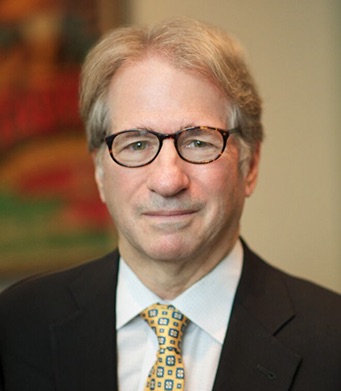
Law professor Keith Findley, a key player since he won a pivotal appeal in 2008 on behalf of child care provider Audrey Edmunds, is surely the most qualified attorney in the arena to have written the chapter on appealing SBS cases, and he brings an insider’s view to his analyses of the confession research as proof of SBS theory and the challenges of cognitive bias.

And of course neuropathologist Waney Squier (winner of the Innocence Project Champion of Justice Award in 2016), in collaboration with forensic pathologist Tommie Olofsson at Uppsala University Hospital, provides a readable overview of the neuropathology of SBS/AHT, addressing some of the misconceptions propagated in the child-abuse literature.
A chapter Squier co-authored with radiologist Julie Mack examines the imaging of the most common brain findings in SBS/AHT cases, with commentary on what isn’t yet understood and the limitations of what imaging can reveal.
The chapter on scientific evidence in the courtroom, by public defense attorney Kathleen Pakes, caught me by surprise, flatly rejecting courtroom testimony from a physician about mechanism of injury.
In conversation Pakes says, “If these were civil cases, if we were Monsanto or Dow Chemical and we had the money to question the science, this stuff would never be allowed.”
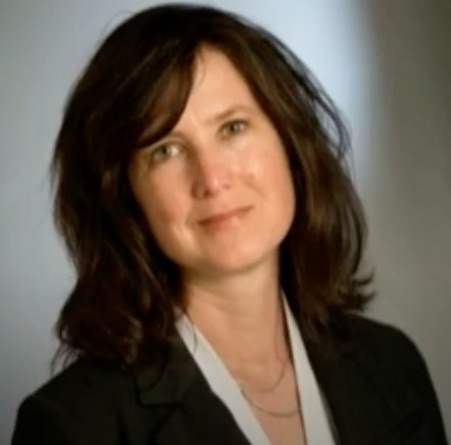
Pakes is more restrained in print, where she addresses the difference between a doctor’s ability to identify and treat a medical condition and that same doctor’s ability to divine what caused the condition—a distinction that’s been pivotal in employee-injury and product-liability litigation. Pakes also reviews the circular reasoning in the literature, the questions raised by biomechanics research, and the subjective nature of the diagnosis, concluding, “a consistent application of governing legal principles would exclude opinion evidence purporting to ‘diagnose’ SBS/AHT.”
And there’s lots more–the international statistics, for example, and the histories of SBS in the Swedish and Japanese courts; Marta Cohen on misdiagnosis of SIDS. This book deserves more coverage than I have room to give it in one posting. If you are an attorney working in this vital, complex, divisive arena, or anyone trying to figure out what’s going on, you need to read Shaken Baby Syndrome: Investigating the Abusive Head Trauma Controversy.
The ebook is now available for download. The hard copy seems to be shipping in the U.K., but I haven’t seen the copy I pre-ordered some weeks ago on the US site. Click the button below for a downloadable coupon for 20% off if you order directly from the Cambridge University Press.
Cambridge University Press, UK edition order page
(1) Chadwick DL, Chin S, Salerno C, Landsverk J, Kitchen L. Deaths from falls in children: How far is fatal? Journal of Trauma. 1991;31(10):1353–5 (Abstract)
(2) Schneps L, Rossant C. Chutes de faible hauteur et syndrome du bébé secoué, erreurs numériques et logiques. In Hématomes sous-duraux et collections péri- cérébrales du petit nourrisson. B. Échenne, A. Couture, G. Sébire, eds. Sauramps, 2020, pp. 299–328 (English translation)
(3) Hall JR, Reyes HM, Horvat M, Meller J, Stein R. The mortality of childhood falls. Journal of Trauma. 1989;29(9):1273–5
(4) Maguire S, Kemp A, Lumb R, et al. Estimating the probability of abusive head trauma: A pooled analysis. Paediatrics. 2011;128(3):e550–e564 (Abstract)
copyright 2023 Sue Luttner
If you are unfamiliar with the controversy surrounding SBS/AHT, please see the home page of this blog.


 On Shaken Baby