Category Archives: Child abuse misdiagnosis

A County Faces the True Cost of Misdiagnosis

A ground-breaking report from a county controller in Pennsylvania last month articulated the fiscal costs of child abuse misdiagnosis, while a collection of local families propelled the financial story into the news by sharing their own heart-breaking experiences with local governing boards.

“My duty is to be a watchdog of public funds,” explains Lehigh County Controller Mark Pinsley, whose investigation, “The Cost of Misdiagnosis,” concluded that the county wastes money on unnecessary foster care, social and police services, litigation expenses, and more due to the over diagnosis of child abuse.
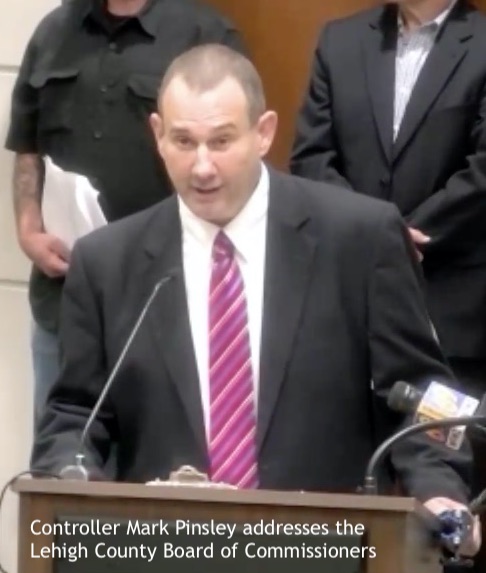
The report reveals that, in the long run, after families have been torn apart and resources have been expended, when cases reach independent appeals boards, judges have been overturning 90% of the county’s findings of “indicated” abuse.
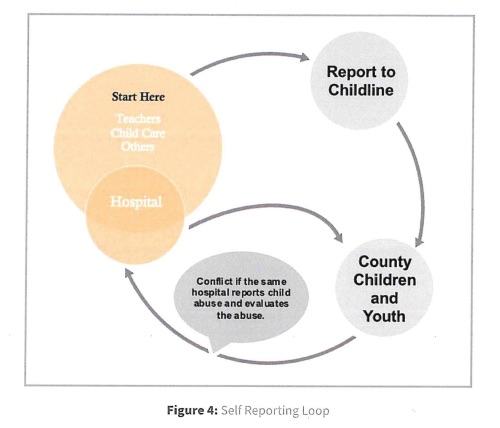
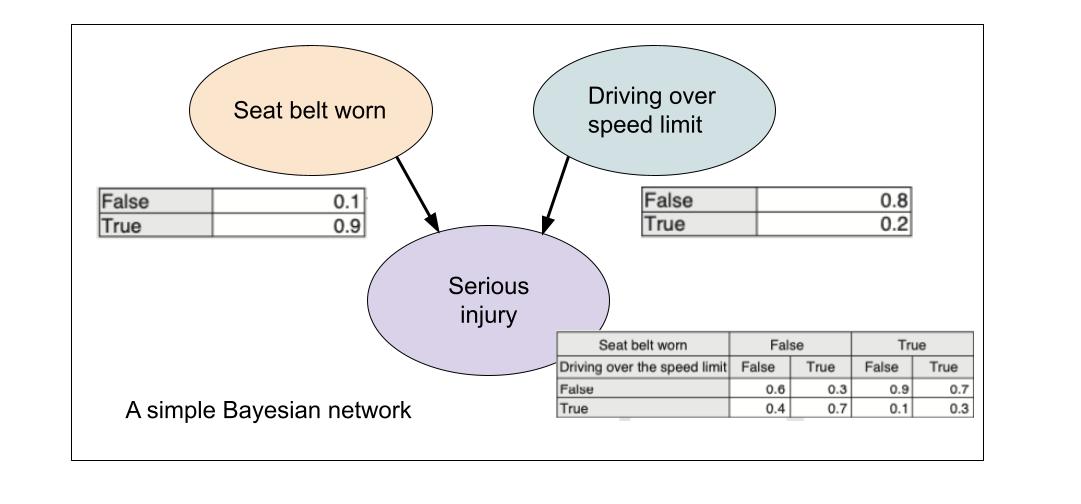
The report also noted the self-reinforcing nature of the process when doctors at local hospitals report potential abuse to the county, which then asks for an investigation by the Child Advocacy Center (CAC) at Lehigh Valley Hospital, run by the same hospital system. The illustration here is from Pinsley’s report.

The families who followed Pinsley at the podium the evening he addressed the Lehigh County Board of Commissioners spoke of their own pain and the damage to their children—even parents who eventually saw the charges dropped and their children returned said they were left emotionally and financially drained. One mother said she divorced her husband to comply with the demands of social services. The official report does not name names, but the parents, one after another, asked that Dr. Debra Esernio-Jenssen, then the director of the CAC, be fired.

So far, the Lehigh County commissioners have only passed the official report on to the state and county Departments of Human Services, but the Lehigh Valley Health Network (LVHN) apparently heard the message: Last week the network announced the appointment of a new director of the CAC and the reassignment of Dr. Esernio-Jenssen to “other” locations.

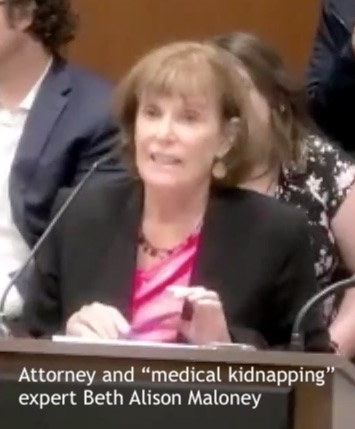
Pinsley started his investigation earlier this year, when a TikTok video by defense attorney Beth Alison Maloney alerted him to a local cluster of Medical Child Abuse (MCA) diagnoses.
Also known as Munchausen Syndrome by Proxy (MSBP), MCA is a diagnosis directed at a parent who seeks unnecessary medical care for a child, fabricating or even causing mysterious symptoms. With 11% of Pennsylvania’s children, Pinsley’s report notes, Lehigh County and its neighbors Northampton and Carbon Counties account for 40% of the state’s MCA cases, a statistic that points to “potential systemic overdiagnosis of this rare disorder.”

The report cites a number of individual cases in which the child-abuse pediatricians ignored previous diagnoses of rare but legitimate medical conditions by other doctors in favor of MCA, only to backtrack later. The report recommends a number of changes in how the county handles abuse diagnoses, including independent investigation of each case by police and social services, which historically have deferred to the opinions of the local abuse specialists.

After he started his research, Pensley wrote, it became clear that he needed to look beyond MCA, “that the inquiry needed to include other areas, such as shaken baby syndrome, various forms of head trauma, and other rare diseases typically classified as child abuse.” Some of those cases also appear in the report.

Pinsley says he was “not the hero” in this effort; he was merely responding to a call for help from a group of local parents who had organized themselves as the Parents Medical Rights Group (PMRG).

“They didn’t need me,” he insists, “I was like the feather in the Dumbo movie. They could fly; they just needed the confidence to try.”

2024 Update: The parents filed a lawsuit against Dr. Ersonio-Jenssen in February of 2024, and she retired in March.

You can read some of the coverage in the regional paper The Morning Call before the pay wall kicks in:

  • In August, it covered the controller’s report and the first parent presentations to the Lehigh Valley commissioners
  • Last week, it reported the change in leadership at the CAC and a repeat presentation by the parents to the commissioners of neighboring Northampton County.
  • On Sunday it ran an op ed by Pinsley about his report

November 2025 update: A father convicted of murder based on a diagnosis by Dr. Esernio-Jenssen has been released from prison, in a bittersweet development, ‘It’s surreal’: Lehigh Co. man freed after 9 years in prison over flawed testimony on infant death

copyright 2023, Sue Luttner

A few source references, for more information.

If you are not familiar with the debate surrounding Shaken Baby Syndrome, please see the home page of this site.
4 Comments

Filed under Child abuse misdiagnosis

A Must-Read Book From a Potent Team

A bold new book from Cambridge University Press assembles, in one passionate collection, the fundamental arguments for reconsidering 50 years of shaken baby convictions, Shaken Baby Syndrome: Investigating the Abusive Head Trauma Controversy.

The authors, 32 experts with impeccable credentials from a range of medical, mathematical, scientific, and legal specialties, bring both years of experience and a fresh, international perspective to the debate.

One chapter, for example, opens with a personal anecdote from retired Norwegian neurosurgeon Knut Wester, who has a scientific interest in external hydrocephalus. Asked his opinion in a shaking case, he writes, he was surprised to receive images that looked like a familiar presentation of Benign External Hydrocephalus (BEH) complicated by bleeding. His report convinced the court to drop the charges. Then he was asked his opinion in a second case, and again the images looked like BEH with bleeding. Swedish neuroradiologist Johan Wikström, Wester’s co-author on this chapter, shares his own parallel experience, all as a preface to their examination of the medical and statistical facts suggesting that BEH can be and often is misdiagnosed as SBS/AHT.

In a companion chapter, the two collaborate with pediatric neurologist Joseph Scheller in the US on a groundbreaking survey of neuro-imaging in the child-abuse literature. Their findings appear in this book for the first time anywhere. The implications, as the authors write, are “frightening.”

The book also brings a level of rigorous mathematical analysis to the SBS/AHT research I’ve never seen before.

A chapter by mathematician Leila Schneps at the French National Center for Scientific Research (Centre national de la recherche scientifique), for example, explores the logical and numerical errors in a seminal 1991 article [1] from the Children’s Hospital in San Diego, in which researchers advised that parents who report “short indoor falls” to explain serious injuries are lying.

Schneps has already published a broader look at the short-fall literature [2], where she found one study [3] that not only reported a few deaths following short falls but noted that some of the children could have been saved with prompt medical attention. In this book, Schneps takes a deeper dive into the San Diego analysis, concluding, “These articles claiming that short falls cannot cause serious harm are not only dangerous, but they are wrong.”

Similarly, British mathematician Norman Fenton and Australian health-information technologist Scott McLachlan devote their chapter to a “causal Bayesian network model,” to examine the methodology of the “Cardiff study” [4], a meta-analysis that combined data from six individual studies to build a tool for confirming a shaking diagnosis based on medical findings.

In its conclusion, the Cardiff paper offered itself as a rebuttal to Deborah Tuerkheimer’s 2009 law review article positing that the scientific underpinnings of shaking theory had crumbled. Rather, the Cardiff authors wrote in 2011, their analysis “confirms the association of AHT with specific combinations of clinical features.” Fenton and McLachlan’s modeling, however, reports “strong biases and errors” built into that work.

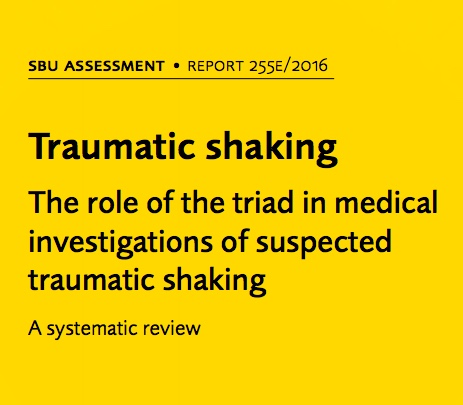
Meanwhile, medical ethicist Niels Lynøe and forensic medicine specialist Anders Erikssøn contributed a chapter on their own examination of the SBS controversy, inspired by the “massive and surprisingly critical international reaction” to a literature review they worked on in 2014-2016 for the independent Health Technology Assessment authority in Sweden (SBU in English).

Lynøe and Erikssøn had served on a team of SBU research experts who looked only at the study designs in the SBS literature, focusing on the question: ”With what certainty can it be claimed that the triad, subdural hematoma, retinal hemorrhages and encephalopathy, is attributable to isolated traumatic shaking (i.e. when no external signs of trauma are present)?”

Citing the prevalence of circular reasoning in the studies, the team concluded that there was “insufficient evidence on which to assess the diagnostic accuracy of the triad,” triggering a flood of denunciations from the community of child abuse experts. After studying the content of the literature, and the criticisms of their work, Lynøe and Erikssøn now report that proponents of SBS theory disagree with skeptics not only about whether and how shaking leads to the triad but about “whether there is a controversy over SBS/AHT at all.” Having experienced the controversy first hand, they suggest that this denial may be “a symptom of a crisis within the prevailing AHT research field.”

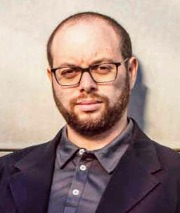
Key to pulling together this international team was French neuroscience researcher and software engineer Cyrille Rossant, whose son was diagnosed as a shaken baby seven years ago—see his blog posting about his experience. (If you or a family member has been interrogated in one of these cases, please see my earlier posting about Rossant’s request for letters.)

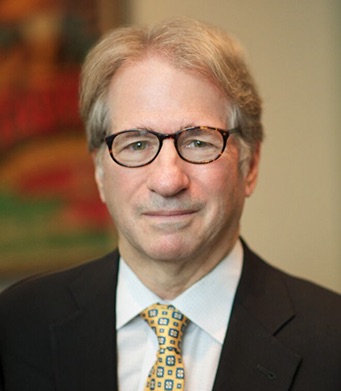
The book also includes veteran voices in the arena—like Innocence Project founder Barry Scheck, who defended “Boston nanny” Louise Woodward in the case that brought shaken baby into the headlines in 1997. Scheck’s foreword offers a readable summary of the evidence and testimony that presumably informed the judge’s decision, after Woodward’s second-degree murder conviction, to reduce the charge to manslaughter and set the sentence to time served.

Law professor Keith Findley, a key player since he won a pivotal appeal in 2008 on behalf of child care provider Audrey Edmunds, is surely the most qualified attorney in the arena to have written the chapter on appealing SBS cases, and he brings an insider’s view to his analyses of the confession research as proof of SBS theory and the challenges of cognitive bias.

And of course neuropathologist Waney Squier (winner of the Innocence Project Champion of Justice Award in 2016), in collaboration with forensic pathologist Tommie Olofsson at Uppsala University Hospital, provides a readable overview of the neuropathology of SBS/AHT, addressing some of the misconceptions propagated in the child-abuse literature.

A chapter Squier co-authored with radiologist Julie Mack examines the imaging of the most common brain findings in SBS/AHT cases, with commentary on what isn’t yet understood and the limitations of what imaging can reveal.

The chapter on scientific evidence in the courtroom, by public defense attorney Kathleen Pakes, caught me by surprise, flatly rejecting courtroom testimony from a physician about mechanism of injury.

In conversation Pakes says, “If these were civil cases, if we were Monsanto or Dow Chemical and we had the money to question the science, this stuff would never be allowed.”

Pakes is more restrained in print, where she addresses the difference between a doctor’s ability to identify and treat a medical condition and that same doctor’s ability to divine what caused the condition—a distinction that’s been pivotal in employee-injury and product-liability litigation. Pakes also reviews the circular reasoning in the literature, the questions raised by biomechanics research, and the subjective nature of the diagnosis, concluding, “a consistent application of governing legal principles would exclude opinion evidence purporting to ‘diagnose’ SBS/AHT.”

And there’s lots more–the international statistics, for example, and the histories of SBS in the Swedish and Japanese courts; Marta Cohen on misdiagnosis of SIDS. This book deserves more coverage than I have room to give it in one posting. If you are an attorney working in this vital, complex, divisive arena, or anyone trying to figure out what’s going on, you need to read Shaken Baby Syndrome: Investigating the Abusive Head Trauma Controversy.

The ebook is now available for download. The hard copy seems to be shipping in the U.K., but I haven’t seen the copy I pre-ordered some weeks ago on the US site. Click the button below for a downloadable coupon for 20% off if you order directly from the Cambridge University Press.

Cambridge University Press, UK edition order page

(1) Chadwick DL, Chin S, Salerno C, Landsverk J, Kitchen L. Deaths from falls in children: How far is fatal? Journal of Trauma. 1991;31(10):1353–5 (Abstract)

(2) Schneps L, Rossant C. Chutes de faible hauteur et syndrome du bébé secoué, erreurs numériques et logiques. In Hématomes sous-duraux et collections péri- cérébrales du petit nourrisson. B. Échenne, A. Couture, G. Sébire, eds. Sauramps, 2020, pp. 299–328 (English translation)

(3) Hall JR, Reyes HM, Horvat M, Meller J, Stein R. The mortality of childhood falls. Journal of Trauma. 1989;29(9):1273–5

(4) Maguire S, Kemp A, Lumb R, et al. Estimating the probability of abusive head trauma: A pooled analysis. Paediatrics. 2011;128(3):e550–e564 (Abstract)

copyright 2023 Sue Luttner

If you are unfamiliar with the controversy surrounding SBS/AHT, please see the home page of this blog.

3 Comments

Filed under abusive head trauma, AHT, Child abuse misdiagnosis, keith findley, SBS, shaken baby syndrome

A Personal & Potent Fight for Justice

When doctors at the Arkansas Children’s Hospital diagnosed 3-month-old Quincy as a victim of child abuse, the press ran with the story. Medical imaging had revealed 17 fractures to the boy’s tiny bones, and police were targeting his father, Zachary Culp, who worked in the school cafeteria. The community understood that an accused child abuser had been in regular contact with its children.

The day of his arrest, while Zachary waited for processing with other prisoners in the holding tank, a breaking-news bulletin interrupted normal programming on the wall-mounted television to announce the development. His face loomed on the screen.

The first assault came just a few hours later, and the guards were in no hurry to stop the violence. “They beat the crap out of me,” Zachary recalls. “I didn’t think I was going to live the next 72 hours.”

He credits his survival to his uncle, a police detective who’d offered him a set of jailhouse tips before his arrest. When assaulted, Zachary says, he was told to “assume the fetal position, like you’re getting ready for a hurricane.” Zachary lost 48 pounds during the 73 days he spent in jail, he reports, but he did survive.

A year later, he was back with his wife Sarah and their son Quincy, after a series of legal and medical developments including Sarah’s diagnosis with Ehlers-Danlos Syndrome (EDS), a genetic condition that would explain the fractures in her son.

“That was all Sarah,” Zachary says. “She has phenomenal research skills.”

Sarah had started by searching on traits they’d noticed about Quincy since birth: easy bruising, blue sclera, lots of spitting up, with slow weight gain—the last diagnosed in Quincy as “failure to thrive.” She found the story of Rebecca Wanosik, a wrongly accused parent who helped form Fractured Families, a support group for families accused of abuse based on a medical misdiagnosis. She learned about EDS and Dr. Michael Hollick in Boston.

Zachary was out on bail by then, but because of a “no-contact” order against him, Sarah took Quincy by herself to Boston for their first consultation.

“Dr. Holick saved our son’s life,” Zachary maintains. At that point, Quincy was so small he had “fallen off the growth charts,” he explains. “He was barely making it. We were desperate for help.”

EDS can’t be confirmed in an infant, but Dr. Holick diagnosed Sarah with EDS and found early signs in Quincy. He also gave Sarah the first useful advice she’d gotten about Quincy’s diet, and her baby started gaining weight. Now 5 years old, Quincy has been diagnosed definitively with Stickler’s Syndrome, another auto-immune condition.

Immediately after his family’s legal ordeal, Zachary Culp became an activist in the arena. A seriously effective activist.

In 2021, only three years after his arrest, Zachary had ushered “Quincy’s Law” through both his state senate and the house: Families accused of abuse in Arkansas based on a medical diagnosis now have the right to a second opinion—like the opinion that finally got Quincy’s health on track.

Zachary based Quincy’s Law (now Act Number 976) on legislation crafted and tweaked by family activists in Texas. He offers advice and a template to families interested in pushing for similar laws in their own states.

Zachary says his political strategy was to approach elected officials personally, “one relationship at a time.” He started with the legislators closest to him, in Pulaski County. He tried to find common ground, ways that he could support their own efforts, with letters or phone calls or outreach. “I like to see what they want to talk about first, before I push my own agenda,” he explains.

He worked his way out in wider geographical circles and up the hierarchy, routinely driving to the state capitol in Little Rock on his days off. He networked with other Arkansas families who had experienced a medical misdiagnosis of abuse.

Zachary recognizes Child Abuse Awareness Month most years—not this year, because a tornado had just ploughed through his part of Arkansas—by taking out an ad in the local newspaper, looking for other accused families.

He and Sarah offer advice and support to the newly accused, who find him through the ads or on Facebook. He’s keeping track of disputed diagnoses by Dr. Karen Farst, the child abuse pediatrician who diagnosed abuse in Quincy’s case.

Last year, he made his first shot at his own seat in the legislature. He lost, but that’s the norm for a first-time candidate. He’s not giving up.

These days, Zachary’s social media feed offers dispatches from EDS and innocence activists, in between celebrations of his family and his church community.

Whatever he does next, Zachary Culp has already proven that one person can make a difference.

Links:

copyright 2023 Sue Luttner

If you are not familiar with the debate surrounding shaken baby syndrome, please see the home page of this blog.

10 Comments

Filed under Child abuse misdiagnosis

Bone Fragility: A New Cause

Researchers have identified a new underlying cause of fragile bones in developing fetuses, this one apparently associated with maternal Ehlers-Danlos Syndrome (EDS), according to a news release propagated by the American Association for the Advancement of Science.

The paper behind the press release underscores the pitfalls of diagnosing abuse by default when a child with fractures in different stages of healing tests negative for known genetic conditions that predispose to fragile bones.

The original article ran in the journal Children: Fetal Fractures in an Infant with Maternal Ehlers-Danlos Syndrome, CCDC134 Pathogenic Mutation and a Negative Genetic Test for Osteogenesis Imperfecta, by Michael F. Holick, Arash Shirvani, and Nipith Charoenngam

The article is a case report from the Ehlers-Danlos Clinical Research Program at the Boston University Medical Campus, where researchers examined ultrasounds of the developing fetus at several points during gestation and identified what looked like fractures suffered in utero. X-rays after birth confirmed the findings. The boy tested negative for osteogenesis imperfecta (OI) and other known causes of fragile bones, including vitamin D deficiency. The authors note:

If this mother had brought in her son for medical care later in his infancy without prior diagnosis of in utero fractures, these X-ray findings would almost certainly have resulted in the diagnosis of nonaccidental trauma.

Citing other abuse diagnoses based on fractures in children of EDS parents, the authors point to an “urgent need for further investigations to identify additional causative genetic variants for skeletal fragility, including yet to be identified genes associated with a well-recognized bone fragility disorder associated with a genetic defect of the collagen–elastin matrix: EDS.”

Leave a comment

Filed under Child abuse misdiagnosis, diagnosing child abuse