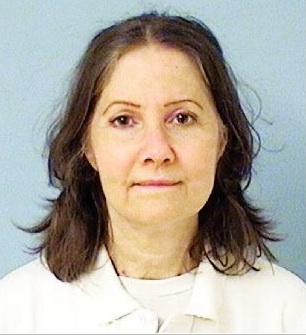
 Governor Jerry Brown commuted the sentence this morning of Shirley Ree Smith, whose case will remain a landmark in the arena. Shirley and her family are jubilant, of course, even though her conviction stands.
“I’ve been waiting so long for this day,” she said on the telephone this afternoon, “I can’t believe it’s finally here.”
Shirley said she was especially grateful to the people who helped her, directly and indirectly. “I would like to thank everyone who stood in my corner and fought for justice with me all these years,” she said, “I did not have to stand alone.”
Justice is not complete, Smith conceded, as she still has a criminal record, “but I can get on with my life now, and the story will help people find out what’s going on with shaken baby syndrome.”
In an interview in January, while waiting for the results of the clemency petition, Shirley’s daughter Tomeka Smith reflected, “In a way we don’t want the clemency, because that means she’s done something wrong and she needs to be pardoned. That’s sad. That’s not what she wants.”
This morning, though, when the phone call came from the attorney, “We were all clapping and jumping and shouting and hugging, the whole family,” Tomeka said, adding, “Still, we’d like to see something official, a piece of paper, to let us know it’s really over.”
As followers of this blog know, Shirley Smith was convicted in 1997 for assault on a child resulting in death. The child was Etzel Glass, Tomeka’s youngest, 7 weeks old at the time. The family was staying with relatives and Shirley was sleeping in the living room with her grandchildren, while Tomeka slept in the bedroom a few feet away. Shirley says she found Etzel unresponsive at about 3 am and brought him in to Tomeka, who called 911.
At the hospital, doctors found only one of the three signs usually used to diagnose infant shaking: subdural hematoma. At Smith’s trial, Dr. Eugene Carpenter and Dr. Stephanie Ehrlich from the Los Angeles County coroner’s office testified that Etzel had died instantly when his brainstem was torn during a shaking assault, leaving no time for the other symptoms to develop.
Smith has had the full support of her family, from the moment a social worker first raised the question of abuse. “Of course my mom is innocent,” Tomeka said in January. “She would never hurt one of her grandkids.”
Smith served a decade in prison before the Ninth Circuit Court vacated her conviction on appeal in 2006, declaring the evidence against her constitutionally inadequate. Since then she has been out of prison but constrained in her movements while the state appealed the circuit court’s decision.
That appeal reached the Supreme Court this past fall. The high court reinstated her conviction, but in a ruling that didn’t address her guilt or innocence: their argument was that the appeals court should not override a jury’s decision. The written opinion even recognized that doubts about her guilt are “understandable,” and it contained a potent dissenting opinion from Justice Ruth Bader Ginsburg that outlined the substantial medical evidence against the traditional model of shaken baby syndrome. (The full opinion is available at this link.)
Through it all, Shirley Smith has kept her faith and her spirit, proving the value of a supportive family. DePaul University law professor Deborah Tuerkheimer, a critic of convictions based solely on the triad (see her op ed from fall 2010), recently called Shirley one of the “incredible figures in this saga.”
The LA Times report about today’s clemency announcement contains only the bare facts, but the news is good.
Shirley says she’s already been called by both national and local news teams, so look for more news stories on her case. Her first television interview is this evening.
If you’re not familiar with shaken baby syndrome and the arguments surrounding it, please see the home page of this blog.

 An appeal of the case is also pending, pushed by the IIP, based on medical records not known to the defense expert at trial: The child had sickle-cell trait and abnormal hemoglobin, as well as a history of infection, fever, anemia, and dehydration.









 On Shaken Baby