Category Archives: AHT

Separating the Sheep From the Wolves

Gray fox at a wildlife rescue center in Lafayette, CA

I have returned sobered from the Twelfth International Conference on Shaken Baby Syndrome/Abusive Head Trauma, Sept 29–Oct 1 in Boston.

Dr. Robert Block, President of the American Academy of Pediatrics (AAP), opened the conference with an address titled “While We Argue, Children Die:  The Consequences of Misinformation,” arguing that the press has been getting it wrong by reporting that shaken baby syndrome is now in doubt.

If the number of shaking diagnoses is not decreasing, Block said, then “the assertion that there has been a significant shift in medical opinion and medical thinking is false and it is not supported in basis of fact.”

Block protested that an upcoming law-journal article misrepresents the intent of the 2009 AAP position statement recommending that doctors drop the term “Shaken Baby Syndrome” in favor of “Abusive Head Trauma.” The goal of the new name, Block said, was “not to detract from shaking as a mechanism of abusive head trauma as much as to broaden the terminology to account for the multitude of primary and secondary injuries that result from abusive head trauma.”

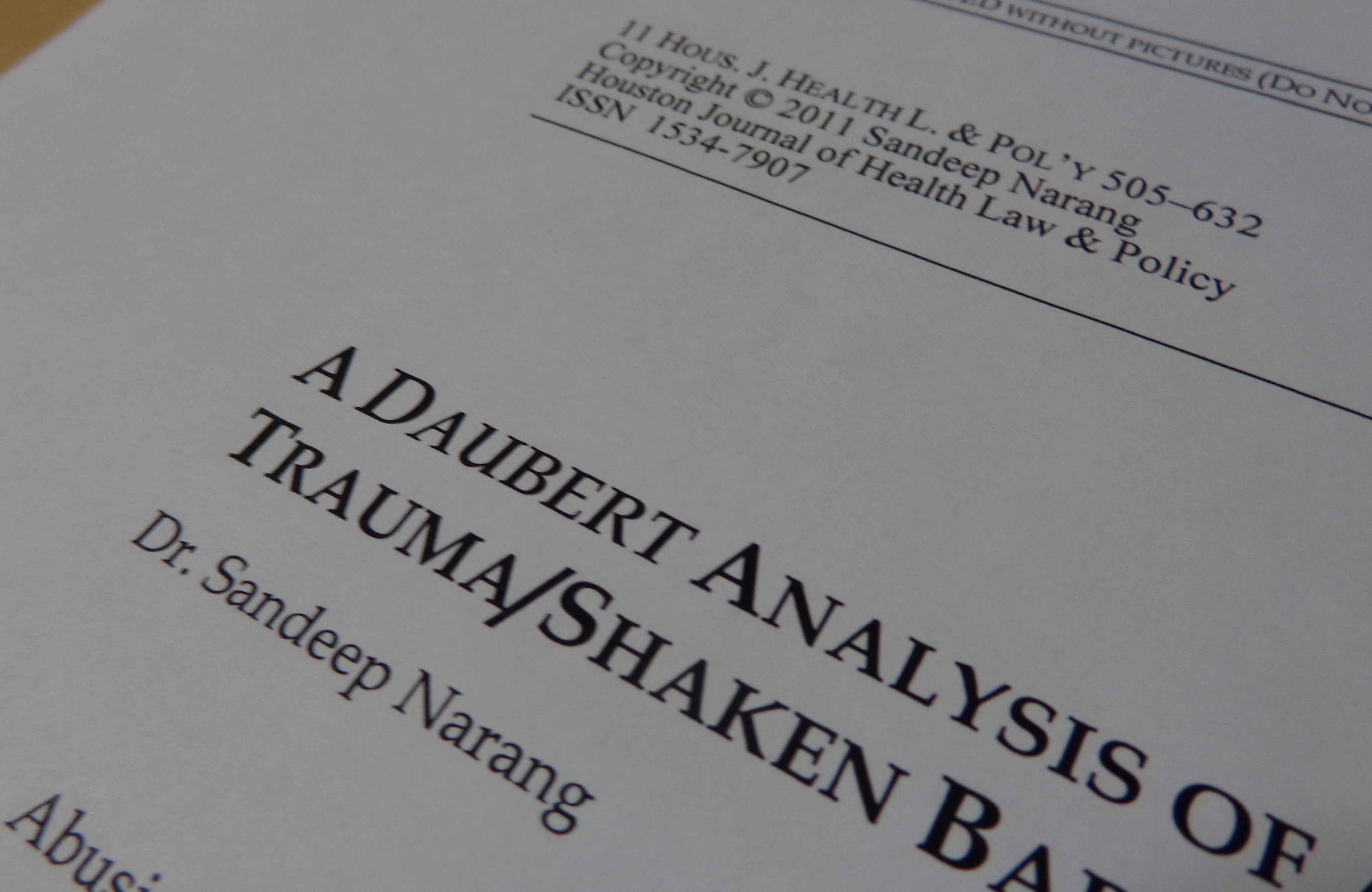
The article Block cited—“Shaken Baby Syndrome, Abusive Head Trauma, and Actual Innocence:  Getting It Right”—was written by law professors Keith Findley and David Moran, with pediatric radiologist Patrick Barnes and pediatric neuropathologist Waney Squier, in response to an earlier article in the same journal —“A Daubert Analysis of Abusive Head Trauma/Shaken Baby Syndrome“—by pediatrician, attorney, and pediatrics professor Sandeep Narang. Dr. Narang had proposed in that piece, as he did again at the Boston conference, that the diagnosis of child abuse is best left to the experts who have devoted their careers to studying it.*

Like Dr. Narang, Block emphasized the importance of clinical experience. The experts have seen “thousands and thousands of children, of all ages, in all stages of health, from perfectly healthy to perfectly dead,” Block said, “Without that experience one cannot understand, get involved in, begin or end that science that we so desperately need.”

Arguing that child-protection doctors are forced to spend their time fighting baseless attacks, Block asked, “Can the media, and the folks who feed the media, be held responsible for injuries to, and deaths of, children?”

Block encouraged the building of multi-disciplinary bridges, where physicians from different specialties can share experiences and learn from each other. Conversation is difficult “with people who are emotionally invested,” he said, and he would welcome the entry of the Institute of Medicine and the National Academy of Sciences into the arena.

Monday morning’s keynote address—”A Wolf in Sheep’s Clothing:  Denialism in Child Abuse Pediatrics” by Dr. Christopher Greeley, professor of pediatrics at the University of Texas Health Science Center—reaffirmed that there is no disagreement within the medical community about abusive head trauma.

“I believe this not to be a medical debate,” Dr. Greeley opened, but “a legal debate with a white coat on.”

Greeley proposed that critics of the known science behind shaken baby syndrome have fallen for the allure of their own personal narratives. “They think, ‘This is Galileo trying to prove his case to the people,'” he explained. “They think, ‘I have this knowledge and it’s being squashed by misguided authority.'”

Alluring at it is, that narrative is false, he said. “Are we the overbearing establishment? Is Dr. Block our pope?”

Dr. Greeley characterized those who question SBS theory as denialists, and he outlined their tactics:

  • Manufacture of doubt—emphasizing small areas of disagreement to give the impression of fundamental flaws
  • Identification of conspiracies
  • Creation of impossible expectations—demanding that the child abuse literature  provide the same kind of evidence produced by drug trials, for example
  • Use of fake experts
  • Misrepresentation and logical fallacies—the “straw man,” for example
  • Selectivity of citation

Dr. Greeley’s slide show of media denialism included offerings from major news outlets (the 2008 Discover magazine piece by Mark Anderson, Prof. Deborah Tuerkheimer’s 2010 New York Times op ed, Emily Bazelon’s New York Times Magazine cover story, and the Frontline/ProPublica/NPR critique of child death investigations) as well as small internet voices (the Medill Innocence Project, MedicalMisdiagnosisResesarch, Medical Veritas [which seems to be an anti-vaccine organization], this blog, and the EBMSI conferences), plus a radio commentary by Phyllis Schlafly.

In the professional arena, Dr. Greeley lambasted the 2003  literature review by Dr. Mark Donohoe, “Evidence-Based Medicine and Shaken Baby Syndrome,” which had concluded that “the commonly held opinion that the finding of subdural hematoma and retinal hemorrhage in an infant was strong evidence of SBS was unsustainable, at least from the medical literature.”

Donohoe had searched the Biomednet Medline database using only the phrase “Shaken Baby Syndrome,” Greeley pointed out, four years before the phrase was officially adopted into the Medical Subject Headings maintained by the National Library of Medicine. Donohoe did not search for terms like “abusive head trauma,” “child abuse,” “subdural hematoma,” or any of the other phrases that might have captured additional relevant articles, Greeley charged, and then he didn’t even read all of the articles he found. Although Donohoe’s search was conducted in 1998, the article wasn’t published until 2003. Greeley said that his own search using Donohoe’s described strategy, even limiting the time range to 1966-1998, produced far more citations than the 54 Donohoe reported. (Greeley did not, however, offer any examples of papers that would have provided stronger scientific support for shaking theory than those Donohoe evaluated).

“Donohoe is a horrible paper and you should never cite it,” Greeley summarized. Noting that Supreme Court Justice Ruth Bader Ginsburg had in fact referenced Donohoe in her minority opinion in the Shirley Ree Smith decision, he speculated, “Surely Justice Ginsburg didn’t read this paper…  or she wouldn’t have cited it.”

He also criticized medical-journal articles by Drs. Pat Barnes, Waney Squier, Jennian Geddes, and Steven Gabaeff and the “Getting It Right” law-journal article by Findley et al.

In other sessions I heard speakers explain that Vitamin D levels in a newborn are unrelated to bone fragility, hypoxia does not cause subdural hematoma, and physicians always do a complete work-up for other conditions that might cause the symptoms before diagnosing abuse. While I’m still puzzling over the medical possibilities, I know from personal experience that the third point is an unattained ideal.

I had hoped the conversation was opening up, but it’s hard to feel encouraged after being dismissed as a denialist. More to come.

* Dr. Narang’s article posits that there is no real medical debate about AHT and concludes:

“It is understandable that lawyers will look for opportunities to create doubt in the minds of jurors. However, the only way to appropriately improve the chances for justice in the courts with respect to AHT is to assure that an unbiased, financially-unmotivated, medical expert testifies to the current state of medical evidence.”

10 Comments

Filed under abusive head trauma, AHT, American Academy of Pediatrics, National Center on Shaken Baby Syndrome, SBS, shaken baby syndrome

When Pie in the Sky Turns Out to Be Dawning Knowledge

With the Twelfth International Conference on Shaken Baby Syndrome/Abusive Head Trauma coming up this weekend, I’ve been reviewing the literature and sorting my thoughts. What I see is an odd mix of new thinking and old stances.

In the June 2012 issue of Pediatric Radiology, for example, Dr. Thomas Slovis and his colleagues open their editorial, “The creation of a non-disease: an assault on the diagnosis of child abuse,” with a triad I’m not familiar with, but it’s got a classic ring to it:

The triad of subdural hematoma, retinal hemorrhage and multiple fractures in a child has been extensively documented to strongly suggest non-accidental trauma. Based on confessional evidence, a medical workup excluding diseases that can present with some of these abnormalities, and almost 50 years of scientific medical supportive literature, the diagnosis of abuse is being made with increasing medical certainty [1–7].*

With that diagnostic guideline in place, the authors object to “a small group of individuals” who have “created controversy where there should be none” and “perverted cases by using incomplete statements of the facts and unproven hypotheses to obscure the straightforward historical and physical findings utilized to make the diagnosis of child abuse.”

The paper describes a recent training that included these presentations:

  • Pediatrician and geneticist Dr. Ingrid Holm explaining that vitamin D levels have not been scientifically connected with fractures in the fetus or neonate, presumably a counter to the rickets work of Drs. Pat Barnes, Kathy Keller, David Ayoub and others; and
  • Pediatric radiologist Dr. Gary Hedlund noting that  “intracranial venous thrombosis alone” is not known to be associated with subdural hematoma, possibly a response to many of Dr. John Plunkett’s diagnoses, with the additional observation “that one of the commonest causes of intracranial venous thrombosis is trauma, and that trauma does cause subdural hemorrhage.”

The key point about the non-disease commentary, though, is near the introduction, in an off-hand reference to new understandings in the field:

[The seminar]  presented the scientifically accepted methodology for the diagnosis of nonaccidental trauma with emphasis on the pathophysiology of various injuries, and covered areas where new data have changed our understanding (e.g., subdural hematoma can occur from bleeding dural veins and not only bridging veins) [20–22].

20. Mack J, Squier W, Eastman JT (2009) “Anatomy and development of the meninges: implications for subdural collections and CSF circulation.” Pediatr Radiol 39:200–210

21. Nelson MD Jr (2009) “Unraveling the puzzle.” Pediatr Radiol 39:199

22. Slovis TL, Chapman S (2009) “The pathophysiology does not denote the mechanism.” Pediatr Radiol 39:197–19

What we have here is an editorial criticizing and dismissing the defense experts in the shaken baby syndrome debate, but with the concession that Drs. Mack, Squier and Eastman were correct in their 2009 proposition, which they also published in a different paper, “The neuropathology of infant subdural hemorrhage,” Forensic Sci Int 2009, soi:10.1016 j.forscicnt.2009.02.005.

At the time it was published, that paper received a scathing review by Dr. Lucy Rorke-Adams in The Quarterly Update, a guide to the child-abuse literature published four times a year by Dr. Robert Reece at Tufts University School of Medicine. Dr. Rorke-Adams’s review (Winter 2010, Vol. XVII, No. 1, p. 14) objected that the authors had rejected “the mountains of evidence that tears of bridging veins consequent to trauma are the primary cause of SDH,” adding in the Reviewer’s Notes:

This concept, initially proposing a non-traumatic pathogenesis of SDH in infants, namely hypoxia, advanced by Geddes et al. in a severely flawed paper with no credibility whatsoever and later repudiated by her, is not being allowed to rest in the dustbin of junk science [10-11].  The disciples of Geddes cannot allow this to happen, else they will be unable to introduce “reasonable doubt” when tetifying on behalf of perpetrators of abusive head injury to infants. Hence, they are flooding the literature with pie-in-the-sky claims that totally lack any evidence base.

10.  Geddes JF, Tasker Rc, Hackshaw AK et al. “Dural haemorrhage in non-tramatic infant deaths:  Does it explain bleeding in ‘shaken baby syndrome’?” Neuropathol Appl Neurobiol 2009;29:14-22

11. Jenny C. The timtimidation of British pediatricians. Pediatrics 2007;119:797-799

This transition, from “pie-in-the-sky” to “new data have changed our understanding,” strikes me as a change in the recognized model of abusive head trauma. It reminds me of comments made by a number of presenters at the 2010 NCSBS conference, when the take-home message was that the “triad” (the AHT triad, that is:  subdural hematoma, retinal hemorrhages and brain swelling) was a straw man invented by defense experts to discredit shaken baby syndrome theory.

2016 Update:  Denial of the triad has been formalized in a commentary by Dr. Christopher S. Greeley, “‘Shaken Baby Syndrome’ and Forensic Pathology” (Forensic Sci Med Pathol 16 Feb 2014 DOI 10.1007/s12024-014-9540-0), where he wrote:

“The complex features of AHT are often disparagingly distilled simply to ‘‘The Triad’’; a term devoid of any real clinical meaning and not used at all in practice.”

But I also have notebooks from prior conferences, when the triad was, indeed, considered enough.  I will close this posting with a quote from a letter published in Pediatrics in 1998, signed by 70 child-abuse physicians, including a few of those 2010 presenters, objecting to the defense testimony in the Louise Woodward trial:

The shaken baby syndrome (with or without evidence of impact) is now a well characterized clinical and pathological entity with diagnostic features in severe cases virtually unique to this type of injury – swelling of the brain (cerebral edema) secondary to severe brain injury, bleeding within the head (subdural hemorrhage), and bleeding in the interior linings of the eyes (retinal hemorrhages). Let those who would challenge the specificity of these diagnostic features first do so in the peer-reviewed literature, before speculating on other causes in court.

My point is that the model is evolving in the face of new evidence.  What I don’t understand is the reluctance of the child-abuse community to look back at possible mistakes in the past.

I’m off to the conference now and not likely to be blogging on the road, but you never know.

* Citations from the opening quote of the Slovis et al. article:

  1. Caffey J (1946) “Multiple fractures in the long bones of infants suffering from chronic subdural hematoma.” AJR 56:163–173
  2. Silverman FN (1953) “The roentgen manifestations of unrecognized skeletal trauma in infants.” AJR 69:413–427
  3. Woolley PV Jr, Evans WA Jr (1955) “Significance of skeletal lesions in infants resembling those of traumatic origin.” JAMA 158:539–543
  4. Kempe CH, Silverman FN, Steele BF et al (1962) “The battered-child syndrome.” JAMA 181:105–112
  5. Silverman FN (1972) “Unrecognized trauma in infants, the battered child syndrome, and the syndrome of Ambroise Tardieu.” Rigler lecture. Radiology 104:337–353
  6. Faure C, Kalifa G, Sellier N (1994) “Les responses de l’imagerie medicale chez l’enfant battu. Syndrome de Silverman-Ambroise Tardieu.” J Radiol 75:619–627
  7. Kleinman PK (ed) (1998) “Diagnostic imaging of child abuse,” 2nd edn. Mosby, St. Louis

5 Comments

Filed under abusive head trauma, AHT, SBS, shaken baby syndrome

Medill Justice Project Starts Posting

2020 Update:  The Medill Justice Project has reorganized and refocused. The links on this page that no longer work have been deactivated.

Journalism students at the Medill Innocence Project have started adding content to a blog devoted to their shaken baby syndrome project.

The first stories went up in late August, print-only updates about their efforts to re-examine the case of Jennifer Del Prete, an Illinois child-care provider convicted of shaking an infant in 2002.

Dr. A. Norman Guthkelch, May 2012

The Audio Podcast

On Friday an excellent podcast appeared, “Setting the Record Straight,” based on an interview with Dr. A. Norman Guthkelch. The pioneering pediatric neurosurgeon who first proposed that shaking an infant can trigger subdural hematoma is now speaking out about the over-diagnosis of infant shaking.

The audio treatment includes a riveting exchange between Dr. Guthkelch and Carrie Sperling, the Innocence Project attorney who contacted him about the troubling case of Drayton Witt. Dr. Guthkelch says that the Witt case opened his eyes to how shaken baby syndrome theory is being used in the courtroom. The piece is even stronger for the inclusion of an interview with Dr. Robert Block, president of the American Academy of Pediatrics and a staunch defender of the classic model.

The Human-Interest Video

Earlier last week a video went up, “Tia’s Story,” a moving visit with Jennifer Del Prete’s 23-year-old daughter. The treatment does not consider the legal issues, but showcases another way in which a hasty diagnosis of infant shaking destroys families.

The Database Update

The site also features an announcement about the database project, started at the beginning of this summer, with some background on the issues.

6 Comments

Filed under abusive head trauma, AHT, SBS, shaken baby syndrome

Evidence-Based Medicine and Shaken Baby Syndrome

Drs. John Galaznik and John Plunkett, at the EBMSI conference

Evidence-based medicine (EBM) is a formal discipline intended to sort out what doctors really know from what they simply believe, “to differentiate objective data from opinion,” explained forensic pathologist Dr. John Plunkett at the second Evidence Based Medicine and Social Investigation conference earlier this month. “Evidence should always trump opinion,” he noted.

As detailed below, the EBM movement relies more on scientifically controlled research—and less on expert opinion and case studies—than the approach that’s traditionally dominated the medical literature.

The highest level of certainty under EBM guidelines applies more readily to drug trials, Plunkett said, where researchers can use large populations and appropriate controls, than to shaken baby syndrome research. “Nothing in the child-abuse literature is going to come anywhere near to Level I,” he conceded, on either side of the shaking debate. “There is not going to be a major bulletin about this.”

The arena itself constrains researchers’ ability to study infant head trauma, Plunkett said, and so the results are not reliable, with the exception of “the biomechanical studies that have been repeated over and over with the same results”—that is, that shaking without impact should not cause subdural hematoma.

Plunkett said he himself misunderstood the role of rotation for many years, even after he started doubting classic shaking theory in the 1980s. “I had been taught that rotation causes subdural hematoma, so I was looking for rotation in a fall,” he explained. “I didn’t realize it until 13 years ago:  Impact causes rotation.”

A number of test-dummy videos shown during the conference illustrated his point:  When a dummy’s head hit the floor, it would bounce back up, in an arc constrained by the neck, finally hitting the floor again at least once.

Rotational motion resulting from linear impact, from F.A. Bandak, Forensic Science International, 151 (2005) p. 75

Biomechanical engineers use the term “impulse loading” to describe the rotational forces caused by the head’s motion at the end of its tether, that is, the neck, which is attached to the trunk.

“Everything caused by impulse loading can be caused by impact,” Plunkett declared. “The reverse in not true.” While impact can cause subdural hematoma, retinal hemorrhage, and encephalopathy, for example, shaking cannot cause skull fracture.

There is simply no need to presume shaking, he said, when a child with the triad shows evidence of an impact.

Nor is shaking necessary to explain subdurals when the child shows no evidence of impact, because “Subdural collections occur without trauma.”  A number of metabolic and infectious diseases can cause them, as well as vascular malformations and any interruption of oxygen to the brain. Some causes, like Saggittal Sinus Thrombosis, are easy to diagnose, Plunkett said, but “Superficial Cortical Venous Thrombosis is routinely missed.”

He dismissed ruptured bridging veins as the source of small subdural hematomas, the “thin film” hematomas often associated with a shaking diagnosis. “Bridging veins are large-caliber conduits,” he said, carrying 5 to 10 ml. of blood per minute. “If one of these things is ruptured, you’re going to get a lot of bleeding, and you’re going to get it really fast.” He described stretch tests in which researchers were able to suspend 4 ounces—the equivalent of a stick of butter, which represents about 500 pounds per square inch—from a harvested bridging vein without snapping it.

“How do you break those without impact?” he asked, answering himself: “You don’t.”

When faced with the triad and no clear explanation, Plunkett concluded, “The default diagnosis is ‘I don’t know,’ not ‘Abusive  Head Trauma.'”

Evidence-based medicine guidelines vary in different places and contexts, but the U.S. Preventive Services Task Force defines these levels of reliability for published medical literature (from Wikipedia):

  • Level I: Evidence obtained from at least one properly designed randomized controlled trial.
  • Level II-1: Evidence obtained from well-designed controlled trials without randomization.
  • Level II-2: Evidence obtained from well-designed cohort or case-control analytic studies, preferably from more than one center or research group.
  • Level II-3: Evidence obtained from multiple time series with or without the intervention. Dramatic results in uncontrolled trials might also be regarded as this type of evidence.
  • Level III: Opinions of respected authorities, based on clinical experience, descriptive studies, or reports of expert committees.

The bulk of the child abuse literature is at Level III on this scale. For an evidence-based analysis of the medical literature about shaken baby syndrome, please see this journal article by Dr. Mark Donohoe.

If you are not familiar with the debate surrounding shaken baby syndrome, please see the home page of this site.

-Sue Luttner

29 Comments

Filed under abusive head trauma, AHT, Dr. John Plunkett, EBMSI conference, SBS, shaken baby syndrome

Parents, Meet the Experts; Experts, Meet the Parents

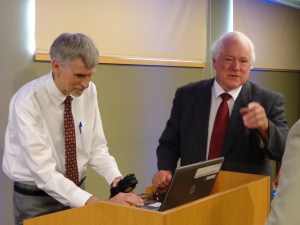
Attorney Zachary Bravos of Illinois

“Over time, the truth prevails,” Illinois defense attorney Zachary Bravos promised his audience—parents falsely accused of abusing their children—at the second-ever Evidence-Based Medicine and Social Investigation conference this past weekend in Vancouver, British Columbia.

After 30 years of injustice rooted in a flawed model of shaken baby syndrome, Bravos said, “the legal system is getting to the point where at least it recognizes the legitimate dispute in the medical community.”

At the same time, he conceded, “These cases are still coming in by the boatload.”

Paul Bayne with sons Baden and Josiah

As his audience was well aware.  Conference organizer Zabeth Bayne and her husband Paul were accused of shaking their infant daughter, only six weeks old at the time, in the fall of 2007. While the Baynes fought the charges, their children spent four years in foster care—except for the youngest, conceived after the accusations, who was taken from his parents at birth and lived his first six months in foster placement.

All four children were finally returned a year ago, after outside experts looked at the medical records and concluded that the girl’s injuries could have been caused by the incident the parents reported at the time:  One of the older boys had fallen on the baby. The Bayne children were all present at the conference and noticeably well behaved, the older two helpful.

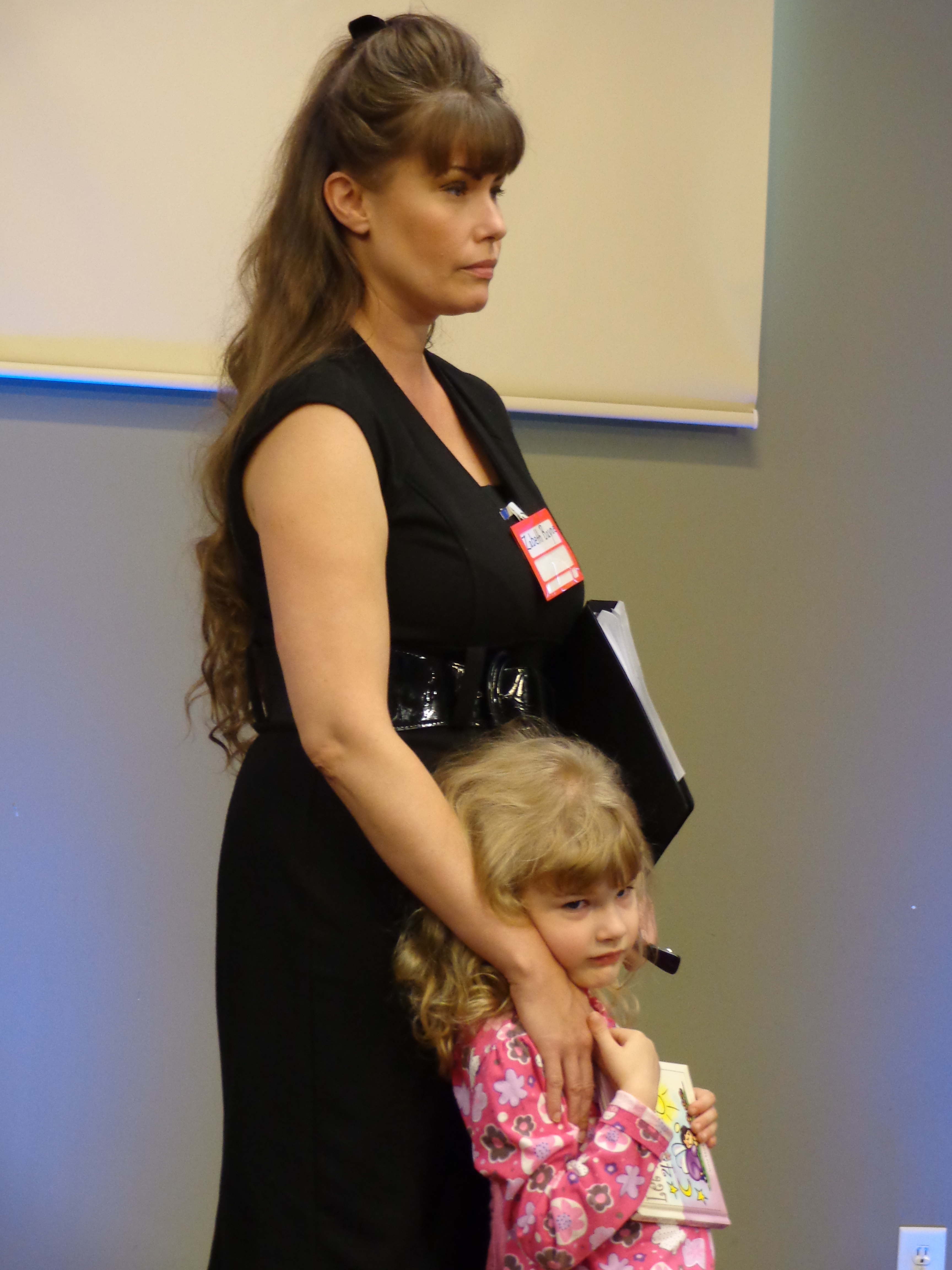
Zabeth and Bethany Bayne

Bravos said that the family’s experience is not unique, with forced foster placement after any accusation. Family court does not operate on the standard of “beyond a reasonable doubt,” but rather on “a preponderence of the evidence,” which takes very little for a finding of abuse. “Once that finding is made, that becomes the reality. If a spouse does not go along with the program, he or she is unlikely to get the children back.

“I can’t blame anybody in that situation who goes along with the program,” Bravos said, “I can’t blame anybody who accepts a plea bargain. But it then becomes another validation for the theory of shaken baby syndrome.”

He advised accused parents to get “every scrap of paper” relevant to their child’s case, from pre-natal records to ER and nurse’s notes. “Parents can often do this even if the attorneys can’t,” he pointed out.

Bravos also recommended filing a pretrial motion—a Daubert motion in some states, a Frye motion in others—asking to exclude testimony about shaken baby syndrome. “We file in every case, and we have lost on every one of those motions,” he reported, “but that’s not what is important.” Filing the motion preserves the right on appeal, he insisted, “These are flares in the night.”

Bravos is a veteran of the legal struggles over “recovered memories,” in which civil and criminal suits were based on presumably suppressed memories of childhood abuse that emerged during certain types of therapy, often including hypnosis. After researchers demonstrated that such memories could also be planted, those cases quit coming to court.

Attorneys Zachary Bravos and Heather Kirkwood

“We could sue for damages” in the recovered-memory cases, Bravos noted. “We could get money out of people’s pockets and, more importantly, out of their insurance companies’ pockets.” Soon insurance companies quit offering coverage to psychologists using those therapies, and the era faded, at least in court.

“We don’t have that leverage now,” he lamented, still maintaining that child-abuse professionals deserve amnesty for their honest opinions. “I don’t blame them, either,” he sighed, “It’s human nature.”

Bravos explained how the legal system let an unproven theory go so far:  Abuse cases are very difficult to begin with, he said, and the evidence can be murky and complex. “When we’re presented with complex problems, it’s really comforting to have a simple answer.” In the case of shaken baby syndrome, that answer is:  The last person alone with the baby is guilty.

Bravos also fought against the satanic ritual abuse cases in the 1980s, discussed on this blog at  “California’s Nightmare Nursery,” one of the on-line chapters of my book.

His talk wrapped up two inspiring and useful conference days that included presentations by expert witnesses from a variety of specialties as well as social service professionals. I will be reporting on more individual talks as I find the time.

My hat is off to Zabeth, her family, and the team of volunteers who made this conference so rewarding. I am dazzled by the resilience of the parents and foster parents I met there, and the people who support them.

-Sue Luttner

6 Comments

Filed under abusive head trauma, AHT, bayne family, EBMSI conference, evidence-based medicine and social investigation, parents accused, SBS, shaken baby syndrome, zabeth bayne, Zachary Bravos

Jury Frees Accused Father, and More

Richard Britts and his daughters-courtesy of Richard Britts

Richard Britts and his daughters
-courtesy of Richard Britts

Illinois father Richard Britts has been cleared of shaking accusations, two years after his younger daughter, three months old at the time, suffered a seizure while in his care. Jurors acquitted him earlier this month after hearing testimony from both prosecution doctors and forensic pathologist Dr. John Plunkett. The child seems to have fully recovered from the incident.

Reporter Patrick Yeagle’s touching and insightful treatment in the Illinois Times makes this observation: 

It’s the latest case calling into question “shaken baby syndrome” – a triad of symptoms that some doctors say can only be caused by violent shaking. Other doctors, however, say existing medical problems can cause the same symptoms, casting doubt on a diagnosis that has landed several people nationwide behind bars.

A Twin Case in Jersalem

A report in The Jersalem Post (“Israel’s best-selling English daily and most-read English website”) offers an unusual slant on a shaking diagnosis with this statement:

Shaken baby syndrome is an intermediate condition between an accident and physical abuse of children.

In the article’s focus case, a father is facing a manslaughter charge in the death of his 4-month-old son, who with his twin sister was rushed to the hospital in January with “internal injuries,” including bone fractures.

The news report explains the prosecution’s thinking:

The state said it will argue that the death was caused unintentionally, but that the father did intentionally commit acts of violence against the baby who died and that those acts of violence did cause the baby’s death, making an allegation of manslaughter appropriate.

A Successful Appeal

An appeals court in Florida has partially reversed a shaking conviction, ordering a new trial because the first judge had excluded biomechanical testimony. The published opinion focuses on what Florida law allows in the testimony of a biomechanics expert. The key paragraph opens:

Kieran Lloyd, who at 7 months eagerly provided data on repetitive bouncing motions by playing in a commercial jumping toy.

Florida courts have held that a biomechanics expert is not qualified to give a medical opinion regarding the extent of an injury. Stockwell v. Drake, 901 So. 2d 974, 976 (Fla. 4th DCA 2005); Mattek v. White, 695 So. 2d 942, 943 (Fla. 4th DCA 1997). However, it has been recognized that a biomechanics expert is qualified to offer an opinion as to causation if the mechanism of injury falls within the field of biomechanics. See Houghton v. Bond, 680 So. 2d 514, 521 (Fla. 1st DCA 1996) (holding that the defense’s biomechanics expert was qualified to testify that 90% of the plaintiff motorist’s injuries were caused by his hitting the dashboard as a result of his failure to wear a seatbelt because the expert was not offering a medical opinion based on brain anatomy and function); Behn v. State, 621 So. 2d 534, 536 (Fla. 1st DCA 1993) (recognizing that an expert in the field of biomechanics would be qualified to testify that a delay in an automobile accident would have altered the fatal consequences)..

The expert whose opinion was prohibited is biomechanic John Lloyd, PhD, whose most recent paper I described in this blog posting. The key paragraph of the opinion concludes:

In this case, Dr. Lloyd was not offering a medical opinion as to the extent of the victim’s brain injury, a matter which was not in dispute. Rather, based upon his biomechanical studies, he opined that (1) a child of the victim’s height and weight could have sustained similar brain injuries by falling out of a day bed; and (2) shaking alone could not have caused such injuries. We conclude Dr. Lloyd was qualified to offer these opinions as to causation because the mechanism of injury (falls and shaking) fell within the field of biomechanics

A Suicide Attempt

Finally, after a preliminary hearing that lasted four days, a California judge has ordered a foster father to stand trial for murder and child abuse in an especially murky case. The defendant called 911 in November of 2010 with a report that a baby was choking on milk. During interrogation later he said he had accidentally knocked the child from the table in his bouncy chair.

Vacaville Reporter Ryan Chalk summarized the medical testimony in a news story, no longer on line, in The Reporter:

Wednesday saw the conclusion of testimony from Dr. Michelle Jorden, a forensic neuropathologist.

Jorden testified that it was her opinion that Buddy had suffered a traumatic brain injury leading up to his choking episode.

“I think it’s a combination of shaking and impact,” Jorden testified as to the cause of the injuries.

And from another day’s coverage:

Dr. Rachel Gilgoff, a child abuse pediatrician, testified that “both sides of his brain were extremely compromised,” as tests revealed he was suffering from significant bleeding and swelling in the brain.

“His injury is extremely consistent with abusive head trauma, or shaken baby syndrome,” Gilgoff testified.

I’m guessing there was  no evidence of impact, because there’s none mentioned in the articles.

The defendant, Reginald Tanubagijo, attempted suicide at some point before the preliminary hearing, according to The Reporter:

Tanubagijo had already been arrested and released on bail, and during that time, Officer Michael Shephard responded to the Tanubagijo home for a report of a suicide attempt.

Shephard testified that he found Tanubagijo slumped over with a bloody towel over his arm and a very large laceration to his wrist.

Inside the kitchen, Shephard testified that he found a note that read, “I killed Buddy.”

Other notes found at the home read, “I did killed Buddy,” and “Tell the judge I did killed Buddy,” the officer further testified.

The child’s biological mother has filed a civil lawsuit charging negligence by the county and others who allowed the defendant to be a foster parent, the most recent coverage reports.

The unnecessary pain of it all makes me sad.

5 Comments

Filed under abusive head trauma, AHT, Gregory Council, PhD, Richard Britts, SBS, shaken baby syndrome

Innocence Network Scouting for Talent

This position has been filled. Katherine Judson started working this October, 2012.

Ms. Judson can provide sample filings and medical references to attorneys defending false accusations of abusive infant head injury. Contact her at katherine.judson@wisc.edu

In a solid piece of good news, the Innocence Network has found three years of funding for a staff attorney to coordinate defense efforts in shaken baby cases.

The job posting, available at http://globalwrong.files.wordpress.com/2012/07/sbs-fellow-07-02-12.pdf, identifies the position as “Shaken Baby Syndrome Litigation Fellow.” Duties will include following the medical and legal controversies that surround SBS and identifying a strategy for reducing the rate of wrongful convictions.

The Innocence Network is a coalition of individual Innocence Projects across the country and around the world. The original Innocence Project, founded in 1992 by Barry C. Scheck and Peter J. Neufeld, looked only at cases in which evolving DNA technology could be used to re-examine tissue samples from earlier trials. Their web site now reports 292 exonerations through DNA testing, 17 of prisoners on death row. Most Innocence Projects are associated with law or journalism schools, allowing them to bring pro bono student work into the appeals process.

Some Innocence Projects have now expanded their scopes beyond DNA, and the Innocence Network has recognized the alarming rate of wrongful convictions in cases of infant head injury. The job summary for the new SBS position notes:

A growing number of cases are now dealing with shaken baby syndrome, where an adult caregiver is convicted of a crime after the death of a child in his or her care, due to the presence of three internal symptoms that doctors once believed could result only from shaking the child.

Given the pace of new cases and new articles lately, the successful candidate will definitely need several of the specified “Key Competencies,” including “Remains organized amidst multiple, competing demands” and “Keeps a sense of humor throughout.”

September 6 update:  They’re interviewing the final candidates now. Look for an announcement soon.

-Sue Luttner

1 Comment

Filed under abusive head trauma, AHT, Innocence Network, SBS, shaken baby syndrome

An Innocence Project Calls for Cases

2020 Update:  The Medill Justice Project has reorganized and refocused, removing the database along with the rest of their SBS matrial.

Journalism students at the Medill Justice Project in Illinois have taken on shaken baby syndrome. This summer, interns and staff members are building a database of all the infant-head-injury cases they can find, through all the channels they can think of.

The team sent out the statement below, asking for input from affected individuals. Do check out the exoneration registry they provide as an example of what they have in mind—those researchers sound eager for input, as well.

-Sue Luttner

From Medill:

“The Medill Justice Project at Northwestern University is working to create a database of U.S. shaken-baby syndrome/ abusive head trauma court cases. We are a journalism organization that examines criminal-justice issues objectively. Our goal is public service: By creating this database, we aim to analyze trends and publish stories that may illuminate this criminal justice issue. As an example, the University of Michigan and Northwestern University law schools created the National Exoneration Registry, which has raised awareness about wrongful convictions: http://www.law.umich.edu/special/exoneration/Pages/about.aspx

Alison Flowers,
courtesy Medill Innocence Project

“The database will include cases in which the defendant is accused of shaking an infant, producing injuries or symptoms associated with, but not limited to, shaken-baby syndrome, abusive head trauma, traumatic brain injury, pediatric traumatic brain injury, and/or shaken-infant syndrome.

“Due to the complex scientific, medical and legal issues surrounding such cases, as well as the statistical task of analyzing the data, we will consult national leaders in these fields as needed.

“If you have information that you are willing to share with us, please contact Alison Flowers at alison.flowers@northwestern.edu or call (847) 467-4945.”

<Fall 2013 Update:  The email address in this press release seems to be obsolete.  The Medill Justice Project web site offers this Contact page: http://www.medilljusticeproject.org/contact/.>

6 Comments

Filed under abusive head trauma, AHT, SBS, shaken baby syndrome

Well Said: Law Reviews Address SBS

Keith Findley, co-director of the Wisconsin Innocence Project, at an SBS meeting in February 2012

With manuscripts from seasoned veterans, young idealists, and players in between, law journals are starting to cover the legal tangle surrounding shaken baby syndrome.

Law professor Keith Findley at the University of Wisconsin Law School, co-director of the Wisconsin Innocence Project, has collaborated with an all-star team to produce a thorough, careful, and readable response to an article that appeared in the April issue of the Houston Journal of Health Law and Policy, from the University of Houston Law Center.

In the original paper (“A Daubert Analysis of Abusive Head Trauma/Shaken Baby Syndrome,” Volume 11, issue 3), attorney and child-abuse pediatrician Dr. Sandeep Narang rejected the mounting criticism of classic SBS theory and argued that, in the absence of a clear alternative diagnosis, the courts should rely on child-abuse experts to tell them whether the presence of the triad represents abuse.

Findley’s response—written with pediatric radiologist Dr. Patrick Barnes, pediatric neuropathologist Dr. Waney Squier, and law professor David Moran from the Michigan Innocence Clinic—is a must-read for anyone facing or defending an SBS accusation. You can download the unpublished draft of “Shaken Baby Syndrome, Abusive Head Trauma, and Actual Innocence: Getting It Right” at http://papers.ssrn.com/sol3/papers.cfm?abstract_id=2048374.

Winter 2013 update:  Dr. Narang’s paper is now available at http://www.law.uh.edu/hjhlp/volumes/Vol_11_3/Narang.pdf, and the response from Findley et al. is now available in situ at http://www.law.uh.edu/hjhlp/volumes/Vol_12_2/Findley.pdf

Past Convictions

The University of Wisconsin Journal of Law Reform, meanwhile, has published a careful analysis that calls for a review of all past convictions in shaking cases. Senior law student Rachel Burg opens her article with the story of Julie Baumer, who was featured in Emily Bazelon’s New York Times Piece in 2010. Baumer served four years in prison before a pro bono attorney brought in new experts, who unanimously and independently diagnosed venous sinus thrombosis. Burg writes, accurately, I’d say:

The truly heartbreaking stories, however, are those that are not told—the innocent people currently in prison, convicted of seriously injuring a child that they loved, based on a medical diagnosis that has become scientifically questionable.

You can download a .pdf of Burg’s article from the journal’s web site, http://www.mjlr.org/2012/05/volume-45-issue-3-spring-2012/

SBS as Established Mistake

In 2011 the Brigham Young University Law Review published a reasoned article calling for bone-density testing before fractures are considered pathognomonic for abuse. Author Matthew B. Seeley, a recent law school graduate, cited shaken baby syndrome as an example of past judicial mistakes. He reviewed the history of the syndrome, including recent rethinking about both the specificity and the timing of the symptoms, and wrote:

There are many lessons to be learned from the history of shaken-baby syndrome, not all of them within the scope of this Comment. One lesson, though, is clear: a misappraisal of whether a certain injury or combination of injuries is pathognomonic can lead to the conviction and imprisonment of innocent caretakers.

Although I’d expect that article to be heading to the archives soon, it is currently available through the Current Issue tab on the journal’s web site, at http://lawreview.byu.edu/issue.php

Shaking as First-Degree Murder

Practicing attorney Derick Vollrath in North Carolina has published an intriguing analysis in the Campbell Law Review, arguing that the prevalence of anti-shaking campaigns is inconsistent with his state’s policy of prosecuting shaking deaths as first-degree murder. Vollrath writes:

These campaigns share a common assumption: a significant number of Shaken Baby Syndrome deaths are not the intended result of a caregiver’s premeditated design.

Caregivers just lose it. They snap. They don’t know any better.  At the same time, North Carolina’s criminal law allows the state’s district attorneys to prosecute these caregivers for first-degree murder,  the most serious criminal charge available.

Although I regret that Mr. Vollrath seems to accept the specificity of the triad, I do appreciate his careful analysis and thoughtful position.  The article is in the current issue of the Campbell Law Review, available at  http://law.campbell.edu/lawreview/

Professor Deborah Tuerkheimer, De Paul University College of Law

The Classic

My files contain a handful of older papers, but the first highly publicized law journal article critical of infant shaking convictions was Professor Deborah Tuerkheimer’s 2009 critique in the Washington University Law Review.

She has since published a follow-up article in the Alabama Law Review addressing the lag in courtroom policy despite the evolving science.

Both Professor Tuerkheimer and Audrey Edmunds—the Wisconsin babysitter whose vacated conviction in 2007 marked the beginning of the Innocence Network’s success with shaking cases—will have books on the shelves soon.  The tide is turning.

©2012, Sue Luttner

4 Comments

Filed under abusive head trauma, AHT, keith findley, narang, SBS, shaken baby syndrome

Exonerations: Brian Banks Didn’t Do It; The Dingo Did

“A Dingo Took My Baby.”  Photo courtesy of http://www.australian-wildlife.com/Dingo-information.html

Two high-profile exonerations have brought criminal injustice into the headlines this summer:  In southern California on May 24, a judge cleared the record of football player Brian Banks, after the woman who accused him of rape recanted. And in Australia on June 11, authorities officially declared that a dingo really did kill Azaria Chamberlain, the infant whose 1980 disappearance on a family camping trip led to a media frenzy and the mother’s murder conviction.

Brian Banks

On the advice of his attorney, Banks plea bargained ten years ago when charged with rape, rather than risk a possible 25-year sentence if convicted at trial. He had already spent more than five years in prison and was on probation with an ankle monitor when he was contacted by his former accuser, who was ready to recant.

The California Innocence Project helped with Banks’s appeal, which associate director Jeff Chinn says has generated more publicity by far than any other case they’ve worked on. The office had no trouble keeping up press files on Ken Marsh, released in 2004 after serving 21 years in a child-death conviction, and even Shirley Ree Smith, whose infant-shaking conviction reached the U.S. Supreme Court last year, but “Brian Banks was next to impossible,” Chinn told me last week.

In the wake of the exoneration, Nancy Petro at the Wrongful Convictions blog published an insightful observation about plea bargaining by innocent people. A subsequent post by Phil Locke about how false confessions can happen criticized the interrogation strategy known as the The Reid Technique®, which is commonly employed with suspects in shaken baby cases. Locke’s blog triggered a fascinating response from Joseph P. Buckley, president of John E. Reid & Associates, the firm that’s trained investigators across the country in the technique.

On the day of Banks’s dismissal hearing, an Associated Press report quoted him making a comment that contains a double meaning for parents accused of abusing their children:

“I know the trauma, the stress that I’ve been through, but I can’t imagine what it’s like to have your child torn from you,” he said. “I don’t know what I would have done without my parents.”

Lindy Chamberlain

When Azaria Chamberlain disappeared from her family’s tent on a camping trip in 1980, her mother Lindy Chamberlain said she had seen a dingo running off with something when she went to check on the baby. Extensive searching produced no body, only the child’s torn jumpsuit. Investigators concluded that the rips had been caused by a knife, not teeth, and accused Lindy Chamberlain of murdering her daughter in the front seat of the family car before raising a false alarm near the tent. After two years of sensationalized press coverage, Lindy Chamberlain was convicted of murder and sentenced to life in prison. Three years later, however,  police searching for a hiker found the child’s missing jacket in a dingo lair, supporting the mother’s original story. The case was re-opened and Lindy Chamberlain was released from prison.

Last week, coroner Elizabeth Morris issued an amended death certificate that officially declared Azaria’s cause of death as a dingo attack. Australian journalist Julia Baird wrote in an editorial in the Australian edition of the New York Times:

We assumed an innocent woman was guilty. We threw rocks at a grieving mother. And a nation founded by convicts somehow forgot the presumption of innocence.

The case had stayed in the news in Australia for years, with early coverage that suggested the Chamberlains had sacrificed their child in a cultish ceremony followed by criticism of the mother for appearing too “icy” and dressing too well.

Public opinion went from hostility to sympathy, however, after Chamberlain’s conviction was reversed and her story told in the successful 1988 film “Evil Angels”—released outside of Australia and New Zealand as “A Cry in the Dark.” Meryl Streep received her eighth academy award nomination for her portrayal of Lindy Chamberlain.

In an article last week in the Australian edition of the New  York Times, reporter James Gorman said the coroner teared up during the presentation of the new death certificate, telling the parents:

“Please accept my sincere sympathies on the death of your special daughter. I am so sorry. Time does not remove the pain and sadness of the death of a child.”

For a time after her release from prison, Lindy Chamberlain, now Lindy Chamberlain-Creighton, lived in New Zealand, where Matthew Theunissen at the New Zealand Herald reported on her new project, a book about forgiveness. Like so many people who’ve been falsely accused of killing or injuring children, she says she would like the people who press these cases to stop. “I doubt that it’s ever going to happen,” she conceded, but:

“I’ve got a punishment I’d like to see for certain individuals who have been involved with this case, deliberately misconstruing the truth. I reckon it would be really nice not to do it again, to see them have to pay in a charitable fund for other victims for where the system had gone wrong.

“If they did that I’d know that they’d put their bad behaviour behind them and really meant they were sorry.”

®The Reid Technique is a registered trademark of John E. Reid & Associates.

Leave a comment

Filed under "A Cry in the Night", abusive head trauma, AHT, Azaria Chamberlain, Brian Banks, dingo, Evil Angels, Lindy Chamberlain, parents accused, SBS, shaken baby syndrome