Arizona Father Freed: Dawn of a Sunnier Era?

Drayton Witt and his wife
Courtesy Arizona Justice Project

After four years of hard work by a team of pro bono attorneys and physicians, the state of Arizona agreed last week to vacate the second-degree murder conviction of Drayton Witt, a young father whose 5-month-old son Steven had suffered a lifetime of medical problems before his final, catastrophic seizure in June of 2000.

Witt’s case was way beyond a triad-only conviction:  Not only did the autopsy reveal no abrasions, grip marks, fractures, or other signs of assault, but the child had been born in respiratory and neurological distress, with the umbilical cord wrapped tightly around his neck, followed by a relentless series of infections, fevers, and bouts of vomiting. A month before his meltdown, Steven spent 6 days in the hospital because of seizures that were never explained, and incompletely controlled with medication.

Prosecution doctors at Witt’s 2002 trial rejected the importance of Steven’s medical history, however, and testified that the presence of the triad proved he had been shaken immediately before he fell unconscious while in the care of his father.

Last year the Arizona Justice Project showed Steven’s medical records to other experts,* who unanimously rejected the shaking diagnosis. Several of them independently noted evidence of venous thrombosis.

Then the attorneys showed these reports to the medical examiner who conducted the original autopsy, and asked him to reconsider his 2002 testimony. In a declaration submitted in February of 2012, Dr. A.L. Mosley noted that medical thinking has changed about the significance of the triad and concluded:

Steven had a complicated medical history, including unexplained neurological problems. He had no outward signs of abuse. If I were to testify today, I would state that I believe Steven’s death was likely the result of a natural disease process, not SBS.

Prosecutors could still recharge Witt, but he has been released from prison for now, with no bail, house arrest, or electronic monitoring.

The vacation of Witt’s conviction joins a handful of other victories for the doctors and lawyers who are fighting for justice in SBS cases, beginning with the reversal of the Audrey Edmunds conviction in 2008 and including the commutation of Shirley Smith’s sentence earlier this year. Witt’s case was pressed by the Arizona Justice Project, a member chapter of the Innocence Network, which has started looking at child-death cases within the past few years. I look forward to more successes.

Emily Bazelon published this article in Slate about Drayton Witt while the case was still under appeal. The Wrongful Convictions Blog posted this item that names the attorneys.

*Forensic pathologist Dr. John Plunkett, pediatric radiologist Dr. Patrick Barnes, neuropathologist Dr. Waney Squier, pediatric opthalmologist Dr. Horace Gardner, biomechanic John Lloyd, PhD, and retired pediatric neurosurgeon Dr. A. Norman Guthkelch, the first person to suggest in writing that shaking an infant could produce subdural hematoma, in a 1971 article in the British Medical Journal. The Witt case is the one Dr. Guthkelch was talking about in the interview on NPR a year ago, when he said, “I wouldn’t hang a cat on the evidence of shaking as presented.”

If you are not familiar with the debate surrounding shaken baby syndrome, please see the home page of this site.

-Sue Luttner

18 Comments

Filed under abusive head trauma, AHT, SBS, shaken baby syndrome, Uncategorized

Chasm Between Sides Yawns Wide

A touching feature story out of New Zealand highlights the lack of communication between the two sides in the shaken baby debate.

Sunday Star-Times reporter Tony Wall writes about a stay-at-home father who was found innocent at trial of a shaking assault on his 4-month-old daughter, the younger of his two children—the defendant was toasted by incredulous jury members at a nearby pub after the verdict. Quoted in the article with the pseudonym “David,” the father describes his treatment by the staff at Starship Children’s Health as “bloody awful.” He is pushing for a review of how the Te Puaruruhau child-protection unit handles cases like his.

Last week’s coverage follows up on a 2010 Star-Times investigation, which “revealed concerns that the unit was acting like a police station, treating parents as guilty until proven innocent and mis-diagnosing accidental head injuries as assault.”

The child-protection team stands by its diagnosis, Wall reports:

Patrick Kelly, Te Puaruruhau’s clinical director, believes his staff got it right and rejects the need for a review.

“We remain of the view that the diagnosis of non-accidental head injury was the correct diagnosis,” he said. He said the case was independently peer reviewed by Ken Feldman of the paediatrics department at the University of Washington, who gave evidence for the prosecution.

Kelly said only 56 per cent of cases where non-accidental head injuries in children were diagnosed led to criminal trials, and of those only 66 per cent ended in a conviction, illustrating the high standard of proof required in such cases.

“Given these statistics, the [not guilty] outcome in this case is not unexpected and does not require a review of clinical practice at Starship.”

The not-guilty verdict seems not to have swayed social services, either.  “David’s battle is not over,” Wall  notes, “He now has to convince Child, Youth and Family to let him have access to his two kids, including the girl, who has fully recovered. He has the support of his partner, the mother of the children.”

The Sunday Mercury in Britain, meanwhile, has revisited the Alan Cherry case, which was identified as problematical in a 2005 review of child-death convictions in England. The court declined to reverse the judgment at that time, or again in 2007, but Cherry is asking for another review. In a feature story earlier this month, reporter Adam Aspinal writes :

Now a growing number of people, backed by changing scientific opinion on so called ‘shaken baby syndrome’, have begun to doubt [Cherry’s] conviction.

They include Home Office pathologist Prof. Helen Whitwell.

In a 2007 report for the CCRC, she said she was no longer certain that Sarah’s injuries – brain swelling, bleeding in the tissue between the brain and the skull, and bleeding behind the eyes – proved that she was shaken violently.

She concluded that the injuries were more likely to have been brought about due to a previous injury.

‘Shaken baby syndrome’ remains the subject of fierce debate in medical circles and the courts.

Another high-profile child-death case has resurfaced in Texas, where a judge has recommended overturning the 1995 murder conviction and death  sentence of Cathy Lynn Henderson. Ms. Henderson claimed the infant she was watching slipped from her arms and fell about 4 feet onto a concrete floor. She panicked, buried the infant, and fled to another state, where she was arrested 11 days later—the search, arrest, and trial received prominent news coverage. Prosecution doctors testified that an accident would not account for the child’s injuries, which must have been inflicted.

Ms. Henderson came within days of execution in 2007, but a state court of appeals voted 5 – 3 to stop the proceedings, based on the growing debate surrounding infant head-injury and the consequent recantation by a premier prosecution witness. Former medical examiner Dr. Roberto Bayardo had testified in 1995 that the child would have had to fall from “higher than a two-story building” to receive the head injury that killed him. In 2007, however, according to a recent story in the Statesman by Chuck Lindell, Bayardo submitted an affidavit and testified that “recent advancements in the understanding of pediatric head injuries indicates that relatively short falls onto a hard surface could produce similar injuries to those he found on Brandon during a 1994 autopsy.”

The StandDown Texas Project offers historical coverage of the case beginning at this link.

Finally, a court in Florida has convicted a mother of murder in the death of her toddler, as reported by Vishal Persuad at the Ocala Star-Banner.

Even as old cases drag on in the appeals courts, new cases accumulate.

4 Comments

Filed under abusive head trauma, AHT, SBS, shaken baby syndrome

Florida Conviction Brings Out the Worst in Human Nature

These tragedies trigger such hatred.

A father in Florida, 28-year-old Jonathan Gelb, has been convicted of aggravated child abuse for a presumed shaking assault on his son in 2008, when the boy was only two months old. Young Lukuz developed breathing problems while in the care of his father, and at the hospital was found to have a broken leg and brain injuries “consistent with shaken baby syndrome.” The child had no bruising or other external signs of assault.

What dismays me right now is the comments posted on the internet following the Tampa Bay Times coverage of the conviction. We are all horrified at the notion of shaking and battering a helpless baby, but these cases seem to encourage people to celebrate other forms of  violence. “Put him in a paint shaker for 30 years” is unsettling, but it didn’t bother me as much as, “Ha, ha, dirtbag. Can’t wait until you get shaken by your booty in prison! Better yet, kill yourself and make the world a better place.”

In their defense, these people have been told that this father is guilty of a heinous crime. We are the heretics, those who understand how wrong a diagnosis of infant shaking can be. Still, I can’t help feeling like we’re tapped into some direct line to human blood-lust. The hatred comes quickly and unfettered.

The case coverage earlier in the week received fewer comments, and two of them were from our side, but I haven’t yet figured out how to respond to yesterday’s article and comments. Good luck to us all.

2 Comments

Filed under abusive head trauma, AHT, SBS, shaken baby syndrome

The Supremes Strike Again

The Supreme Court has made another unfortunate decision in a child-death case, with Justices Sonia Sotomeyer, Ruth Bader Ginsburg, and Elena Kagan dissenting.

Yesterday’s ruling allows prosecutors to retry Alex Blueford in Arkansas on charges of capital murder and first-degree murder in the 2007 death of one-year-old Matthew McFadden Jr., the son of Blueford’s girl friend.

The jury in Blueford’s trial had been instructed to consider four possible charges in sequence, the most serious first:  Capital murder, first-degree murder, manslaughter, and negligent homicide. The jurors had agreed among themselves that Blueford was innocent of capital murder and first-degree murder, but then found themselves deadlocked on the manslaughter charge. The judge declared a mistrial and the prosecution prepared to retry Blueford on all four charges, but his lawyers argued that would be double jeopardy, since the jurors had agreed unanimously he was innocent of the two most serious charges.  The Supreme Court rejected that claim, saying the interrupted verdict did not constitute a legal finding.

At the time of Matthew’s death, Blueford reported that he had accidentally knocked the child to the floor, but prosecutors said he had slammed the child to death.

For more information see the Washington Post coverage and the decision itself.

For the story of the Supreme Court’s last unfortunate child-death decision, see this post.

Leave a comment

Filed under Uncategorized

A Push for Pamela Jacobazzi

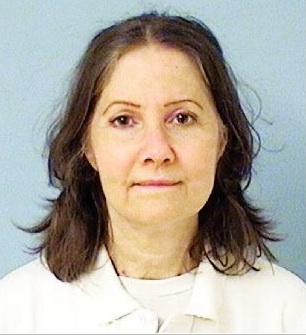
Pamela Jacobazzi at the Lincoln Correctional Center

To an enthusiastic response from friends and family of a beloved child-care provider in Illinois, Bill Clutter has cranked up his campaign to free  Pamela Jacobazzi, in prison since 1999  for the presumed shaking death of a 10-month-old boy.

“Pam Jacobazzi is innocent,” says Clutter, a private investigator and founder of the Illinois Innocence Project (IIP). “She’s been sitting in prison too long. [Governor] Pat Quinn should follow the example of Jerry Brown in California.”

Clutter has started an on-line petition asking for a commutation of Jacobazzi’s sentence, in support of a clemency petition filed with the governor.

Coverage of the case last year in the Illinois Times characterized the legal developments as “part of a national trend in which people accused of killing infants are challenging in court old assumptions about shaken baby syndrome.”

An appeal of the case is also pending, pushed by the IIP, based on medical records not known to the defense expert at trial:  The child had sickle-cell trait and abnormal hemoglobin, as well as a history of infection, fever, anemia, and dehydration.

After watching the appeal drag on for years, Clutter is now “beating the drums and getting people out to sign the petition.” If you didn’t follow the first link to it, use this one.

Historical note:  Free-lance science writer Lee Scheier brought the Jacobazzi case to my attention in 2005, in a prescient piece published in The Chicago Tribune Magazine, at this link, long before the media awareness that’s been demonstrated in the recent Shirley Smith coverage.

Leave a comment

Filed under abusive head trauma, AHT, SBS, shaken baby syndrome

Father Not Guilty in Minnesota

A Minnesota jury found a father not guilty this week on all three counts against him stemming from the 2009 death of his 4-month-old son.

Piecing together the available press reports, the trial seems to have taken two weeks, with the prosecution resting on Monday, April 23.  The defense started its case on Tuesday morning, followed by closing arguments and a jury decision on Wednesday, April 25.

The background:  Defendant Damien L. Marsden was at home with his 4-month-old son Rylin for approximately half an hour on August 2, 2009, while the boy’s mother was out shopping. Marsden was reportedly grilling hamburgers outside. When the boy’s mother arrived home, the two of them went inside together, found the boy “pale and lifeless,” and called 911.

During defense testimony the child’s grandmother, Tammy Klein, told the court that the infant had been dropped at her day care facility just a week before the incident, on July 23, which left him crying and with a red mark on his head. The elder Marsden reported that his son had fallen from a bed on August 1, the day before he was rushed to the hospital.

Prosecution witness Dr. Arne Graff, however, testified that the boy died from “non-accidental head trauma” that could not have been caused by a short fall.

After Graff’s testimony, reporter Chris Bieri of the Grand Forks Herald wrote

Graff, a child abuse pediatrics specialist from Sanford Health in Fargo, maintained that the condition responders found Rylin Marsden in was an immediate response to trauma, not a reaction to an earlier fall or accident.

He said the spreading of blood in Rylin Marsden’s head was consistent with a rotational injury or shaking, not just an impact injury.

Graff said during an examination of the child, he noticed retinal hemorrhage and said the results of a CT scan showed brain bleeding, both consistent with having his head shaken.

Graff said there was nothing in Marsden’s medical or family history that would have complicated a different type of injury, causing it to become deadly.

Forensic pathologist Jonathan Arden testified for the defense, as described in a later article:

Arden, an expert anatomic and forensic pathologist based out of northern Virginia, provided testimony supporting a theory that Rylin Marsden’s hospitalization and eventual death were the result of a pair of falls, the first coming at Klein’s daycare.

Arden’s theory was initially based on his finding that there were signs of two different injuries, and that re-bleeding of the initial injury in the boy’s head caused him to be hospitalized on Aug 2.

The second injury was purported to be a barely more than 2-foot fall from a bed onto a carpet on Aug. 1. Arden said the timeline of injuries on July 23 and Aug. 1 were consistent with what he saw in the healing of initial injury and re-bleeding.

Arden went over a number of CT scans with the jury and testified that his reading of initial CT scans having both fresh and healing hemorrhages were in agreement with a case radiologist’s findings.

Prosecutors inferred Arden was a witness for hire — he runs a consulting firm and testified to charging $400 an hour for consulting and $4,000 per day for court appearances.

The trial also featured the new trend toward avoiding the phrase “shaken baby syndrome” in favor of “abusive head trauma” or “non-accidental head trauma.” The coverage of the defense testimony included this report:

Klein testified Graff continually told the extended family he knew it was a shaken baby, a term Graff said under oath on Monday he didn’t use.

Another day’s coverage read:

There also was testimony on the term “shaken baby syndrome,” which Graff said he only uses to describe what is now referred to as “non-accidental head trauma.”

In summary, this case sounds like a classic of the genre. The earlier articles seem no longer to be on line, but the final Grand Forks Herald article is at:    Marsden Found Not Guilty on All Three Murder Counts

Leave a comment

Filed under abusive head trauma, AHT, SBS, shaken baby syndrome

Surfing the Web With Shirley Smith

Governor Jerry Brown’s decision earlier this month to commute the sentence of Shirley Ree Smith has given shaken baby syndrome another run in the news, where the coverage shows a new awareness of the changing landscape.

The day after the announcement, for example, NPR reporter  Joe Shapiro said on a segment of All Things Considered,  “now doctors and scientists  have a better understanding of other causes . . . that can mimic the signs of child abuse.”

In an excellent piece on ProPublica, reporter A.C. Thompson found room in the second paragraph to mention the new, conflicting analyses of the medical evidence released a few days before the clemency announcement.  Los Angeles District Attorney Steve Cooley had asked for expert reviews of the evidence in Smith’s case, and he received three quite different reports, two of them raising questions about the conviction.

From the District Attorney's letter to Governor Brown

The ProPublica web site has also posted a fascinating document, the letter from District Attorney Steve Cooley to Governor Jerry Brown, sent in January while Brown was considering the request to commute Smith’s sentence. The main point of the letter is not Smith’s guilt or innocence, but, as the letter puts it, “the current state of the science that forms the foundation for Abusive Head Trauma (AHT, which was formerly, colloquially referred to as Shaken Baby Syndrome (SBS)).” Cooley cites informational materials from the U.S. Department of Health and Human Services, a journal article, and a legal decision to support his point that “AHT is widely accepted by both the medical and legal communities as a diagnosis and cause of death.”

Which strikes me as irrelevant to both Shirley Smith’s case and the debate surrounding shaken baby syndrome. The question at hand is is:  Does the evidence prove that Etzel Glass died from a shaking assault? The larger question is:  Does intracranial injury prove abuse without other signs of violence?

Presumably the letter to Governor Brown was drafted in response to the statement in support of clemency  submitted by Ms. Smith’s attorneys in December. Although that document does quote from Supreme Court Justice Ruth Bader Ginsburg’s minority opinion in the Supreme Court decision, the bulk of the document addresses the evidence in Smith’s case. I have to conclude that the main goal of Mr. Cooley’s letter was to head off any reference by Governor Brown to the debate surrounding a diagnosis of shaking.

Brown’s commutation order did not in fact reference the wider debate, although it did quote Justice Bader’s minority opinion in the Supreme Court decision that “there has very likely been a miscarriage of justice in this case.”

Los Angeles Times reporter Carol J. Williams quoted from both Cooley’s letter and the new, conflicting reviews of the evidence in her follow-up story that ran the day after the governor’s announcement. That treatment also reveals a little bit more about Smith, who found herself homeless in Los Angeles for a time after her release from prison, because she was not allowed to leave the state and therefore could not rejoin her daughter and grandchildren in Illinois.

The day of the announcement, Emily Bazelon at Slate wrote a quick but thorough piece concluding that  Smith’s case could give other innocent people in prison “a shot at getting their lives back.” Bazelon reiterated her position from the  winter 2011 article  in The New York Times Magazine, that “the science underlying shaken-baby prosecutions is shifting, with critics arguing that alternative explanations are not adequately explored. But a new concensus—legal or scientific—hasn’t yet emerged from the bitter fight, in some cases, over the diagnosis.”

In the on-line ABA Journal coverage, reporter Martha Neil wrote, “Smith’s case is one of a number of convictions in which evidence once thought to be determinative concerning shaken-baby deaths is now being questioned.” The two reader comments that made it past the moderator have both been in support of the commutation.

Shirley Smith is now living with her daughter in Minnesota, where CBS News in Minneapolis ran a touching interview that did not address the medical issues, and a CBS/Fox station prepared a feature segment that was even briefer. Neither posting on the internet seems to have received reader comments.

The Associated Press syndicated a story, picked up at least by USA Today, that did not refer to the larger debate but did cite a number of statements in Smith’s favor.

SFGate in San Francisco posted the Chronicle’s coverage, which evoked both positive and negative reactions from readers. The piece was short, but reporter Bob Egelko summarized the situation surrounding both Smith’s case and the larger question in one accurate paragraph:

Recently, however, a pathologist in the coroner’s office reviewed the case and found little evidence of traumatic injury. Some researchers have also questioned the validity of shaken-baby syndrome, a term doctors have used for 40 years to describe often-fatal head injuries suffered by small children with no outward signs of abuse.

A site called The Inquisitr pulled together an article of its own from a number of sources. For whatever reason, maybe the unfortunate headline, reader comments on that site have been 100 percent negative.

Blogger Kate Jane posted a short piece asking for reader comments, which hasn’t received much response.

I doubt I’ve found them all.  Please let us know if you come across something interesting I’ve missed.  Thanks.

-Sue Luttner

2 Comments

Filed under abusive head trauma, AHT, SBS, shaken baby syndrome

Clemency Granted for Shirley Smith

Governor Jerry Brown commuted the sentence this morning of Shirley Ree Smith, whose case will remain a landmark in the arena. Shirley and her family are jubilant, of course, even though her conviction stands.

“I’ve been waiting so long for this day,” she said on the telephone this afternoon, “I can’t believe it’s finally here.”

Shirley said she was especially grateful to the people who helped her, directly and indirectly. “I would like to thank everyone who stood in my corner and fought for justice with me all these years,” she said, “I did not have to stand alone.”

Justice is not complete, Smith conceded, as she still has a criminal record, “but I can get on with my life now, and the story will help people find out what’s going on with shaken baby syndrome.”

In an interview in January, while waiting for the results of the clemency petition, Shirley’s daughter Tomeka Smith reflected, “In a way we don’t want the clemency, because that means she’s done something wrong and she needs to be pardoned. That’s sad. That’s not what she wants.”

This morning, though, when the phone call came from the attorney, “We were all clapping and jumping and shouting and hugging, the whole family,” Tomeka said, adding, “Still, we’d like to see something official, a piece of paper, to let us know it’s really over.”

As followers of this blog know, Shirley Smith was convicted in 1997 for assault on a child resulting in death. The child was Etzel Glass, Tomeka’s youngest, 7 weeks old at the time. The family was staying with relatives and Shirley was sleeping in the living room with her grandchildren, while Tomeka slept in the bedroom a few feet away. Shirley says she found Etzel unresponsive at about 3 am and brought him in to Tomeka, who called 911.

At the hospital, doctors found only one of the three signs usually used to diagnose infant shaking:  subdural hematoma. At Smith’s trial, Dr. Eugene Carpenter and Dr. Stephanie Ehrlich from the Los Angeles County coroner’s office testified that Etzel had died instantly when his brainstem was torn during a shaking assault, leaving no time for the other symptoms to develop.

Smith has had the full support of her family, from the moment a social worker first raised the question of abuse. “Of course my mom is innocent,” Tomeka said in January. “She would never hurt one of her grandkids.”

Smith served a decade in prison before the Ninth Circuit Court vacated her conviction on appeal in 2006, declaring the evidence against her constitutionally inadequate. Since then she has been out of prison but constrained in her movements while the state appealed the circuit court’s decision.

That appeal reached the Supreme Court this past fall. The high court reinstated her conviction, but in a ruling that didn’t address her guilt or innocence: their argument was that the appeals court should not override a jury’s decision. The written opinion even recognized that doubts about her guilt are “understandable,” and it contained a potent dissenting opinion from Justice Ruth Bader Ginsburg that outlined the substantial medical evidence against the traditional model of shaken baby syndrome. (The full opinion is available at this link.)

Through it all, Shirley Smith has kept her faith and her spirit, proving the value of a supportive family. DePaul University law professor Deborah Tuerkheimer, a critic of convictions based solely on the triad (see her op ed from fall 2010), recently called Shirley one of the “incredible figures in this saga.”

The LA Times report about today’s clemency announcement contains only the bare facts, but the news is good.

Shirley says she’s already been called by both national and local news teams, so look for more news stories on her case. Her first television interview is this evening.

If you’re not familiar with shaken baby syndrome and the arguments surrounding it, please see the home page of this blog.

14 Comments

Filed under abusive head trauma, AHT, SBS, shaken baby syndrome, Uncategorized

Shirley Ree Smith Update and More

While Governor Jerry Brown considers the clemency request for Shirley Smith, two new physicians have registered conflicting opinions about the cause of her grandson’s death, after Los Angeles District Attorney Steve Cooley requested  a review of the evidence.

The article in the Los Angeles Times about the new developments, by reporter Carol J. Williams,  includes this fascinating paragraph:

In a letter to the governor that Cooley’s office made available, the district attorney said he was mindful of Smith’s lack of criminal history, age and good behavior in prison, indicating that he wasn’t opposed to clemency on “equitable grounds.” But he cautioned Brown against rejecting “the well-documented and widely accepted medical diagnosis, AHT,” saying that would undermine public confidence in diagnoses of child abuse.

I might be starting to understand why the district attorney won’t just admit that the medical facts don’t support a diagnosis of shaking in Smith’s case:  If he concedes that she might be innocent, her trial demonstrates how easy it is for a jury to convict on the basis of sincere but unproven medical opinion.

Williams also posted a blog on the subject at  http://www.latimes.com/news/local/la-me-shaken-baby-evidence-20120330,0,6785859.story

Meanwhile, the Huffington Post has published a poignant update on a tragic case of mistaken child-abuse diagnosis:  Much too late for the parents, victims of an apparent murder-suicide, doctors now acknowledge that the couple’s 3-month-old daughter was suffering from a debilitating genetic disorder.

Leave a comment

Filed under abusive head trauma, SBS, shaken baby syndrome, Uncategorized

Shirley Smith’s Case: NPR, ProPublica, and FrontLine Still Covering SBS

Morning Edition aired a story about Shirley Smith this morning, at http://www.npr.org/2012/03/29/149576627/new-evidence-in-high-profile-shaken-baby-case

ProPublica also has a story posted, with excerpts from the FrontLine interviews:  http://www.propublica.org/article/video-shirley-ree-smith-in-her-own-words

Leave a comment

Filed under abusive head trauma, AHT, SBS, shaken baby syndrome