Category Archives: abusive head trauma

Celebrating a Temporary Reprive

Following a flood of media coverage and days of intense legal maneuvering, Texas father Robert Roberson is still alive, after the state supreme court issued a temporary reprieve minutes before he was scheduled to be executed last evening.

All of Robert’s appeals and petitions had been denied, but on Wednesday the Criminal Jurisprudence Committee in the state’s House issued a subpoena for Roberson to appear for a hearing next Monday, a move that raised a jurisdictional dispute and led to a series of motions, counter-motions, and, eventually, a stay, for now.

“The vast team fighting for Robert Roberson – people all across Texas, the country, and the world – are elated tonight that a contingent of brave, bipartisan Texas lawmakers chose to dig deep into the facts of Robert’s case that no court had yet considered and recognized that his life was worth fighting for,” Roberson’s attorney Gretchen Sween said Thursday night.

Roberson enjoys the support of the Innocence Project; a number of physicians, scientists, and attorneys who question the SBS hypothesis; a majority of the Texas state legislators; and his own friends and family as well as other wrongly accused families, autism and disability-rights groups, and attorney/novelist John Grisham.

For more from this blog on Robert’s case, please see Looming Execution in Texas Stirs Action Worldwide and Hustling to Stop an Execution. If you haven’t yet signed the Innocence Project petition to stop the execution, the petition is still active and the number of signers is still growing.

Meanwhile, the case has triggered local, national, and international media coverage, shining a much-needed spotlight on the debate surrounding Shaken Baby Syndrome. Some of the news treatments:

-Sue Luttner

If you are not familiar with the debate around Shaken Baby Syndrome/Abusive Head Trauma, please see the home page of this site.

8 Comments

Filed under abusive head trauma, AHT, parents wrongly accused, SBS, shaken baby, Uncategorized

A Must-Read Book From a Potent Team

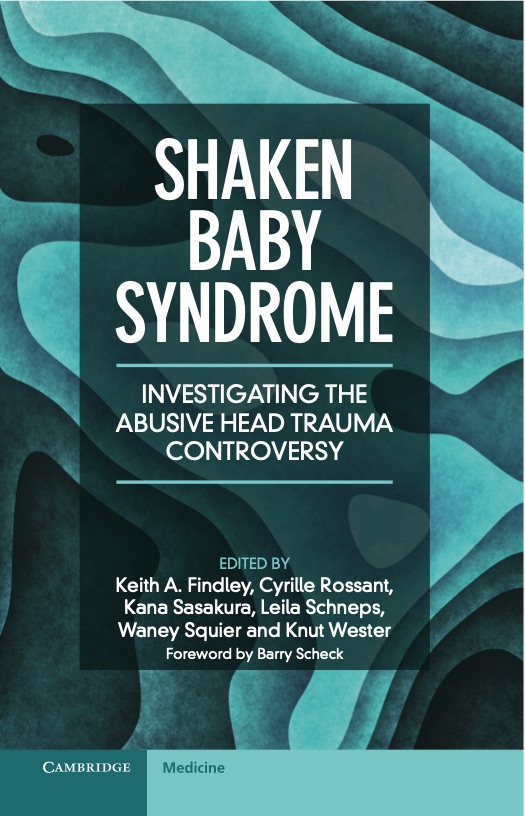
A bold new book from Cambridge University Press assembles, in one passionate collection, the fundamental arguments for reconsidering 50 years of shaken baby convictions, Shaken Baby Syndrome: Investigating the Abusive Head Trauma Controversy.

The authors, 32 experts with impeccable credentials from a range of medical, mathematical, scientific, and legal specialties, bring both years of experience and a fresh, international perspective to the debate.

One chapter, for example, opens with a personal anecdote from retired Norwegian neurosurgeon Knut Wester, who has a scientific interest in external hydrocephalus. Asked his opinion in a shaking case, he writes, he was surprised to receive images that looked like a familiar presentation of Benign External Hydrocephalus (BEH) complicated by bleeding. His report convinced the court to drop the charges. Then he was asked his opinion in a second case, and again the images looked like BEH with bleeding. Swedish neuroradiologist Johan Wikström, Wester’s co-author on this chapter, shares his own parallel experience, all as a preface to their examination of the medical and statistical facts suggesting that BEH can be and often is misdiagnosed as SBS/AHT.

In a companion chapter, the two collaborate with pediatric neurologist Joseph Scheller in the US on a groundbreaking survey of neuro-imaging in the child-abuse literature. Their findings appear in this book for the first time anywhere. The implications, as the authors write, are “frightening.”

The book also brings a level of rigorous mathematical analysis to the SBS/AHT research I’ve never seen before.

A chapter by mathematician Leila Schneps at the French National Center for Scientific Research (Centre national de la recherche scientifique), for example, explores the logical and numerical errors in a seminal 1991 article [1] from the Children’s Hospital in San Diego, in which researchers advised that parents who report “short indoor falls” to explain serious injuries are lying.

Schneps has already published a broader look at the short-fall literature [2], where she found one study [3] that not only reported a few deaths following short falls but noted that some of the children could have been saved with prompt medical attention. In this book, Schneps takes a deeper dive into the San Diego analysis, concluding, “These articles claiming that short falls cannot cause serious harm are not only dangerous, but they are wrong.”

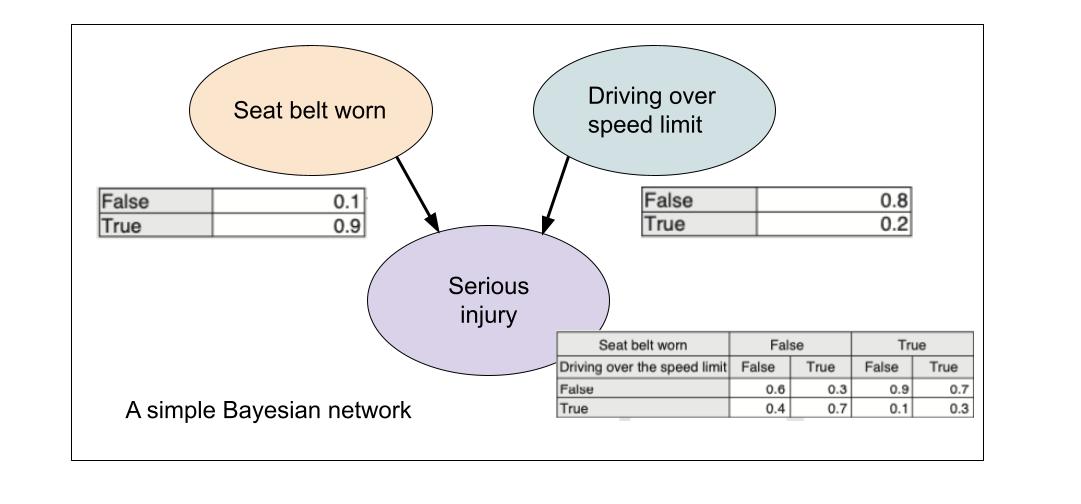
Similarly, British mathematician Norman Fenton and Australian health-information technologist Scott McLachlan devote their chapter to a “causal Bayesian network model,” to examine the methodology of the “Cardiff study” [4], a meta-analysis that combined data from six individual studies to build a tool for confirming a shaking diagnosis based on medical findings.

In its conclusion, the Cardiff paper offered itself as a rebuttal to Deborah Tuerkheimer’s 2009 law review article positing that the scientific underpinnings of shaking theory had crumbled. Rather, the Cardiff authors wrote in 2011, their analysis “confirms the association of AHT with specific combinations of clinical features.” Fenton and McLachlan’s modeling, however, reports “strong biases and errors” built into that work.

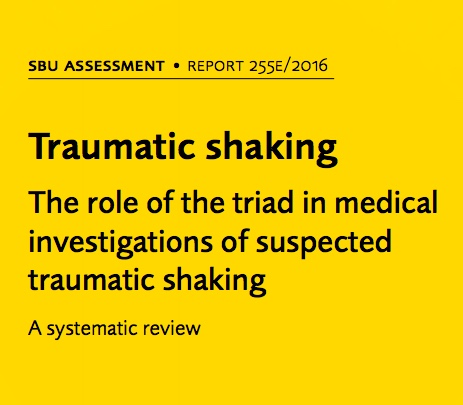
Meanwhile, medical ethicist Niels Lynøe and forensic medicine specialist Anders Erikssøn contributed a chapter on their own examination of the SBS controversy, inspired by the “massive and surprisingly critical international reaction” to a literature review they worked on in 2014-2016 for the independent Health Technology Assessment authority in Sweden (SBU in English).

Lynøe and Erikssøn had served on a team of SBU research experts who looked only at the study designs in the SBS literature, focusing on the question: ”With what certainty can it be claimed that the triad, subdural hematoma, retinal hemorrhages and encephalopathy, is attributable to isolated traumatic shaking (i.e. when no external signs of trauma are present)?”

Citing the prevalence of circular reasoning in the studies, the team concluded that there was “insufficient evidence on which to assess the diagnostic accuracy of the triad,” triggering a flood of denunciations from the community of child abuse experts. After studying the content of the literature, and the criticisms of their work, Lynøe and Erikssøn now report that proponents of SBS theory disagree with skeptics not only about whether and how shaking leads to the triad but about “whether there is a controversy over SBS/AHT at all.” Having experienced the controversy first hand, they suggest that this denial may be “a symptom of a crisis within the prevailing AHT research field.”

Key to pulling together this international team was French neuroscience researcher and software engineer Cyrille Rossant, whose son was diagnosed as a shaken baby seven years ago—see his blog posting about his experience. (If you or a family member has been interrogated in one of these cases, please see my earlier posting about Rossant’s request for letters.)

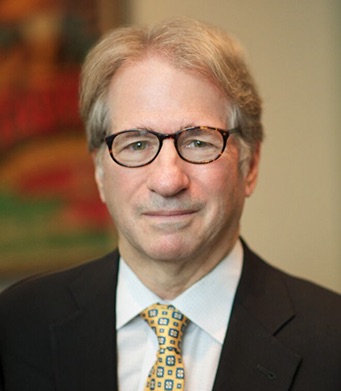
The book also includes veteran voices in the arena—like Innocence Project founder Barry Scheck, who defended “Boston nanny” Louise Woodward in the case that brought shaken baby into the headlines in 1997. Scheck’s foreword offers a readable summary of the evidence and testimony that presumably informed the judge’s decision, after Woodward’s second-degree murder conviction, to reduce the charge to manslaughter and set the sentence to time served.

Law professor Keith Findley, a key player since he won a pivotal appeal in 2008 on behalf of child care provider Audrey Edmunds, is surely the most qualified attorney in the arena to have written the chapter on appealing SBS cases, and he brings an insider’s view to his analyses of the confession research as proof of SBS theory and the challenges of cognitive bias.

And of course neuropathologist Waney Squier (winner of the Innocence Project Champion of Justice Award in 2016), in collaboration with forensic pathologist Tommie Olofsson at Uppsala University Hospital, provides a readable overview of the neuropathology of SBS/AHT, addressing some of the misconceptions propagated in the child-abuse literature.

A chapter Squier co-authored with radiologist Julie Mack examines the imaging of the most common brain findings in SBS/AHT cases, with commentary on what isn’t yet understood and the limitations of what imaging can reveal.

The chapter on scientific evidence in the courtroom, by public defense attorney Kathleen Pakes, caught me by surprise, flatly rejecting courtroom testimony from a physician about mechanism of injury.

In conversation Pakes says, “If these were civil cases, if we were Monsanto or Dow Chemical and we had the money to question the science, this stuff would never be allowed.”

Pakes is more restrained in print, where she addresses the difference between a doctor’s ability to identify and treat a medical condition and that same doctor’s ability to divine what caused the condition—a distinction that’s been pivotal in employee-injury and product-liability litigation. Pakes also reviews the circular reasoning in the literature, the questions raised by biomechanics research, and the subjective nature of the diagnosis, concluding, “a consistent application of governing legal principles would exclude opinion evidence purporting to ‘diagnose’ SBS/AHT.”

And there’s lots more–the international statistics, for example, and the histories of SBS in the Swedish and Japanese courts; Marta Cohen on misdiagnosis of SIDS. This book deserves more coverage than I have room to give it in one posting. If you are an attorney working in this vital, complex, divisive arena, or anyone trying to figure out what’s going on, you need to read Shaken Baby Syndrome: Investigating the Abusive Head Trauma Controversy.

The ebook is now available for download. The hard copy seems to be shipping in the U.K., but I haven’t seen the copy I pre-ordered some weeks ago on the US site. Click the button below for a downloadable coupon for 20% off if you order directly from the Cambridge University Press.

Cambridge University Press, UK edition order page

(1) Chadwick DL, Chin S, Salerno C, Landsverk J, Kitchen L. Deaths from falls in children: How far is fatal? Journal of Trauma. 1991;31(10):1353–5 (Abstract)

(2) Schneps L, Rossant C. Chutes de faible hauteur et syndrome du bébé secoué, erreurs numériques et logiques. In Hématomes sous-duraux et collections péri- cérébrales du petit nourrisson. B. Échenne, A. Couture, G. Sébire, eds. Sauramps, 2020, pp. 299–328 (English translation)

(3) Hall JR, Reyes HM, Horvat M, Meller J, Stein R. The mortality of childhood falls. Journal of Trauma. 1989;29(9):1273–5

(4) Maguire S, Kemp A, Lumb R, et al. Estimating the probability of abusive head trauma: A pooled analysis. Paediatrics. 2011;128(3):e550–e564 (Abstract)

copyright 2023 Sue Luttner

If you are unfamiliar with the controversy surrounding SBS/AHT, please see the home page of this blog.

3 Comments

Filed under abusive head trauma, AHT, Child abuse misdiagnosis, keith findley, SBS, shaken baby syndrome

Parent Interrogation Tactics, an Update

The good news is that the journal Forensic Science International: Synergy has published my letter to the editor in response to the article by Cyrille Rossant and Chris Brook describing the experiences of French parents during police interrogations, as summarized in my previous post.

The bad news is that submitting the letter took longer than writing it, because the process for submitting a few paragraphs was the same as for submitting an entire article. It’s hard to imagine that many affected families made the time to work through it all—although I’ve updated my original post with a few more details about the process.

If you have written a letter about your interrogation experiences, though, or if you still intend to write one, you can simply email it to the journal’s editor, Dr. Max Houck, at https://www.journals.elsevier.com/forensic-science-international-synergy/editorial-board/dr-max-houck#email-dr-max-houck. I don’t think an emailed letter will be considered for publication, but I’m sure the journal will note your interest.

If you’re having trouble finding your voice, maybe reading my letter will spark an idea. If you want some advice about the submission process, submit a comment to this posting.

The initial article by Rossant & Brook, published this winter, was an analysis of the “environment and conditions” of police interrogations in AHT cases, from a survey of 97 French families accused between 2004 and 2021. Again, see my previous post for details.

Thank you for your efforts, and best wishes with your cases.

Links:

If you are not familiar with the debate surrounding shaken baby syndrome, please see the home page of this blog site.

3 Comments

Filed under abusive head trauma, AHT, Falsely accused

Grace in Exoneration, After 18 Years

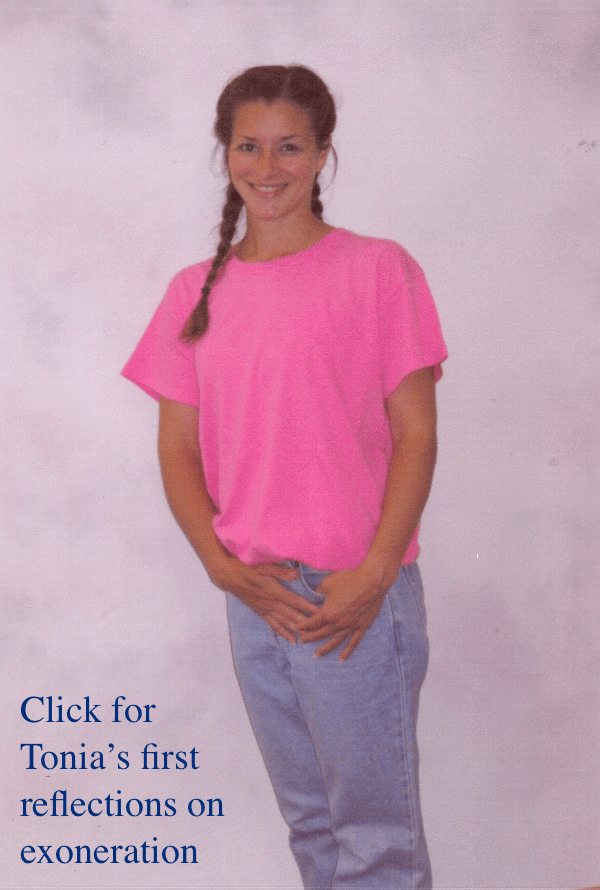
Even as she went to trial in 2003, Tonia Miller says, she expected to be found innocent. She knew she hadn’t abused her baby, she explains, and, “I trusted the justice system.” Her chuckle at her own youthful naïveté is more wry than bitter.

Unfortunately for Tonia, the medical experts at the time were adamant and unanimous. Even though 11-week-old Alicia showed no bruises, grip marks, or fractures, even though the baby had been sick her entire life, with chronic collections of subdural blood possibly dating from birth, and even though no one had ever seen Tonia mistreat either her baby or her toddler, doctors testified at trial that the pattern of bleeding and swelling inside Alicia’s head could mean only one thing: Shaken Baby Syndrome (SBS). The young mother was found guilty of second-degree murder.

But those experts were wrong.

Tonia’s conviction was vacated in 2020, after four new experts brought in by the Michigan Innocence Clinic re-examined the medical records and concluded, unanimously, that Alicia had died from pneumonia.

“There was nothing subtle here,” emphasizes clinical law professor David Moran, co-founder of the Michigan Innocence Clinic and the driving force behind the appeal. “The pneumonia was blindingly obvious. But the presence of the triad closed down critical thinking. No one ever questioned the initial diagnosis.” Moran calls the case “an especially stark example” of shaking theory in the courtroom.

Incredibly, the autopsy report had noted pneumonia in the child’s lungs, and she’d been recovering from a respiratory infection, a well-recognized precursor to pneumonia in newborns. In the weeks before Alicia’s collapse, Tonia had sought medical help for her daughter repeatedly, with reports of weak sucking, breathing problems, and even seizures, witnessed not only by Tonia but also by relatives and neighbors.

Moran’s appeal also argued that the triad of findings—retinal hemorrhage, subdural hematoma, and cerebral edema—underpinning Tonia’s conviction is no longer considered proof of shaking. The appeal judge concluded that SBS has become “controversial” and noted “a shift in the scientific consensus.”

Dr. Steven Gabaeff, a clinical forensic medical specialist and an emergency physician for 40 years, says he finds the shift-in-consensus element ironic, because there has never been any scientific proof that the triad results only from shaking, despite the testimony at Tonia’s trial. “It was false evidence. It was never true,” he points out, “And this case proves that yet again.”

The pneumonia had compromised Alicia’s lungs, reducing the amount of oxygen available to her brain. Breathing, controlled at the brain stem, is one of the first functions to be affected when the brain is in trouble. Weak breathing can compound the oxygen problem just by itself, and on the morning Alicia was rushed to the hospital, her airways were obstructed by the formula she had apparently choked on. As detailed in the new reports, a series of natural processes readily explains how pneumonia in the lungs can lead to bleeding and swelling in the brain.

Even after her conviction was vacated, Tonia remained in prison while the state appealed the decision. She was finally released on bond in April of 2021, with the spectre of a second trial hanging over her. This fall, the state dropped all charges, and now she is free to plan her life.

Tonia seems to hold few grudges. She says she doesn’t take it personally that the relative who eventually adopted her older daughter cut off all contact—although she still hopes to reconnect with her surviving child, now a young woman. And she understands why Alicia’s father quit writing when he married: “I have to put myself in his wife’s shoes,” she says. “I wouldn’t want my husband in touch with a woman convicted of murdering a baby.”

Tonia even offers a positive angle on her time in prison, which she says gave her the chance to reflect and to process. Her early life was difficult, she says, and “prison helped me deal with those issues from my past.”

Not that the path was easy.

The early interrogations left her numb and confused, she remembers. “The detectives isolated me from everybody… I tried to tell them what happened, but they kept interrupting, saying I was lying… After a while I started thinking, ‘If I tell you what you want to hear, will you just leave me alone?'”

Tonia had said from the first that she had shaken Alicia gently to revive her, after the girl seemed to gasp and quit breathing—but her accusers insisted she had shaken Alicia violently, just before the breathing problems.

As she explains in the essay that accompanies this post, Tonia was “petrified” on her way into prison. Since then, she has risen to the occasion and more. Now that she’s out, she has found a job she likes and is looking forward to finishing her BA—she earned most of the credits she needs while in prison.

Please see Tonia’s reflections on her experience of prison and exoneration, written immediately after her release.

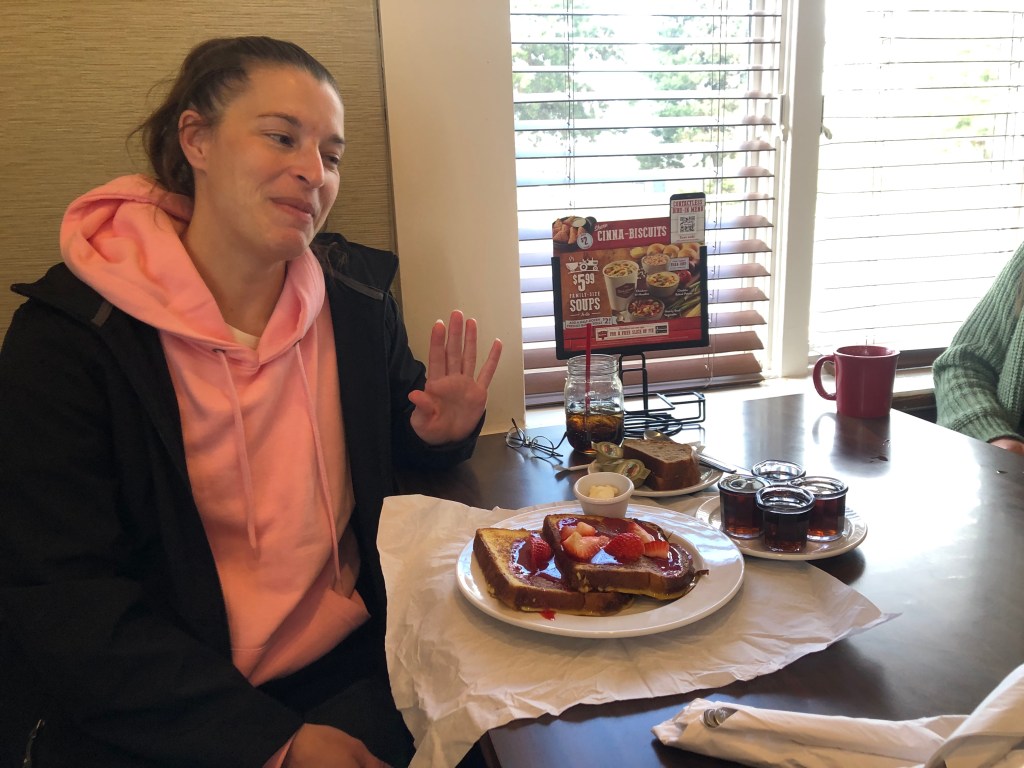
This photo: After escorting her from prison in April of 2021, Tonia’s legal team took her for her first French toast in 18 years.

See also Tonia’s entry in The National Registry of Exonerations.

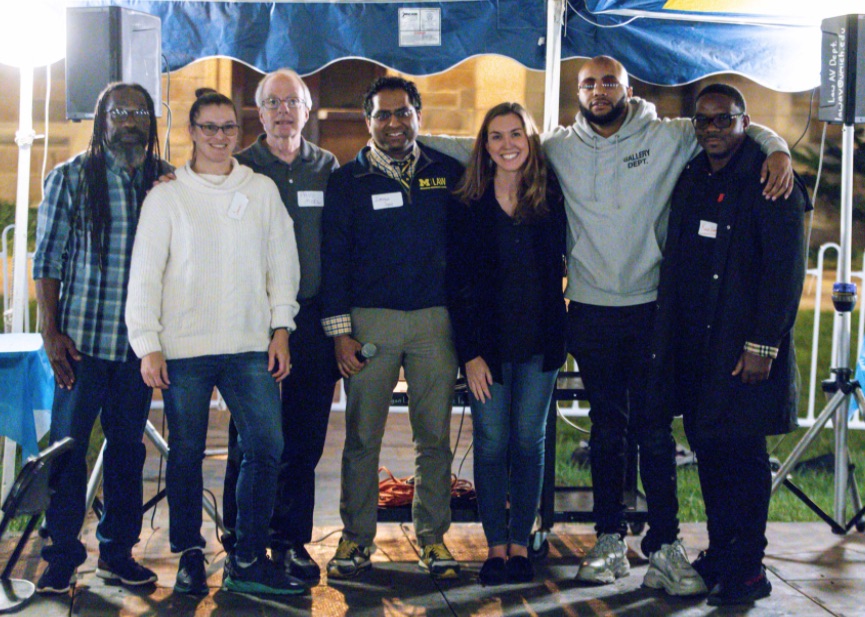
October, 2021: At the Michigan Innocence Clinic celebration of four wrongly convicted prisoners released this year.

© 2021 Sue Luttner

If you are not familiar with the debate surrounding Shaken Baby Syndrome, please see the home page of this blog.

4 Comments

Filed under abusive head trauma, AHT, parents accused, SBS, shaken baby, shaken baby syndrome, Uncategorized, wrongly accused

Unconscious Bias and Manner of Death

Graph from studyA sobering study has raised serious questions about the reliability of a document that’s generally treated in the courtroom as objective truth:  the medical examiner’s report.

Researchers at University College London presented a group of forensic pathologists—all board-certified members of the National Association of Medical Examiners (NAME)—with a “not straightforward” case, a 3-year-old who arrives at the emergency room with a head injury and later dies. All pathologists received the same medical findings and investigation reports, but some were told the child was White and in the care of a grandmother, others that the child was Black and in the care of the mother’s boyfriend.

The graph above illustrates the study’s most dramatic finding: Pathologists in the study called the death an accident, not a homicide, twice as often in the case of a White child with a grandmother; in a complete reversal, they called the death a homicide five times as often as accident in the case of a Black child with the mother’s boyfriend. Journalist Radley Balko, in an editorial in The Washington Post, called the study “stark evidence of cognitive bias among medical examiners.”

The study also raises questions about the fundamental reliability of an ME’s conclusions:  78 of the 133 pathologists in the study told researchers they didn’t have enough information to determine whether the death was accident or homicide. Of those who gave an opinion, 23 called it an accident, 32 a homicide.

This is already a problem,” Balko’s editorial noted. “Reliability is one of the key criteria the Supreme Court has said judges should consider in deciding whether to allow expert testimony. The same facts applied to different people should produce the same outcome. That clearly wasn’t the case in this study.”

I recommend reading both the editorial and the journal article itself:

-Sue Luttner

If you are not familiar with the debate surrounding shaken baby syndrome, please see the home page of this blog.

1 Comment

Filed under abusive head trauma

With Their Own Nightmare Behind Them, Trying to Make a Difference

Edelyn & Peter Yhip

Edelyn Yhip, RN & Peter Yhip, MD

Last summer, Edelyn and Peter Yhip were preparing for the worst:  If they were both convicted, they asked each other, who would take their children, 13-year-old Mikaela and 9-year-old Jonathan? What would happen to their home, and everything in it, if they were both in prison?

But on August 23, after 6-1/2 years of accusations, the Yhips stood in court and heard the judge drop charges against them, because the state had conceded it had insufficient evidence of murder in the 2012 death of Jonathan’s twin brother Benjamin.

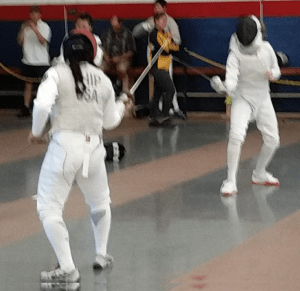
“We felt so blessed when the charges were dismissed,” Edelyn said when we got together in September, at a fencing tournament where Mikaela was competing. “Now we can grieve and mourn for Benjamin, and start to heal our family.”

In a video posted by the Northern California Innocence Project (NCIP), which helped with their defense, Edelyn reflected on the reality that set in after the “jubilation” the day the charges were dropped. Although it was “great to leave this behind us,” she said, “my son is gone, and our family is not the same. Our children are still in pain—they were alone and scared when they needed us the most.”

In a television interview in the fall, Mikaela remembered how police officers came to her school one afternoon and took her and Jonathan away from the family friend who’d come to pick them up—leaving them instead in the care of foster parents they’d never met before. “They told me that Benjamin died,” Mikaela recalled. “I was so confused and scared… I really missed my parents, especially at night.” She was 7 years old.

The Yhips were eventually able to transfer the foster placement to a family the children knew, but even then they were allowed only an hour and half a week of visitation, always supervised by social services—”It was like somebody was spying on us all the time,” is how Mikaela put it. Jonathan was not allowed to attend his brother’s funeral.

Edelyn said she now has two goals: restoring her children and changing how infant death investigations are handled. “I can’t just pick up and go back to normal,” she declared, “not after what my children went through, what Peter and I went through. This nightmare should not happen to another family.”

Peter Yhip told me the ordeal destroyed his own faith in the legal system—”You never imagine something like this could happen to a perfectly innocent family,” he said—but he has learned the power of community. When he and Edelyn realized they were accused of murdering their son, he remembered, “We were numb with disbelief. But so many people rallied around us, it gave us hope. I have more faith in humanity now.”

Yhip FamilyEdelyn is a nurse and Peter is a doctor. They paid off their student loans before starting a family, Edelyn explained in the NCIP video. When they found themselves infertile, Edelyn said, they adopted the infant Mikaela from China in 2005, and then their sons in 2010, when the boys were 18 months old. “Returning from Taiwan with the boys,” she beamed, “We felt like our family was complete.”

They quickly realized, though, that Benjamin had serious medical problems, with recurring infections and a diagnosis of failure to thrive that led to an implanted feeding tube. In the spring of 2012, Edelyn found him not breathing in his bedroom and called 911.

Local press coverage quoted the NCIP about what happened next:

“At the hospital, bone scans showed unchanged abnormalities suggesting a genetic condition, and the neurosurgeon opined Ben had suffered a stroke that caused his collapse,” according to the NCIP. “Ben was put on life support and eventually declared brain dead. Arrangements were made for organ donation.”

Despite Benjamin’s long and complex medical history—including a series of hospitalizations in Taiwan, before he was adopted—the state’s pathologist declared the death a homicide, citing the presence of subdural and retinal hemorrhages, which are two elements of the  “triad,” a pattern of bleeding and swelling inside the infant skull that is commonly attributed to “abusive head trauma,” previously known as “shaken baby syndrome.”

While their children remained in foster care, baffled and terrified, Edelyn Yhip was arrested at the family home, and Dr. Yhip was arrested at his clinic, handcuffed and led out the front door past patients in the waiting room.

The Yhips’ friends and family rallied behind them, setting up a web site and raising money to mount a defense. More than one family put their homes on the line, adding their properties to the bond, so Edelyn and Peter could be out of prison while waiting for trial. The family was reunited about a year after the accusations, when the dependency court found “substantial evidence” that Benjamin had died of medical complications, not criminal assault. Still, the county continued to press its criminal case for five more years, while the NCIP submitted a growing body of medical reports supporting the family’s innocence, as well as court decisions from other disputed shaking cases and the 2018 book, The Forensic Unreliability of the Shaken Baby Syndrome.

“We had a host of heroes in this case,” wrote NCIP attorney Paige Kaneb, who stuck with the case through all those years, in an email announcing the decision to drop the charges. “Great day, long overdue. The best part was after court when the Yhips told their 13-year-old daughter that this is finally over.”

The nightmare is over, but the Yhips are not leaving their experience behind. Both Edelyn and Peter say they hope their case might help move the debate about shaking theory forward, and help other families avoid a nightmare like theirs. “The triad has got to go,” Edelyn insists. “It’s not just the financial toll, it’s the emotional toll it takes on your whole family.”

This week, the Yhips are heading to Atlanta for the annual Innocence Network conference, April 12–13, where they are hoping to connect with other accused and exonerated families. You can contact them at fresh20fishing@gmail.com.

copyright 2019, Sue Luttner

If you are not familiar with the debate surrounding shaken baby syndrome, please see the home page of this blog.

Leave a comment

Filed under abusive head trauma, AHT, Falsely accused, Innocence Project, SBS, shaken baby, Uncategorized

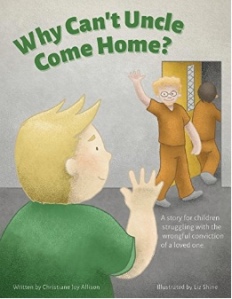
“Why Can’t Uncle Come Home?” – A Book for Families

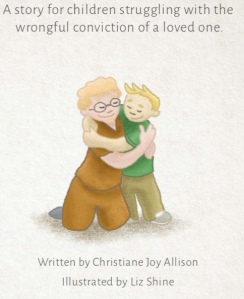
Author Christiane Joy Allison and illustrator Liz Shine have hit the mark with their engaging and healing children’s book about a relative’s wrongful imprisonment, an offering the author calls “a bittersweet labor of love for both the illustrator and me.”

Why Can’t Uncle Come Home?  addresses the anger, fear, and confusion a child feels when a beloved relative is sent to prison, and it explains how an innocent person might be convicted of a crime. The book succeeds in its own right, but it also fills a need, telling the young relatives of innocent inmates they are not alone.

“I read this book with my 6-year-old grandson. It is a great tool for opening conversation,” posted Vickie Fetterman to a support group for accused families. “He has been so affected by his father’s wrongful conviction.”

Christiane Joy Allison, “CJ” to her friends, knows her subject: Her book chronicles the reactions of her own niece and nephew when her husband, Clayton Allison, was accused and ultimately convicted of murder in the death of his and CJ’s daughter Jocelynn. At the time, while also trying to defend her husband and grieve for her daughter, CJ looked for books to help her young relatives understand what was happening, and found nothing. “I saw a need and I realized I had to fill it,” CJ said in a telephone interview last month. “I didn’t intend to write a children’s book. It just sort of landed on me.”

From the Rasmuson Foundation web site

On-line comments have been effusive. “This beautifully illustrated and accessibly written book fills a hole in the world of literature,” wrote Laura Ojedo in an Amazon review, “A must-read for children, and honestly for people of any age.”

CJ said she was gratified when she read her book recently to school children in her community of Wasilla, Alaska, and found her audience of 5-to-7-year-olds fully engaged. “I felt so blessed when one of the parents pulled me aside afterward and thanked me for tackling the subject, because they just had a friend experience wrongful conviction and felt lost how to explain it.”

When her husband was accused in 2009, CJ and an army of other supporters stepped forward in his defense, and they have stuck with the campaign even after his conviction in 2015.

In the course of the investigation, CJ showed herself both stronger and more ethical than a pair of Alaska state troopers, who thrust grisly autopsy photos in her face, ridiculed her faith in her husband, and misled her during a long and heartless interrogation.

The Allison family’s experience features a number of elements that show up frequently in these cases:

  • a plausible alternative explanation (Clayton reported that the toddler fell down the stairs)
  • a quick diagnosis by physicians unaware of the child’s complex medical history
  • distraught parents subjected to cruel and deceptive interrogation tactics and
  • a tangle of legal rulings that limited what CJ could say at trial

You can follow the family’s struggle through the Free Clayton Allison Facebook page.

The Rasmuson Foundation, which supports artists and non-profits in Alaska, has awarded CJ a grant to publish a follow-up book, Timmy and Kate Go to Visit.

Why Can’t Uncle Come Home? earned honorable mentions for its illustrations and cover design and for its handling of family issues in the 2018 Purple Dragonfly Book Awards from Story Monsters Ink, a magazine about children’s literature for teachers, librarians, and parents.

CJ, a writer by both nature and training, has an MBA in Management & Strategy and a BA in Journalism & Public Communications.

As CJ predicted, Why Can’t Uncle Come Home? is the only children’s book I could find that addresses wrongful conviction. Several books deal with parents in prison, including these titles that have received generally good customer reviews: The Night Dad Went to Jail; Far Apart, Close in Heart; and My Daddy’s in Jail. Customer reviews also give a thumbs-up to Maybe Days, a book written for children entering foster care. The State of New Hampshire publishes this list featuring more titles for children with parents in prison.

Leave a comment

Filed under abusive head trauma, AHT, Falsely accused, parents accused, shaken baby syndrome

Falsely Accused: Organized Parents in France Earn Credible Coverage

A coalition of wrongly accused parents in France has caught the attention of Le Monde, which Wikipedia calls “one of the most important and widely respected newspapers in the world.”

Association Adikia put up their web site just last month, although some of the members have had a Facebook presence for some time. Last week Le Monde published a letter from key organizers explaining who they are, what the problem is, and what they plan to do.

Here is a Google translation of the published letter:

We are wrongly accused of abusing our children as a result of misdiagnosis”In a tribune in “Le Monde”, a hundred parents testify to their fight, accused of violence on their children while they are suffering from a rare disease. They created the Adikia association to advance their cause to justice.

We are more than a hundred parents wrongly accused of abusing our own children as a result of misdiagnosis. Two and a half years ago, one of us created a Facebook group to tell her story. This is where we found ourselves over the months after experiencing the same dramatic situation.

While we consult pediatric emergencies for our babies who are uncomfortable, doctors detect signs a priori suggestive of abuse. These are mainly fractures, bruises, or bleeding inside the skull and eyes (subdural hematomas and retinal hemorrhages). These last two signs are typical of the “shaken baby syndrome”.

In our case, however, our children have various rare diseases. For example, the son of Virginie (creator of the group) is suffering from hypofibrinogenemia, a rare genetic abnormality of blood coagulation. As indicated by the report of the High Authority of Health on the subject, disorders of coagulation form an important class of differential diagnoses of shaken baby syndrome.

Unjustified accusations

The son of Vanessa (president of the association) is one of the many babies in our association with external hydrocephalus. Clinical studies suggest that this pathology may favor the occurrence of subdural haematomas. Marielle’s daughter has osteogenesis imperfecta, or glass bone disease, which can cause fractures. Emi has hypophosphatasia and her son has bone fragility associated with vitamin D deficiency.

In an emergency, however, doctors must diagnose quickly and act if they feel the child is at risk in their family. They make a report, which leads to the almost automatic placement of our children. They are withdrawn while we are taken into custody and questioned by the police.

As if dealing with the suffering of our babies was not enough, we must also suffer unjustified accusations of abuse. Worse, we must live with the idea that our babies will have to spend the next months or years away from us, when they are sick and need all our love. Their first steps, their first laughs are stolen forever. Strong emotional ties with parents are essential for the neuropsychological development of babies, as pediatrician Catherine Gueguen has shown. We have all had suicidal thoughts, but we must absolutely stand firm for our children.

The placements end when the juvenile judges finally feel that we are not dangerous. In a way that is difficult to understand, we are criminally prosecuted when the judicial expertises are carried out. Specialized maltreatment doctors seem to validate the violence systematically, even in the presence of rare and unknown diseases. We have a hard time getting specialists in rare diseases to do their own expertise, even more when the medical records of our children are seized by the courts!

The example of the little Luqman is characteristic. At 16 months, he spent 13 away from his parents. More than a year ago, he had hemorrhaging leading to a diagnosis of shaken baby syndrome. An extremely severe vitamin K deficiency (necessary for blood clotting) was quickly detected. It appeared later that Luqman had abetalipoproteinemia, a rare genetic disease that could cause such a deficit. According to several doctors, this disease could explain the symptoms.

Shaken baby syndrome

Today, Luqman is still placed, and his parents are indicted. For the legal experts who have access to the whole file, the signs presented are characteristic of shaken baby syndrome and the diagnosis of abuse is therefore certain. Can we really be certain that this disease, which affects less than one in a million babies, can not cause subdural haematomas and retinal hemorrhages?

We have trouble making it clear to the various speakers that the words of doctors and experts never have absolute truth. We must all show the greatest humility before the complexity of the human body. We do not know everything about medicine, far from it.

We have created our association – Adikia – to support and inform those unfairly accused, to make our testimonies known to the public, and to gain more weight in court. We would like doctors to take every precaution, as far as possible, and for the judges to consider all the elements of the files. Decisions as serious as long-term placements or prison sentences must not be made solely on the basis of medical evidence, however clear and categorical.

We would also like to be involved in improving the reporting and diagnosis criteria for suspicion of abuse. Our goal is to avoid unfounded accusations and unjustified placements as much as possible while respecting the sound and indispensable principle of child protection.

Virginie Skibinski and Vanessa Keryhuel, for the Adikia association.

Association Adikia had already reached out to other parents’ organizations worldwide. They share a logo created by Italian artist Chiara Zini for the beautiful and touching site una Mamma, un Papá.

If you are not familiar with the debate about shaken baby syndrome, please see the home page of this web site.

4 Comments

Filed under abusive head trauma, AHT, Falsely accused, parents accused

Shaking Accusations Gone Wrong

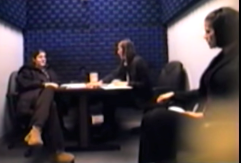
The interrogation

A series of legal developments in the past few weeks highlights the devastating effects of misguided abuse diagnoses on innocent families.

In Sacramento, California, father Jesus Flores was found innocent in June of shaking his son Mason, but despite the verdict, Mason is being adopted by another family. Flores lost parental rights during the years he spent in jail awaiting trial.

The child’s mother, Sara Guzman, also lost custody, ironically because she refused to believe that Flores had injured their son. Reporter Lois Henry quoted Guzman in the Bakersfield Californian:

“They told me the only thing messing me up from getting Mason back was that I stood by Jessie (Jesus),” Guzman said. “They said I needed to go against him. But that wasn’t right. I knew he wasn’t the kind of man who would ever hurt his baby.”

After watching video of the police interview, reporter Henry disputed statements from both the diagnosing doctor and the detective that Flores had confessed to shaking his son. Henry wrote:

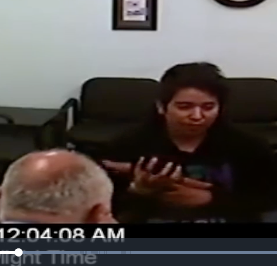
Flores uses a doll to show detectives how he rocked Mason earlier in the day to try and comfort him.

In the video, Flores cradles the doll, supporting its head and rocks him back and forth.

He tearfully asks if that could have been what hurt his son?

“Could that have caused it?” he asks over and over. “If it did, then I’m the worst father…”

One of the detectives would later testify that Flores demonstrated shaking the doll, causing its head to violently snap back and forth.

Not even close. (See video at bakersfield.com)

The reporter is right: Not even close. Check the video. The detective hands the doll to Flores at 12:03:38 am on March 22, 2015, and 15 seconds later Flores demonstrates the motion he will repeat through the rest of the interview—which I would call more up-and-down than back-and-forth, but certainly not violent.

The jurors who found Flores innocent heard about Mason’s complex medical history, and the new brain bleeds that appeared while the boy was in the hospital and then again in foster care. On the interrogation tape, however, long before anyone had looked at past medical records, the detectives never waver from confidence in the father’s guilt. Ignoring Flores’s obvious pain and confusion, they reject his story again and again, prodding him to quit lying and “accept responsibility.” Even when he breaks down and accepts their accusations, Flores says only that he “might have” rocked the boy harder than he realized, he doesn’t remember.

Another disturbing video was released last week in Detroit, showing a father’s pain at learning that his daughter had died—information he heard in open court when he was charged with her rape and murder. (On the page with the print coverage, scroll down to the second large graphic for the video.) James Lee Saltmarshall, 22, has now been released, after an autopsy disproved the medical findings that had triggered the charges against him. The video treatment includes a from-the-heart statement from Saltmarshall’s attorney:

“You have somebody charged with the most salacious thing you can charge him with, the worst thing, raping and killing his infant daughter. And now it’s a big ‘Oops’?…

“How do you fix it? I don’t know.”

In South Carolina, meanwhile, Wayne County dropped charges against an accused father who’d been in jail for two years—and indicted the babysitter instead. As summarized by reporter Angie Jackson in The Post and Courier:

Eugene Anthony Wright, 49, was initially charged with homicide by child abuse. At the time of his daughter’s death, he was accused of slamming her to the floor in his Dorchester Gardens apartment in North Charleston.

The Attorney General’s Office said after further investigation, it was determined that Wright could not have committed the crime and the charge has been dismissed.

The indictment of the babysitter, Jackson wrote, “does not detail the evidence against her.” I speculate that the key point is whether the effects of a serious pediatric head injury are or are not immediately obvious, a question still under debate in the journals and in the courtroom, along with the potential for serious injury in short household falls. Earlier coverage of the case seemed to put the father at the scene, but it’s hard to know the story from what’s available.

In a long-lingering case in California, foster mother Jovannee Reynolds has been sentenced to four years of probation, after a plea bargain in which she “took responsibility” for the death seven years ago of a days-old baby named Mikayla who quit breathing in her care.

Reporter Pablo Lopez wrote in the Fresno Bee:

On Friday, [defense attorney Curtis] Sok told the judge that the case took seven years because it turned into a battle of medical experts – one who said Mikayla died of shaken-baby syndrome and two who suggested she suffered her fatal injury in her mother’s womb.

Reynolds had told police she had “patted the baby on the back” when the little girl seemed to be having trouble breathing. Reynolds was originally charged with murder, but the plea agreement reduced that to manslaughter. According to the Bee coverage, prosecutor Christopher Gularte gave this explanation:

Because of the conflicting medical opinions, Gularte told [the judge] that the prosecution could not prove the murder charge. Instead, Gularte said both sides settled on the manslaughter charge because of Reynolds’ admission to police about patting the baby on her back. In essence, her use of force in patting the child was more than a reasonable person would do.

While I am pleased that Ms. Reynolds will face no jail time, I am sobered that the county insisted on pressing charges against her, and that the act of patting a baby on the back when it’s struggling to breathe has been declared manslaughter. Ms. Reynolds and her husband had started caring for Mikayla about a week before the child’s collapse, when she was only five or six days old, after her mother, a known drug user, had tested positive for methamphetamine. I’m guessing there were no actual signs of trauma, just the brain findings, or the news reports would mention them.

Updates

The Medill Justice Project has published a poignant look at the effects of his mother’s incarceration on the son of child care provider Jennifer Del Prete, released in 2014, after a successful appeal of her 2005 conviction.

A Florida court has agreed to hear an appeal by the Innocence Project of Florida on behalf of child care provider Stephanie Spurgeon, in prison on a manslaughter conviction in a shaking case. She the Tampa Bay Times coverage.

copyright 2017, Sue Luttner

If you are not familiar with the debate about shaken baby theory, please see the home page of this blog.

4 Comments

Filed under abusive head trauma, AHT, parents accused, Uncategorized

Steps Forward, Steps Backward, Part II

The second half of a posting started on March 7
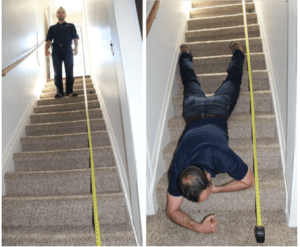
Re-creation of the reported fall

In another small step forward, a father in Michigan has been found not guilty of murder or abuse in the death of his 11-week-old son, after spending 16 months in jail waiting for trial.

Mark Hontz had reported falling down the basement stairs with the boy in his arms, landing on the infant when they reached the floor. Doctors at the University of Michigan, however, rejected that explanation for the child’s injuries. At the preliminary hearing, forensic pathologist Dr. Jeffrey Jentzen pointed to anterior rib fractures and neck damage, which he said were “more consistent” with the compression and whiplash that occur during squeezing and shaking than with a fall down stairs.

Dr. Jentzen’s testimony reflected an opinion I’ve heard before about pediatric stairway falls:

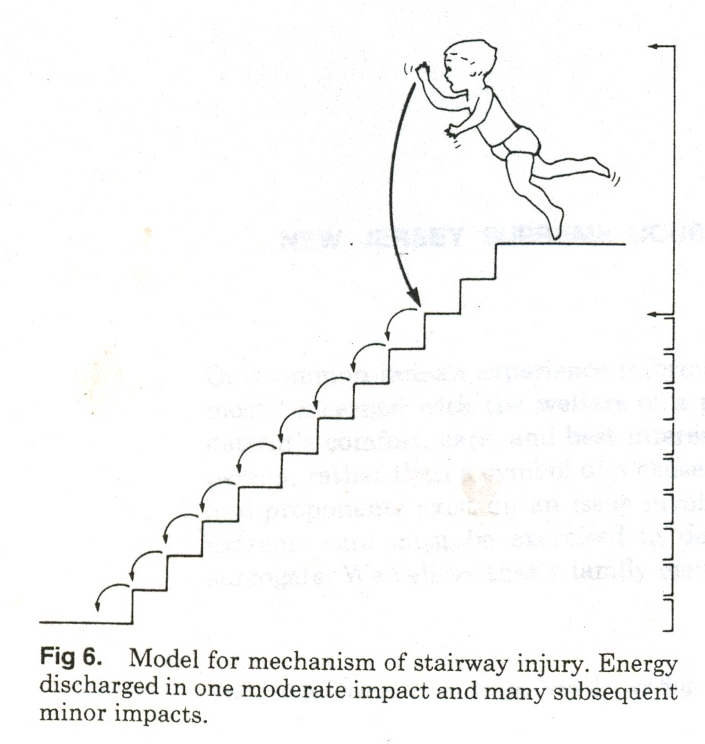
“Well actually, going down stairs is not a single fall down, for example, ten feet. It is ten individual falls down a single foot, so there’s not the long distance fall that you would expect.”

In the journal Pediatrics in 1988, Drs. Mark Joffe and Stephen Ludwig at the University of Pennsylvania proposed that model in their paper “Stairway Injuries in Children,” illustrating their point with the figure to the right. That paper had concluded that “nonaccidental injury should be suspected” when children receive serious injuries in an alleged stairway fall.

The photos at the top of this page show the stairs to Mark Hontz’s basement, with the figure at the starting and landing spots he reported. A biomechanical engineer brought in by the defense pointed out that an adult falling forward down stairs does not fall one step at a time, as the feet are no longer under the center of mass. Instead, the body falls forward, propelled by the force of gravity, until the motion “is arrested by contact with the ground or steps.” The engineer calculated that the infant experienced a vertical fall of 9 feet, landing with an approximate speed of 16 miles per hour.

Investigators conducted a series of interviews with Mark Hontz, finally confronting him with the medical opinion that his son did not die from a fall down the stairs. “Hontz offered no other explanation,” the police report says, which is another way of saying that, even under intense pressure during repeated interrogations, the father never changed his story.

Illustrating the value of a thorough defense, attorney Sharon Clark Woodside also called in a forensic pathologist, a child abuse pediatrician, and a pediatric radiologist to rebut the prosecution theory.

Witnessed Shakings

Two witnessed shakings in separate hemispheres this winter seem to have produced no injuries, nor any questioning of shaking theory.

Dismayed diners at an Australian cafe called authorities about a man shouting and shaking his 5-month-old daughter, according to a news story by reporter Allison Harding. After paramedics checked the child and cleared the father to take her home, Harding wrote, other patrons attempted unsuccessfully to block his car. The father later pled guilty to unlawful assault and has sought treatment for “long-term mental health issues.” His wife reportedly stood by him in court, calling him a responsible and loving father.

cottonwoodaz

Cottonwood, Arizona

Concerned bystanders in Cottonwood, Arizona, called police and recorded video of a 19-year-old mother shaking and slapping her 10-month-old daughter at a street corner, according to coverage in the Verde Independent. Responding officers arrested the mother, a transient already known to local police and described as “combative.” Authorities later discovered that the child was missing from foster care in another state, kidnapped by her parents during a family visit. The Independent’s coverage quoted Cottonwood Police Sergeant Tod Moore, who said, “I have seen too often in shaken baby cases where permanent brain damage or death occurs. We appear to be very fortunate this time.” I note that Sgt. Moore has probably seen serious injury in cases where the doctors diagnosed shaking. In the one witnessed case he’s probably handled, doctors at the local hospital found no injuries.

More Fathers in the News

Convictions of and accusations against fathers continue to pass through the headlines.

One case in Pennsylvania has it all: no external signs of assault, the presumption of immediate symptoms, and a retreat from the term “shaken baby syndrome”—but with a computer animation shown at trial illustrating the presumed effects of a violent shaking. From an article before the verdict by reporter Laurie Mason Schroeder of The Morning Call:

Prosecution expert Dr. Debra D. Esernio-Jenssen, medical director of the Child Advocacy Center at Lehigh Valley Hospital, testified that Quinn suffered from symptoms of abusive head trauma, formerly called “shaken baby syndrome.”

Using a computerized animation, Esernio-Jenssen demonstrated how, she said, a baby’s brain would hemorrhage from being snapped back and forth in the hands of an angry adult.

On the subject of timing, Leigh Valley Live reporter Sarah Cassi wrote in an article reporting the conviction:

[Dr. Esernio-Jenssen] testified the baby would have shown immediate symptoms following the “severe, lethal episode of head trauma” she suffered, meaning the injuries occurred while [the father] was alone with the child.

Depressingly, the father’s defense attorney seems to have focused on blaming the child’s mother, arguing only that the injury had been inflicted before the girl was left in his client’s care.

A father in Tennessee has been sentenced to 15 years for aggravated child abuse, convicted after a 4-day trial, according to coverage in the Johnson City Press. The child’s mother still insists her husband is innocent—in a moving clip from the trial posted by WCYB, she said, regarding her son, “We wanted a real answer because we knew he wasn’t abused.”

The story of a young father accused in Wisconsin, meanwhile, received mixed coverage in a single treatment, with a headline about possible doubts but six opening paragraphs focused on the prosecution theory of shaken baby syndrome—the unfolding article then cites the Audrey Edmunds case and reveals that the defense attorney is fighting hard against the diagnosis.

Foster Mom Charged

And in Florida, investigators have reached the improbable conclusion that a 43-year-old mother and foster parent—active in the local child protection community—became enraged enough to batter a 17-month-old to death in the 7-minute gap between the time a social worker left her home and the time she dialed 911 for help with an unconscious toddler. Coverage in the Tampa Bay Times describes a boy with a complex medical history, including developmental delays and physical signs of early neglect. The child used a feeding tube, and he had been discharged from the hospital just a few hours before his collapse, after three days of treatment following a choking incident. Faith in the diagnosis of abusive head trauma, with a guarantee of immediate symptoms, apparently overrides the logical assessment of established medical facts.
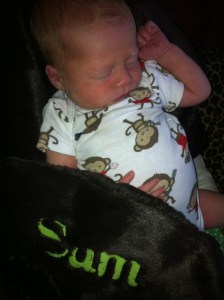
Sam Stone

Sam Stone

This story reminds me of Quentin Stone in California, a father acquitted in 2014 by jurors in Yolo County who accepted that the child’s fatal collapse had resulted from an evolving head injury suffered in an accidental fall. Stone had taken his son to the hospital several months before his medical crisis, just to make sure he was OK, he said, after the boy had rolled off a bed. Doctors found no injuries and released him, but over the following weeks, the Stones had sought medical advice repeatedly for their son’s ongoing vomiting and apparent “breath holding.” Despite that well documented history, the prosecution charged Stone with murder after the boy’s fatal collapse, based on medical opinion that the brain findings proved abuse and the symptoms would have been immediate.

Also in Yolo County,  a public invitation this winter to the annual Rotary Club of Davis fund-raising dinner noted that a team of Rotarians had taken a trip three years ago to Kenya, East Africa, “to educate physicians, medical students and nurses on how to identify abusive head trauma in children.” The article did not say where the Rotarians got their own medical training, but it reported that the team “trained nearly 1,200 professionals throughout Kenya.” According to the shaken baby page on the web site for Rotary District 5160 (northern California), the Davis chapter also provides shaken baby simulator dolls to schools and hospitals.

Fractures in the News

Finally, a television station in Indiana ran a provocative segment on a family trying to regain custody of their two sons, removed because of fractures discovered in their first-born when he was four months old. “I understand them getting involved at that point,” says mother Ally Allen on camera, “The frustration came in that they never tried to find an answer.”

Knowing they had not abused their son, Ally says, she and the child’s father started looking for another doctor who could give them an accurate diagnosis. They found Dr. David Ayoub, a pediatric radiologist in Illinois who determined that the infant suffered from rickets, a lack of mineralization in the bones that predisposes to fractures. Once considered a disease of the past, rickets remains “a significant cause of nutritional disease for infants,” according to the American Academy of Pediatrics.

The family’s second child was removed from them at birth because of the pending charges. While they wait for their case to work its way through dependency court, Ally and her partner can see their sons only for a few hours at a time during scheduled visitations.

If you are not familiar with the debate about shaken baby syndrome/abusive head trauma, please see the home page of this site.

copyright 2017 Sue Luttner

7 Comments

Filed under abusive head trauma, AHT, parents accused