Old Cases, New Cases, Sad Cases, True Cases

An exasperating series of convictions and exonerations has reminded me both how big a price child-care providers are paying in this arena and how hard it is to pin down the facts about shaken baby syndrome.
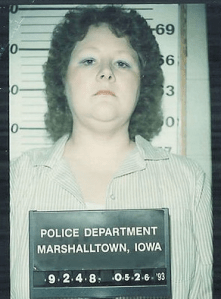
Mary Weaver, 41 years old in 1993, when accused of shaking an infant in her care

Mary Weaver, 41 years old in 1993, when accused of shaking an infant in her care

Mary Weaver, Exonerated

If more people had been paying attention in the 1990s, for example, the story of 11-month-old Melissa Mathes would have been a valuable case study in both timing and mechanism.

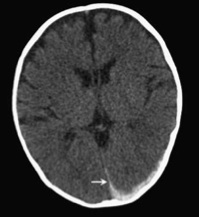
On a January morning in 1993, care provider Mary Weaver called 911 for help when the infant Melissa fell unconscious after about 45 minutes in her care. Autopsy revealed a healing skull fracture, but doctors concluded the girl had been shaken to death—and based on the common wisdom that the symptoms of a serious pediatric head injury are immediate and obvious, prosecutors targeted the babysitter.

Weaver’s first trial ended with a hung jury, her second in a conviction and a life sentence. Then new witnesses came forward to report that Melissa had been knocked unconscious in a fall at home on the morning of that critical day. Weaver was granted a new trial in 1996, and was acquitted by a jury in 1997.

The case changed the mind of forensic pathologist Dr. Vincent Di Maio, for many years the editor-in-chief of The Journal of Forensic Medicine & Pathology. Called in for his opinion, Di Maio read Melissa’s medical records and realized the common knowledge about timing of infant head injuries was wrong. The girl had been seen by her family doctor three times for the flu in the week before she quit breathing in Weaver’s care.

“That case is very disturbing,” DiMaio told me in 2000, “because everybody agrees that the skull fracture is seven days old, and everybody agrees that the doctor saw this child and thought she looked normal… But we know she already had cortical necrosis [dead brain tissue] and thrombosis [clots inside the vessels]… Whether or not you believe the babysitter killed the kid, you know a serious brain injury went unnoticed by a professional observer.”

The case has not appeared in the medical journals, but Mary Weaver was in the news last month when her name was added to the National Registry of Wrongful Convictions, maintained by the University of Michigan Law School and the Center on Wrongful Convictions at Northwestern University School of Law. The registry offers a summary of Weaver’s case, and her local newspaper covered the registration story. 2014 update: There is now a book about Mary’s case.

Kelly Kline, Not Guilty

Fifteen years after Weaver’s exoneration, Ohio child care provider Kelly Kline found herself in the same spot, fighting shaking allegations even though the child who fell unconscious in her care had a healing skull fracture revealed at autopsy.

Akron Children's Hospital

Akron Children’s Hospital

Even more remarkable in the case of 15-month-old Ella Young, the treating physicians had a plausible explanation for the fracture:  The girl had fallen down the stairs at her mother’s split-level home a week before developing breathing problems at Kline’s house. Dr. Richard Daryl Steiner, however, a pediatrician at Akron Children’s Hospital, concluded that the fracture was irrelevant and Ella had died of shaking injuries inflicted immediately before her meltdown. He and Summit County Medical Examiner Dr. Lisa Kohler both testified for the prosecution at Kline’s trial

Dr. John Plunkett, at the 2012 EBMSI conference

Dr. John Plunkett, at the 2012 EBMSI conference

Forensic pathologist Dr. John Plunkett testified for the defense, arguing that the fall six days earlier could have set off a slow neurological response that reached a critical threshold without a violent trigger.

The good news is that the jury found Kline not guilty—the Wooster Daily Record, which had earlier published the charges without question, including Kline’s name and address, also covered the not guilty verdict this past fall.

The tragedy is that child protection professionals continue to press these cases. Kline says she understands that she was lucky to be found innocent, but she and her family are still struggling to recover from the financial and emotional costs.

badge“I see a police officer, and I know it’s not rational, but my hands shake. I can’t think,” she said in early April, months after the innocent verdict. She’s trying to shed her anger at the officers and social workers who dealt with her over the year and a half she stood accused. “Not one person ever tried to help me or listen to my story,” she said, “They just accused me and accused me.”

Throughout more than one difficult interrogation, Kline never wavered from her original story, although keeping her head wasn’t easy, she recalled. “Lieutenant [Kurt] Garrison told me, ‘All fingers are pointed toward you. The forensic science says you did this. Dr. Daryl Steiner says you did this. There are no other suspects’ . . . He had me so frustrated the way he was turning it around, he almost made me believe I did something wrong.”

Ashley Howe, from the police interrogation tape

Ashley Howes, from the police interrogation tape

Ashley Howes, Compensated

At 13, Ashley Howes was not an experienced babysitter. She was the daughter of a family acquaintance, expecting to act as a “mother’s helper” for the weekend, playing with a pair of sisters, 5 years and 19 months old.

The girls were having a good time, and on Sunday afternoon Ashley agreed to extend her stay. But then, less than an hour after she was left alone with the sisters, Ashley called 911 for help with an unconscious toddler, her charge Freya.
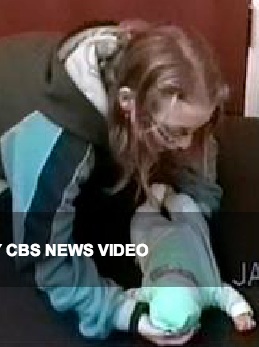
The shaking diagnosis came quickly. Police picked up Ashley at the hospital and took her to the station, where they interrogated her for a total of 19 hours, turning on the video recorders at about 3 am. You can see what the Seattle police considered to be the damning portion of the interview in the 48 Hours coverage of the case.

Ultimately, Judge Mary Roberts excluded the tapes from evidence, noting that detectives had ignored what she considered Ashley’s recorded invocation of her right to remain silent. With the tapes excluded, prosecutor Kathy Van Olst then asked the court to withdraw the charges, with the argument that the tapes were essential to proving the necessary timeline.

The 48 Hours coverage in 2006, after the charges were withdrawn, offered this background information on shaken baby syndrome:

According to most doctors, the only other way Freya could have sustained these kinds of head injuries would have been from a high-speed car accident or a fall from a great height, two things she was not involved in that weekend…

Dr. Brian Johnston, the chief of pediatrics at Harborview Medical Center, says he thinks Freya suffered an inflicted injury.

“In severe or fatal shaken baby cases, the symptoms would be apparent immediately after the shaking. They have difficulty breathing. They lose consciousness,” says Johnston.

Johnston did not treat Freya that night but has studied shaken baby cases. Does he think a 100-pound child could create enough force to kill a 26-pound baby?

“A 100-pound child is the size of many average-sized grown women. Unfortunately, we know that people that size are capable of inflicting these injuries on children,” says Johnston.

After the charges were withdrawn, the police, the district attorney’s office, and Freya’s family all told reporters for 48 Hours that they still believe Ashley is guilty. Her defense attorney Bryan Hershman, however, said, “I don’t want this little girl to live the rest of her life with people saying she got off on a technicality. She didn’t. She’s innocent.”

IMG_4464Ashley Howes was not convicted, but at the age of 13 she endured hours of hostile interrogations by a series of police officers who insisted she had murdered a little girl. She spent nearly a year under house arrest with an ankle monitor, not even allowed onto her own back lawn, and when she finally returned to school, any hopes of a normal adolescence were put to rest by taunts and jeers at the presumed baby-killer.

Ashley’s story was in the Seattle Times in March when the city reached a financial settlement with her parents, who had filed a civil suit in 2011 against the police for their callous and deceptive treatment of their daughter.

What I wish is that the doctors who make these black-and-white pronouncements about causation and timing would speak personally with the people they’re accusing, and not just send the police in to badger out confessions. I think they are missing out on a lot of valuable information. The police claim that Ashley confessed to “shaking” Freya twice, for example.  One of those two incidents was earlier in the day while she was giving the girl a bath, before the parents left the house.  If Ashley shook Freya violently at that time, and the symptoms are as immediate as Dr. Johnston says, would Freya’s mother really have called Ashley’s mother later in the afternoon and asked to keep her longer? If that “confession” isn’t accurate, what about the other one? I just don’t understand their sureness in the face of these uncertainties and conflicting tales.

Toni Blake and Suzanne JohnsonChristmas, 2001

Toni Blake and Suzanne Johnson
Christmas, 2001

Suzanne Johnson, Supported

Grandmother and child care provider Suzanne Johnson was convicted in 1999, during the first wave of shaking accusations. Counting time served waiting for trial, she is now 15 years into a mandatory sentence of 25 years to life.

Johnson’s conviction politicized her young jury consultant, Toni Blake, who was sure her client was innocent. While studying the medical literature for Johnson’s trial, Blake realized how unprepared most defense attorneys are for infant head injury cases, so she now offers a collection of SBS references  on the web site for her consulting business, Second Chair Services.

After years of work by Blake and others, the California Innocence Project has now taken on Johnson’s case.

Later this month the project is starting an Innocence March to the state’s capitol in Sacramento, where marchers will ask for pardons from Governor Jerry Brown for 12 convicted prisoners. The first leg of the walk, from San Diego to Ocean Beach, is dedicated to Johnson. Blake reports that Innocence Project attorneys have drafted a habeas corpus brief in the case that will be filed in 2013.

Inspired by the walk, supporters of Suzanne Johnson have started a Facebook page under the name Team Sue, at https://www.facebook.com/pages/Team-Sue-California-Innocence-Project-Innocence-March/479414115446391. You can read more about her story on her Innocence March entry.

Marina England, Convicted

A case of witnessed shaking has led to a felony conviction for aggravated battery in Illinois, where a mother told police she arrived to pick up her two daughters and found care provider Marina England screaming at the 3-month-old and shaking her. 

The child seems to have shown no behavioral changes or diagnostic signs like bleeding or swelling, but Ariel Cheung writing in the The Register-Mail reports that two days after the incident, when the infant was brought in for an abuse evaluation, Dr. Channing Petrak, medical director of the University of Illinois Pediatric Resource Center in Peoria, diagnosed “a mild traumatic brain injury, more commonly known as a concussion.”

I’m not sure what criteria Dr. Petrak used to reach her diagnosis, but according to the news report, her testimony was key to the judge’s verdict.

If you are interested in more on witnessed shakings, please see this blog posting from the fall of 2012. If you know of other witnessed shakings, please submit a comment. If you tell me it’s intended as a private communication, not a public comment, I will not post it but respond privately.

copyright 2013, Sue Luttner

If you are not familiar with the medical debate surrounding shaken baby syndrome, please see the home page of this site.

8 Comments

Filed under abusive head trauma, AHT, California Innocence Project, Falsely accused, SBS, shaken baby syndrome

Fathers Caught in the Jaws of Injustice

The crush of the stories is getting to me, both the number of them and the cruelty.

Justice Richard L. Buchter in New York drove the point home last week during the sentencing of Hang Bin Li, the immigrant father convicted last month of manslaughter in the death of his infant daughter Annie. According to the New York Times coverage, Buchter called Li’s treatment of his daughter “shocking, sickening, sadistic” before imposing a sentence of 5 to 15 years.

The New York Post reported that Li tried to tell the judge he was innocent, saying, “I didn’t know how or why this happened. I wrote what my statements were to the police, three times of what happened.”

But the judge cut him off. “These are the same lies the jury rejected,” he said.

No one is listening.

Jason Curtis with his son Jackson -photo courtesy the Curtis family

Jason Curtis with his son Jackson
-photo courtesy the Curtis family

And the tragedies keep coming. Jason Curtis in Iowa, for example, was convicted last month of first-degree murder in the death of his son Jackson, 5 months old when he quit breathing during a nap.

Curtis’s story was simple:  He was at home with the baby while the child’s mother was at work. He thought Jackson was asleep, but when he checked on him mid-morning, he found the boy unresponsive. He immediately dialed 911.

Doctors found no bruises, abrasions, red marks, or fractures, but bleeding and swelling inside the boy’s skull convinced them he had been assaulted—more than once.

Like many children diagnosed with shaking injuries, Jackson had a complex medical history. He had been prescribed a series of anti-biotics and anti-fungal medications, and he had been hospitalized at the age of three months for failure to thrive.  On the day he quit breathing, he was being treated for a respiratory infection. Autopsy revealed a large chronic subdural hematoma and multiple small rebleeds.

“Every time they gave him a new medication, he got sicker,” says Roni Hays, Curtis’s aunt, who also points out that during ten doctor visits over Jackson’s five months of life, not a single medical record noted evidence of abuse.

threesleepEven one of the prosecution experts testified that nothing in the child’s brain could “unequivocally” be considered evidence of trauma. Daily trial coverage in the local newspaper, no longer on line, included the testimony of defense experts Dr. Waney Squier and Dr. Peter Stephens, who disputed the abuse diagnosis.

Prosecutor Matt Wilber told reporters after the verdict that his office had targeted Curtis from the beginning, because of a “prior child abuse conviction.” Patty Parham, another of Curtis’s aunts, told me that a couple of years ago both Curtis and the children’s mother had taken plea bargains on the advice of their public defenders, when their four-month-old daughter was found to have a fractured arm and clavicle. Curtis pled guilty to child endangerment and the girl was returned to her parents. (If you assume all plea bargains equal confessions, please see this posting.)

Jackson Curtis

Jackson Curtis

“Jason would never hurt a child,” Parham insists. “If you ever saw Jason with his kids you’d know it. His children are everything to him.” Friends and relatives commenting on his petition site concur. A former supervisor of Curtis’s at an adult care facility wrote that Jason “always gave dignity and respect to our residents.”

In Ohio, meanwhile, another father has been convicted of shaking his  son to death, in a murky case full of pre-judgment and miscommunication. Brandon Wilson reported that some weeks before his son quit breathing, the 10-month-old had fallen down several stairs, and then later had fallen from a shopping cart at a local store. The parents had taken him to an urgent care facility because of continued vomiting, but that was still weeks before his medical crisis. In a taped police interview after the child’s death, detectives insisted that something must have happened just before the boy collapsed, and that’s when Wilson “acknowledged that he had shaken the baby.”

The police heard a confession to shaking, but his words as reported sound to me more like an attempt to revive a non-responsive infant. The Portsmouth Daily Times coverage reported this impression from the tape:

Earlier in the interview when Wilson began to acknowledge that he had shaken the baby somewhat, Wilson said – “But I was not shaking that baby to hurt the baby or anything like that. I was just concerned about—you know what I mean? It was just—he was limp. It seemed like he was dead already when he was laying there.”

Later in the interview, he reiterated – “Well, I don’t really know how—I was not shaking him, like, really forcefully, but I was just trying to get him to wake up.”

Experts for the prosecution testified that children do not die from short falls like those Wilson had reported.

Annie Li, courtesy the Li family

Annie Li, courtesy the Li family

But I can’t help protesting:  What makes the doctors so sure these parents are lying? Their families seem to believe them.

Hangbin Li’s wife, the mother of his deceased daughter, asked the judge for leniency, calling Hangbin a good father and saying, “I was there that day, I saw everything. He didn’t intentionally hurt Annie.”

I had gotten to know Jason Curtis a little bit, through email, while he was realizing the state was really going to prosecute him for the death of his son. He was polite, thoughtful, and not a bit pushy. I was relieved when I heard that Dr. Squier was taking on his case—and I was shocked when I heard he’d been convicted of first-degree murder.  When his family members described him to me as patient and gentle, it only confirmed my impression.

I wish the child-abuse experts would stop and listen to the parents and caregivers, and to the people who know them.  I am not saying that children are never abused, or that shaking a baby is not dangerous. Indeed, I’m sure shaking a baby can be fatal.

Jackson Curtis

Jackson Curtis

But I’ve logged my time in the medical library, and in the courthouse, and I know that the pattern of cranial bleeding and swelling that now defines Abusive Head Injury does not prove abuse, even though a number of respected professionals seem to sincerely believe that it does. (See, for example, this article by intensivist Dr. Steven Gabaeff, which comes with a downloadable collection of original sources.) How many more cases like that of Tammy Fourman or Patti Kwan do we need before doctors slow down and listen to the evidence that a number of physiological processes can result in this cluster, not only violent assault?

I’ve seen two important changes in the arena over the past 15 years.

First, physicians and attorneys from outside the child-protection community have been drawn in, as they’ve encountered troubling accusations and convictions in their own practices. The result is a new wave of published research that questions the model of infant head injury that’s been winning for 30 years in the courtroom.

Second, the affected families are finding each other over the internet. Just now they are staggering under the weight of their individual burdens, but together they could become a voice loud enough to be heard.

copyright 2013, Sue Luttner

If you are not familiar with the debate surrounding shaken baby syndrome and abusive head trauma in general, please see the home page of this web site.

26 Comments

Filed under abusive head trauma, AHT, Hang Bin Li, Hangbin Li, parents accused, SBS, shaken baby syndrome

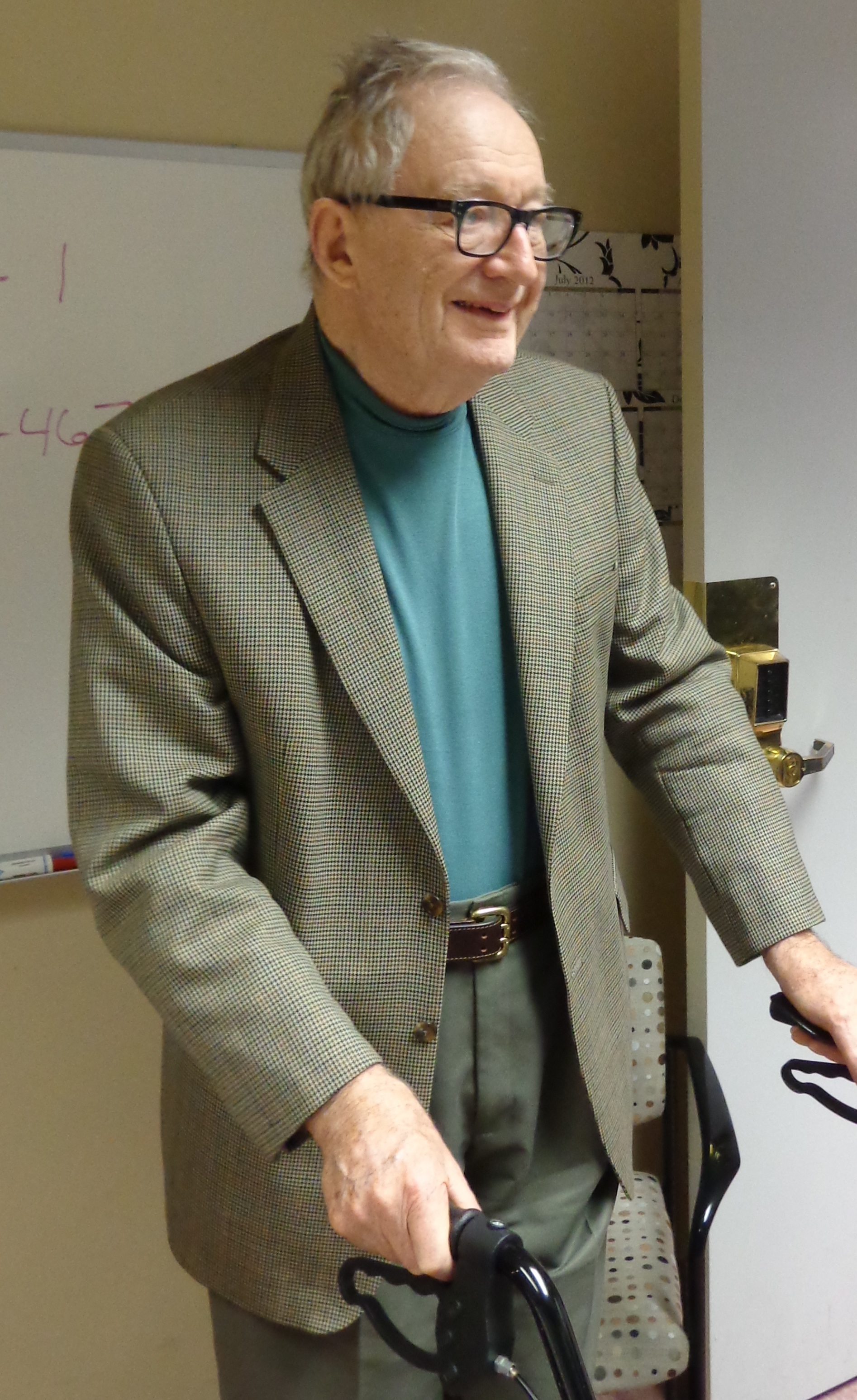
Dr. Norman Guthkelch, Still on the Medical Frontier

Dr Norman Guthkelch, Oct. 2012

Dr. Norman Guthkelch at Medill 
Photo by Sue Luttner

At 97, retired pediatric neurosurgeon Dr. Norman Guthkelch has ridden more than one wave of change in the practice of medicine.

He remembers that his mentor Sir Geoffrey Jefferson, Britain’s first professor of neurosurgery, cautioned his students against relying too heavily on x-rays, for example. Jefferson would warn, “The eye has rested upon the evidence of fracture, and the mind has traveled no further.”

“X-rays created a meaningless distinction between ‘fractured skull’ and ‘no fracture,'” Guthkelch explains, “whereas the important thing is the degree of damage to the underlying brain.”

Guthkelch’s medical training was interrupted by World War II:  He went straight from his 1944 residency in Manchester into the army, and found himself neurosurgeon-in-charge of a small team attached to a general hospital. During the Battle of the Bulge, he was in surgery for 36 hours, breaking for food but not for sleep.

“That time gave me an advantage over surgeons with no battle experience,” he reflects. “I’d seen enough blood. Operating for its own sake was not an attraction.”

twinsAfter the war, Guthkelch returned to a fellowship under Jefferson, who had honed his own understanding of head injury during World War I. Relieved to be treating a general population, Guthkelch found himself especially charmed by his youngest patients, a delight noted by his mentor. “Jeff told me when I came back to finish off my training that my future lay in developing pediatric neurosurgery,” Guthkelch recalls. “He was quite right.” As Jefferson had held Britain’s first professorship in neurosurgery, Guthkelch in his turn received the nation’s first pediatric neurosurgery appointment, at the Royal Manchester Children’s Hospital. “It was only by a few weeks,” he chuckles, “but I was the first.”

One of his observations was that children in neurological distress were sometimes suffering the effects of subdural hematoma—that is, blood underneath the dura mater, the tough but flexible membrane that lines the interior of the skull. A subdural hematoma does not invade the brain, but it can exert dangerous pressure on the tissues below. And while a pool of subdural blood may dissolve on its own, it may also expand, causing further problems.

Guthkelch published his first paper on pediatric subdural hematoma in 1953, when he wrote in the British Medical Journal:

“It should be emphasized that infantile subdural effusion is not a rare condition. Study of the records of the Royal Manchester Children’s Hospital for the four years covered by this series shows that, of all surgical conditions of the central nervous system occurring in the first two years of life, only spina bifida and hydrocephalus were seen more often than subdural haematoma… Similarly, Smith and her co-workers (1951) have reported finding subdural effusions in almost a half of their cases of bacterial meningitis in infancy, and Everley Jones’s (1952) figures are similar.”

At that time, before CAT scans or MRIs, doctors inferred the presence of subdurals in living patients from the symptoms: convulsions, vomiting, and headaches in adults or fussiness in babies. The only way to confirm a subdural hematoma was to penetrate the subdural space. With an infant, the surgeon could pass a needle between the unfused plates of the immature skull. A problematic pool could then be drained, slowly, over several days to avoid a sudden change in pressure. In his 1953 paper Guthkelch described the procedure developed by pioneering pediatric neurosurgeon Franc Ingreham at the Children’s Hospital Boston, and reported on his own findings while treating 24 cases.

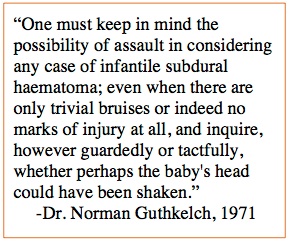
guthkelchQuote.The paper that brought Guthkelch into the child abuse arena is the advice he offered in the British Medical Journal in 1971, under the title, “Infantile Subdural Haematoma and Its Relationship to Whiplash Injury.” At that time in Britain, Guthkelch says, shaking a child in the course of discipline, “or not even discipline, correction, shall we say,” was considered acceptable. He recommended that health workers discourage the habit, as it was causing damage to developing brains. He cited cases in which parents had told him of shaking their child, and he referenced a paper by U.S. radiologist John Caffey, who had noted the combination of subdural hematoma and long-bone fractures in a few very young children. Guthkelch’s paper on shaking aroused not much interest in England, he recalls. He mailed a copy to Dr. Caffey at his hospital in Pennsylvania and began his own local education campaign. “My great allies in this were the case workers, who were a tremendous resource,” he says. “They were usually trained nurses, whom the health system would pay to make rounds in economically depressed areas.”

Although he likes many aspects of the British health-care system, Guthkelch has a major quibble with one provision:  Mandatory retirement for surgeons at age 65, a milestone that began looming for him in the 1970s. “I wasn’t ready to retire,” he objects.

normanCloseBut he had an obvious back-up plan:  The States. His mother had a close friend in Philadelphia, and he’d been brought up on Ernest Hemingway and Gertrude Stein. He accepted an invitation to the Pittsburgh Children’s Hospital, where he reports feeling immediately at home. “You Americans are very lovable people,” he grins.

He was surprised, however, to realize that his colleagues were diagnosing a condition known as “Caffey’s syndrome,” believed to result from violent shaking of an infant. Caffey’s paper on infant shaking, published in the U.S. a year after Guthkelch’s in Britain, had enjoyed far greater circulation, and few had noticed the footnote citing Guthkelch’s original paper. “No one was asking me about it, and I didn’t really have anything further to say about it,” Guthkelch shrugs.

He stayed in the field until 1992, as improvements in medical imaging  and surgical technique transformed the way doctors diagnose and treat problems of the brain. Neurosurgeons were collaborating with radiologists as they honed their abilities to decipher the lights and shadows of CT scans and MRIs. “I loved every minute of it,” he beams.

He’d intended to retire in the 1980s, when he left Pittsburg Children’s and moved with his wife to Tucson, Arizona. The local university hospital, however, asked him to take on a temporary position at the neurosurgery unit, where he remained for another eight years. Then he finally found time to work on his translation of the New Testament from the Greek, to organize a lifetime of bird photographs, and to spend more time with his wife as her health began to fail.

Drayton Witt and his wife.Courtesy Arizona Justice Project

Drayton Witt and his wife
Courtesy Arizona Justice Project

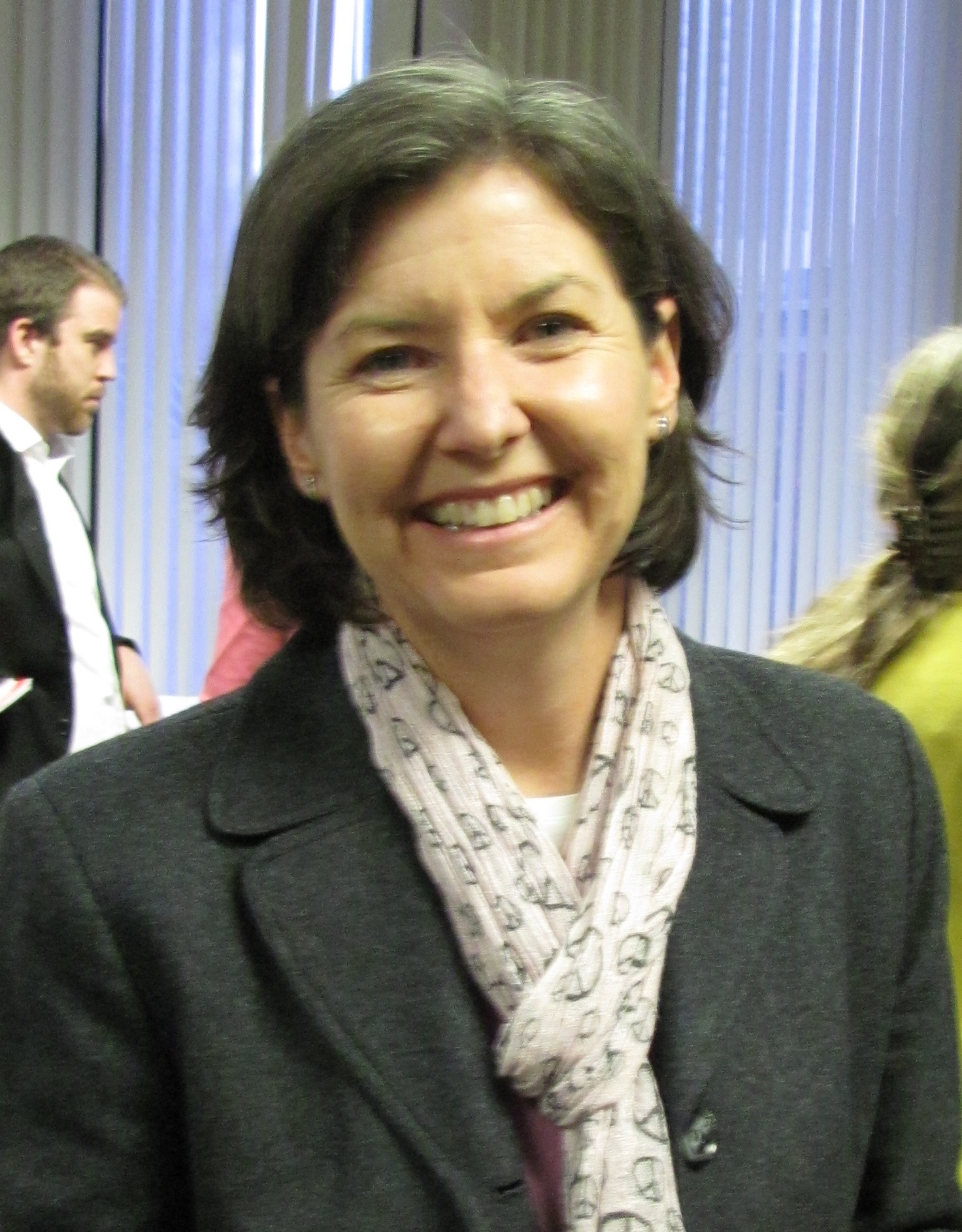
Then he was approached by law professor Carrie Sperling with the Arizona Justice Project. She and her students were working for the release of Drayton Witt, a young father convicted of second-degree murder ten years earlier for the presumed shaking death of his son.

Sperling says she was electrified to learn that the grandfather of shaken baby theory lived two hours south of her. She and her students were convinced that Witt was innocent: His son Steven had suffered a short lifetime of serious health problems, including hospitalization for seizures that were never explained, not even fully controlled with medication. Sperling was unsure of the reception she would receive from Dr. Guthkelch, “but he turned out to be an amazing man,” she says, “an amazing, gracious man.”

Guthkelch read Steven Witt’s medical records with growing dismay. He later told National Public Radio reporter Joseph Shapiro, in an interview now available on podcast, “I think I used the expression in my report, ‘I wouldn’t hang a cat on the evidence of shaking'” in that case. Sperling’s team successfully petitioned to vacate Witt’s conviction, and later the charges were dropped.

Carrie Sperling, at an Innocence Network meeting

Carrie Sperling, at an Innocence Network meeting

“It was Carrie who opened my eyes to how much of this is going on,” Guthkelch sighs.

He says he never intended that the presence of subdural hematoma and retinal hemorrhages, with or without encephalopathy, should prove that a child had been shaken, only that shaking was one possible cause of the bleeding. “I am frankly quite disturbed that what I intended as a friendly suggestion for avoiding injury to children has become an excuse for imprisoning innocent parents.”

Sperling suggested he read law professor Deborah Tuerkheimer’s 2009 law-journal article on how shaken baby syndrome is handled in the courtroom. “She certainly nailed it,” he says of Tuerkheimer’s work. Some months later he saw some “harsh, unprofessionally harsh” criticism of that paper. When he tried to talk about it with people he knew from the child-protection community, he realized how wide the schism was. “There are cases where people on both sides, both of whom I admire equally, are barely able to speak to one another,” he told NPR.

He contacted Tuerkheimer, and the two of them hit it off. They speak regularly on the phone, he reports, and “we find we are of one mind on this subject.”

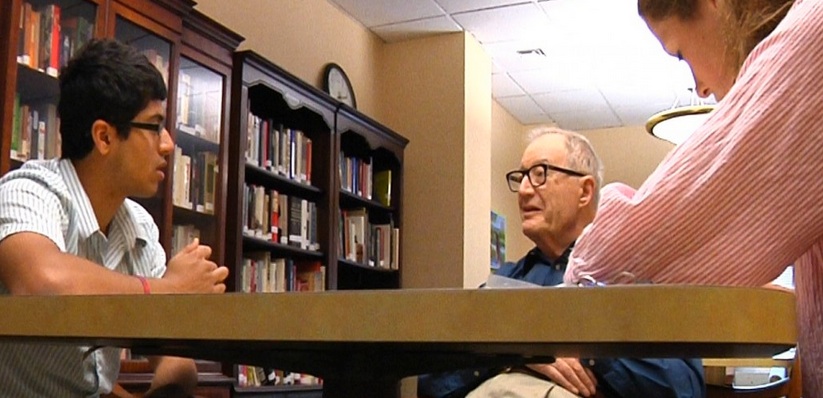
Dr. Guthkelch meets with students from the Medill School of Journalism.Photo by Alison Flowers, courtesy of the Medill Justice Project

Meeting with students from the Medill School of Journalism
Photo by Alison Flowers, courtesy of the Medill Justice Project

After his wife’s death, Guthkelch moved to a suburb outside of Chicago, where he’s continued trying to be an ambassador between the two sides. When he learned that journalism students at the nearby Medill Justice Project had taken on a shaken baby case, he reached out to them. One result is a first-rate podcast  that includes interviews with both him and Dr. Robert Block, president of the American Academy of Pediatrics. (2021 update:  The Medill Justice Project has reorganized its web site; the shaken baby material is no longer available.)

When Dr. Sandeep Narang, pediatrician and attorney, published an argument that courtroom testimony about child abuse is best left to trained child-protection physicians, not paid experts, Guthkelch wrote the introduction to a rebuttal by a team of advocates for the innocent accused. (For a quick summary of Narang’s article and Guthkelch’s response, see this page.)

Dr. Ron Uscinski and Dr. Norman Guthkelch,October 2012

Dr. Ron Uscinski and Dr. Norman Guthkelch
October 2012

Guthkelch also spends what time he can reviewing cases. “Let me be quite frank,” he says, “For a 97-year-old I’m fairly well preserved, but my memory is not what it once was.” Producing a medical report takes careful concentration and more double-checking, as does following and responding to  the literature.

But he perseveres. “I want to do what I can to straighten this out before I die,” he says, “even though I don’t suppose I’ll live to see the end of it.”

Which reminds me of something Carrie Sperling said about him when I spoke with her at the Twelfth International Conference on Shaken Baby Syndrome/Abusive Head Trauma in the fall of 2012.  “I felt a little bit bad about getting Norman Guthkelch involved, because I knew he would become controversial” she said in a video dispatch posted on the Medill site. “I did warn him, but I don’t think there’s any way to warn people of how the wrath can come down on you when you get involved in this sort of thing…  It’s amazing the effect he’s had on the experts I know, on the people I know.  I’m hoping that he lives a long, long time so that he can  meet with as many people as want to meet with him and talk to as many people as want to talk with him.”

copyright 2013, Sue Luttner

Dr. Guthkelch died quietly at home, surrounded by loved ones, in July 2016, weeks short of his 101st birthday. I posted this obituary.

For excerpts of my videotaped interviews with Dr. Guthkelch, conducted in October of 2012, please click on the image below:

If you are unfamiliar with the debate about shaken baby syndrome, please see the home page of this blog.

60 Comments

Filed under abusive head trauma, AHT, Arizona Justice Project, Drayton Witt, Innocence Network, Innocence Project, Norman Guthkelch, parents accused, SBS, shaken baby syndrome

Quick Hang Bin Li Verdict Devastates

Annie Li, courtesy the Li family

Annie Li at one month, courtesy the Li family

While attorneys on both sides claim partial victories, supporters of Hang Bin Li say they are “devastated” by the mixed verdict delivered last Friday, when a New York jury found Li innocent of murder but guilty of manslaughter in the 2007 death of his infant daughter Annie. The news was especially shocking because no one had expected a verdict so soon.

During nine days of testimony over three weeks, the jurors heard from nine medical experts for the prosecution, including the local medical examiner, a child-protection pediatrician, a pediatric ophthalmologist, a pediatric radiologist, two pediatric critical-care physicians, and a specialist in osteogenesis imperfecta (OI), a disease of the bones. All agreed that Annie had died from abusive head trauma. Many said shaking was involved.

Defense attorney Cedric Ashley opened his case last week by calling Dr. Zhongxue Hua, a respected medical examiner from a neighboring jurisdiction. I can’t find coverage of Dr. Hua’s testimony in the English-language press, but I’m told he said that Annie had signs of mild OI and unusual heart findings.

Ashley also called the Lis’ landlady Mrs. Zhou, wrapping up his case in a day and a half. Both sides made closing arguments on Thursday afternoon, and the jury returned its verdict the next day. An outspoken supporter of Hang Bin Li at the time—who has since removed her material from the web—wrote in an email:

Put yourself in the Jury’s shoes. If 9 Medical witnesses for the Prosecution kept denying something, but only 1 Defense Medical witness saying something else. Your mind is unsure, but common sense tells you, “How could all 9 people be wrong, and only 1 person is sober and correct?”

In a telephone interview after the trial, Ashley said his decision to call only one expert witness was not based on limited resources but on his opinion that, among the witnesses in this case, “only two persons had the expertise to determine the manner of death, and those were the forensic experts, the medical examiners.”

Ashley cautioned against drawing any lessons or conclusions from this “nuanced” case, which he said was not about shaken baby syndrome. “The prosecution threw shaken baby syndrome at this couple,” he said, “Our case  was about accidental, non-intentional head trauma exacerbated by OI.”

The Li case has received daily coverage in three Chinese-language newspapers in New York, and periodic coverage in the English-language press. The New York Times quoted prosecutor Leigh Bishop’s saying after the trial that the verdict was “perfectly reasonable,” because “we didn’t have enough information about his mind-set at the time he inflicted the injuries” to prove murder.

Reporters Corey Kilgannon and Jeffrey E. Singer wrote about their conversations with the jurors:

Several jurors said that they felt an obligation to see Mr. Li punished for Annie’s death, but that they could not arrive at a guilty verdict on the murder charge because they lacked the evidence to decide that her injuries resulted from a depraved mental state on Mr. Li’s part, a finding required for guilt on that charge.

“We spoke up for the baby and said, ‘You can’t do this,’ ” one juror, Luisito Castro, said.

Annie Li in 2007, courtesy the Li family

Annie Li in 2007, courtesy the Li family

Ashley characterized the outcome as a partial victory. “He’s not facing 25 years to life,” Ashley told reporters. The manslaughter charge carries a maximum sentence of 5 to 15 years in prison, and a minimum of 1 to 3 years. Li has already spent nearly 5 years in custody—4 years and 10 months—while waiting for trial.

The Lis have both denied that either of them did anything to harm Annie—and their community agrees. Their defense was paid for by donations from supporters, many of them other Chinese immigrants.

Hang Bin and Ying Li, and their community, were drawn unexpectedly into this arena, but the attorneys and medical experts at Hang Bin’s trial were seasoned veterans. Prosecution witness Dr. Carole Jenny, for example, is one of the major forces behind the relatively new medical-board speciality of child-protection pediatrics.  A former prosecutor, Cedric Ashley is on top of the medical arguments, making him a rare defense attorney in this complex arena. Prosecutor Leigh Bishop—whose actress friend Katie Holmes made headlines in early January by stopping in at the courthouse to hear opening statements—was on the faculty at last fall’s Twelfth International Conference on Shaken Baby Syndrome/Abusive Head Trauma. In 2007 Bishop successfully prosecuted Yoon Zapana, whose son Victor Zapana published an essay about his mother’s conviction in the November 27, 2012, issue of The New Yorker.

In the Zapana trial, as in the Li trial, the defense called a single medical expert while Bishop called a spectrum of medical specialists. I’m reminded of an email I received about a year ago, the reflections of a defense expert who found himself outgunned at a similar trial.

While I have heard of cases won with only one or even zero defense experts, I think it’s rare.  I don’t know of any data on the subject, but my observation is that a defense team that includes the full range of specialists is a better bet, as illustrated by a series of exonerations earlier this winter and the Russ Van Vleck trial in 2011.

The Lis’ story might not be over with the trial. Michael Chu, the neighborhood travel agent who hosts the Hang Bin and Ying Li Rescue Committee in his business office, is now educating himself about the appeals process. “One thing is very clear,” he says, “We won’t give up easily.”

If you are unfamiliar with the debate surrounding shaken baby syndrome in the courtroom, please see the home page of this site.
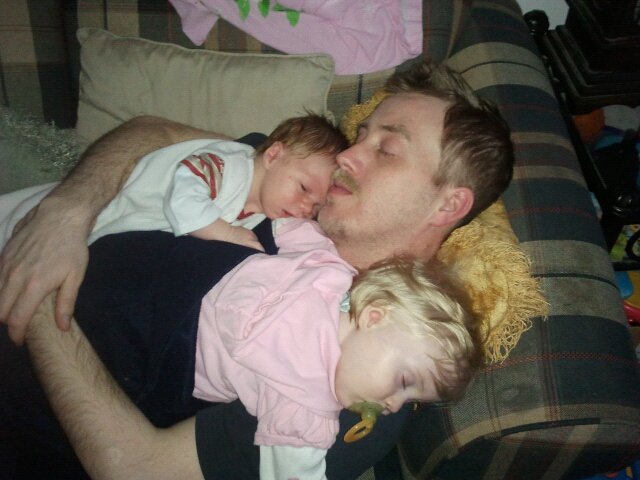
9 Comments

Filed under abusive head trauma, AHT, Hangbin Li, parents accused, SBS, shaken baby syndrome, Ying Li

The Slow Wheels of Justice—Or Is It a Treadmill?

The trial of accused father Hang Bin Li opened in New York yesterday, and Ernie Lopez  in Texas has accepted a plea bargain, both developments reflecting the determination and strength of the professionals who retain their faith in the classic model of shaken baby syndrome. But first:

VSTVenous Sinus Thrombosis in the News

The health problems of Secretary of State Hilary Clinton have brought venous sinus thrombosis (VST) into the headlines. Clinton was hospitalized earlier this month for anti-coagulation therapy, following the diagnosis of a clot with the potential to block blood flow from her brain. In an article in Residency Notes, Dr. Patrick Fitzsimmons speculates that the clot could be related to her fall in early December.

He writes that VST is associated with a number of “procoaguable states,” including trauma and inner ear infections, “but in at least 15% and perhaps as many as 30 or 40% of cases no underlying risk factor or etiology is identified.” He notes that the resulting back-up of cerebral spinal fluid can lead to raised intracranial pressure and cerebral edema, possibly leading to strokes, which “can even be hemorrhagic.” This analysis is consistent with news reports that Clinton’s blood clot could have been life-threatening.

Clot specialist Dr. Samuel Goldhaber reports in a video inspired by the news that clots like Clinton’s are “very rare,” estimating that his practice sees maybe six new cases a year.

Clinton’s prognosis is reportedly excellent—assuming the blood clot dissolves—largely because the clot was found during a follow-up MRI:  She never showed any neurological symptoms. Reporter Susan Donaldson James at ABC news quotes Dr. Brian D. Greenwald, medical director at JFK Johnson Rehabilitation Center for Head Injuries, “She is lucky being Hilary Clinton — lucky that her team thought to do it.”

One of the reasons I find all this so fascinating is that one of the speakers at the Boston conference this past fall characterized VST as the new “courtroom diagnosis” for SBS.

from KatieHolmes.com

from KatieHolmes.com

Hang Bin Li Trial Opens

Today’s New York  Post coverage of Hang Bin Li’s murder trial focused on a surprise appearance in the gallery by actress Katie Holmes, whose publicist told the press she was there to support her friend Leigh Bishop, the prosecutor. Holmes reportedly arrived wearing no makeup and in the company of an unnamed companion, and stayed through Bishop’s opening arguments.

New York Times reporters Corey Kilgannon and  Jeffrey E. Singer, who have been following the Lis’ case for at least a year, filed their usual high-quality report covering the opening statements of both sides and the testimony of the first witness, a long-time friend of the Lis. They write:

Li Dongyong, who is now a sushi chef in Toronto, testified in Chinese through an interpreter. He said that he knew both Mr. and Ms. Li, stretching back to elementary school in Fujian Province in China. And he set the stage for the events, saying that on the day Annie fell ill, he rushed to the apartment in Flushing and saw that the baby was pale and feverish, but that he never saw Mr. Li strike or otherwise physically harm the child.

The parents decided to wait before calling 911, he said, but shortly after midnight, he heard them frantically trying to wake Annie, who had turned blue and unresponsive. He said he saw Mr. Li trying to rouse the baby.

The Lis say 2-month-old Annie deteriorated for unknowns reasons. The prosecution says Hang Bin Li shook and slammed his daughter to death.

The article in today’s Times Ledger (serving Queens since 1919) leads with the support Hang Bin  and Ying Li have received from their community, and it covers both the defense and prosecution positions regarding the dropping of charges last week against Ying Li.

This web site offers ongoing updates on the trial and links to the Chinese-language coverage.

Ernie Lopez: Guilty of Felonious Cleaning

In Texas last week, Ernie Lopez pled guilty to a lesser charge rather than face a new trial and possibly more time in prison. His 2003 conviction for aggravated sexual assault of a 6-month-old girl was overturned last year, after his case was featured in a series on changing child-death forensics that ran in NPRFrontline, and ProPublica. He was released last winter. This time, the prosecution was moving forward with a murder charge.

According to last week’s NPR report on the plea agreement, Lopez confessed to “injury to a child by causing serious bodily injury,” based on testimony from a polygraph expert that Lopez said he might have penetrated the girl while cleaning her up after a messy diaper. Lopez has denied making those statements in the past.

The plea agreement imposes restrictions on what Lopez may say about the case, so under the advice of his attorney he did not grant another interview with NPR. Joseph Shapiro’s coverage includes this observation, however:

Last year, Lopez explained that the first time he went to trial he believed innocent people don’t get convicted. Then he spent nine years in prison. This time, he would have had key medical experts and a more developed defense. Yet he still faced the risk of conviction.

Shapiro also quotes attorney Heather Kirkwood, who has been working on the Lopez case pro bono for years, “I don’t think any one of us believes he would be convicted. But in these cases, there’s no guarantee.”

The Amarillo Globe-News offers a more traditional slant on the story, with the headline, “Amarillo man admits shaking baby before she died.” While the commenters on the NPR web site have been reasonably sympathetic to Lopez, the Globe-News comment section brims with vitriol at a presumed abuser. One writer scorned the prosecutor for not pressing a case he wasn’t sure he could win.

Globe-News reporter Russell Anglin offered more details about the plea agreement:

As part of the plea agreement, Lopez was required to admit to the state’s allegations and agreed that the state could prosecute him again if he ever asserts that he did not commit the crime.

Lopez’s attorney, Bill McKinney, declined to answer questions about the case but did allow himself the comment, “The child died of a clotting disorder.”

1 Comment

Filed under abusive head trauma, AHT, Ernie Lopez conviction, Hangbin Li, parents accused, Ying Li

Charges Dropped Against Ying Li; Hang Bin Li Jury Selection Begins

Annie Li in 2007, courtesy the Li family

Annie Li in 2007, courtesy the Li family

The New York Post reports that manslaughter charges were dropped against Ying Li on Wednesday—the day before jury selection started in the trial of her husband Hang Bin Li, accused of shaking and slamming their infant daughter Annie to death in 2007. Ying Li was accused of not seeking help for the girl immediately after the presumed assault, which both Lis have maintained through four years of imprisonment never happened.

In the hearing to drop all charges, prosecutor Leigh Bishop said the doctors at Flushing Hospital had told her that Annie’s injuries were so severe that even immediate medical attention wouldn’t have saved the girl’s life. Reporter Christina Carrega quoted Bishop, “The people believe that they could sustain the endangering the welfare of a child charge, but since she spent four years in jail already, it would exceed the maximum sentence of one year if she was convicted.”

Supporters of the couple say that new medical evidence points to a genetic bone disorder as the cause of Annie’s meltdown. Hang Bin Li made headlines this past October, when he turned down a plea bargain that would have let him out of prison immediately.

“Ying’s dismissal is good news, but the battle is not over yet,” said supporter Michael Chu, who relayed this statement from Ying Li:

“They can lock us up for 50 years, but that’s not going to change the fact that Hang Bin and I are innocent… We’re powerless but we won’t shut up or give up. We’ll go all out seeking help to fight for our innocence!”

Jeffrey E. Singer and Corey Kilgannon at the New York Times published this excellent coverage last winter, and then provided more information in the spring, when Ying Li was released from prison after a bail reduction.

press release from 2008 detailing the charges against the Lis cited a witness who said the child was exhibiting symptoms five hours before the call to 911.

I don’t find coverage of the upcoming trial in an English-language Google search, but a blogger who supports the couple reports that three Chinese-language news sites covered the partial jury selection this week. The blog says the trial is scheduled to start next Wednesday, Jan. 9, when I hope it will be covered in the papers I can read.

January Update:  Hang Bin Li was convicted in early February, as described at this post.

1 Comment

Filed under abusive head trauma, AHT, Hangbin Li, parents accused, SBS, shaken baby syndrome, Ying Li

Fathers in the Cross-Hairs

courtesy the Aspelin family

Kristian Aspelin and the newborn Johan, 2010, courtesy the Aspelin family

Exonerated fathers are on a streak lately, after years of pain and struggle for the families involved.

Earlier this month NPR reported the dropping of felony assault charges against Kristian Aspelin, a San Francisco father of two who in 2011 said his 3-month-old son Johan had slipped out of his hands and onto the kitchen floor. The medical examiner rejected that explanation, concluding from the autopsy that the boy had been shaken and slammed to death.

Key to Aspelin’s legal victory, reporter Joseph Shapiro concludes, was having the resources to hire a quality defense team. By selling his house, cleaning out his savings, and borrowing from family and friends, Aspelin was able to present the prosecution with exonerating reports from six medical experts and a biomechanical engineer, plus a video re-enactment of the fall as he had originally reported it. Charges were dropped without a trial.

January 2014 Update:  San Franciscio station KPIX revisited the case, on the occasion of the Aspelin family’s welcoming triplets into the world.

diceSuing the County

In Las Vegas, meanwhile, a father found innocent at trial has filed suit against the county for continuing to keep him apart from his family after the verdict. In this touching story, Associated Press reporter Ken Ritter describes the faith and persistence of Nigerian immigrant Victor Fakoya, who enjoyed the support of his family and community through his two-year ordeal.

Fakoya had been home caring for his own two daughters and a 2-year-old boy, the son of a family who was living with them. He dialed 911 when the boy started vomiting.  The child died, with a skull fracture revealed at autopsy, and doctors concluded he had been assaulted immediately before his meltdown. According to the AP report:

The jury in [Fakoya’s] first trial deliberated two days but failed to reach a verdict. A second jury acquitted Fakoya. Five days later, county officials pressed a Family Court case against Fakoya, alleging that he was unfit to return to his own family because a child died as a result his abuse.

Fakoya has filed a suit for $10 million, naming “Clark County, the district attorney and Child Protective Services officials.”

Few suits like this one have succeeded in the past, but Anglican minister Rev. Dorian Baxter in Canada announced his victory last month over the Children’s Aid Society, achieved after he had illicitly recorded a meeting in which social workers admitted he was innocent of molesting his daughters but threatened to prosecute him if he didn’t agree to their conditions. He told his tale in a bit of a sermon, at this link.

Not Guilty Verdict, Unreported

The Arizona press seems to have missed the “not guilty” verdict in the trial of Robert Gilcrist, a young father who said he had dropped his daughter while removing her from her car seat. She seemed fine for several hours, he reported, but the next morning her breathing was not right and she did not seem to recognize him. When paramedics arrived, the girl was breathing normally, and she was rated as fully conscious on the Glasgow Coma Scale, 15 out of 15.

RedCactusHer condition deteriorated, however, and diagnositic scans revealed brain swelling, which peaked about 24 hours into hospitalization. She was left with permanent brain damage, and doctors concluded that a short fall could not cause such a serious injury. Their reports included opinions that “retinal hemorrhages indicate that there was a rotational component to this, such as may be seen with shaking” and “[i]f the victim suffered these injuries on Saturday evening, she would not have survived until Sunday morning.”

At the time, Gilcrist was living with his daughter in a church outreach home, and the infant’s mother was living in a motel across the street while enrolled in a rehabilitation program.

The exciting thing about this case is that the rights of an indigent defendant were respected in Phoenix, Arizona, where defense attorney Rick Tosto pulled together a team of experts including Dr. Steven Gabaeff, emergency medicine; Dr. Pat Barnes, pediatric neuroradiology; Dr. Jan Ophoven, forensic pathology; Dr. Khaled Tawansy, ophthalmology; and Dr. John Lloyd, biomechanics.

A Family at Last, Five Years Later

Finally, the Daily Mail in England reports on a family finally united after the father was wrongfully accused in 2007 of shaking the older of his two daughters. The girl made a complete recovery, and further examination of the medical records revealed that the incident could have been related to her difficult birth or a cyst in her throat, whose presence was not revealed to the original jury.

The good news is that all these fathers were ultimately exonerated. The bad news is that these prosecutions continue, seemingly unabated.

-Sue Luttner

If you are not familiar with the debate about shaken baby syndrome, please see the home page of this blog, at https://onsbs.com/. Unfortunately, child protection professionals also teach that a short fall can’t cause serious injury to a baby, which is a  misconception.

5 Comments

Filed under abusive head trauma, AHT, John Lloyd, parents accused, SBS, shaken baby syndrome

Cracks in the Stone Wall

audreyCoverAs ill-considered and improbable shaken baby convictions accumulate, the stories of injustice find their way out.

It Happened to Audrey

Headlining this week’s good press, Audrey Edmunds’s book has hit the shelves. It Happend to Audrey, written with journalist Jill Wellington, is a from-the-heart dispatch from the front lines of the struggle.

Edmunds recounts her horror the morning a baby she was caring for seemed to choke on a bottle and quit breathing—and then her disbelief and terror as a diagnosis of shaken baby syndrome sent her to prison. Anyone who has been accused will recognize the warping of reality as investigators, social workers, and the courts accept the diagnosis, ignoring actual evidence that should have raised questions.

Four years after Edmunds’s conviction, the same medical examiner autopsied another little girl, who had been brought to the hospital with recurrent vomiting in the mid-morning. When the breathing problems and seizures started 17 hours later, medical imaging revealed a brain injury that had gone unnoticed all day by a series of medical professionals—a documented case of the “lucid interval.” Dr. Robert Huntington reported this case to a medical journal, and was forced to reconsider having testified to immediate symptoms at Edmunds’s trial. A state appeals court ultimately overturned her conviction in 2007, after years of work by law students under the direction of Keith Findley at the Wisconsin Innocence Project. Edmunds recalls her thoughts during a hearing along the way, as a series of child-abuse experts reiterated why they believed seven-month-old Natalie Beard had died from a violent assault at the hands of her last caregiver:

“No matter what their research, theories, formulas or experience said about Natalie Beard, there was only one truth:  I did not shake or inflict traumatic brain injury on that child. The state’s presentation was pure conjecture. I was always thoroughly beaten by the ongoing lies.”

katie

Katie Couric

Edmunds and Findley have taped a segment with Katie Couric, and are scheduled to appear on the Katie program tomorrow, Monday, December 10, at 3 pm, at least in my time zone.

Montana Innocence Project

Meanwhile in Montana, reporter Jessica Mayrer has published a well researched article in the Missoula Independent that considers the cases of three state inmates convicted of shaking infants.

Robert and Gabriel Wilkes, 2008

Dave Wilkes with Gabe, 2008, courtesy the Wilkes family

  • Robert James “Dave” Wilkes said his 3-month-old son Gabriel started making gurlging noises and then stopped breathing while lying on the floor of their new apartment. The prosecution convinced a jury that Wilkes had shaken his son to death. Now the Montana Innocence Project says their doctors have found evidence the boy suffered from a liver disease that could have caused his melt-down.
  • Michael Reim of Helena requested a trial by judge this year instead of by jury, because of the complex medical evidence against him. After listening to prosecution doctors who said Reim’s son had been shaken, and to defense doctors who said the boy suffered from a clotting disorder, the judge ruled that Reim was guilty of abusing his son.
  • Young mother and infant-care provider Nevada Ugalde of Billings said she left an 8-month-old in a crib while doing laundry on a June day in 2008, and returned to find him on the floor. At her trial, doctors testified that she must have assaulted the boy, as he couldn’t have suffered fatal injuries falling out of a crib 32 inches onto carpet.

Cathy Lynn Henderson

And in Texas the Court of Criminal Appeals has vacated Cathy Lynn Henderson’s 1995 conviction, also based on testimony that a short fall could not cause fatal injuries.  At her trial, Medical Examiner Dr. Roberto Bayardo had called Ms. Henderson’s account of dropping the baby onto a concrete floor “impossible” and “incredible” as an explanation for his injuries.

In 2007, however,  after reading Dr. John Plunkett’s paper on short pediatric falls and the evolving biomechanical literature, Dr Bayardo told the appeals court that he would no longer call the infant’s death a homicide but instead would list the cause of death as “undetermined.” Dr. Plunkett and a number of other experts also testified at the hearing. The court ruled in favor of Ms. Henderson, writing:

The court further found that Dr. Bayardo’s re-evaluation of his 1995 opinion is based on credible, new scientific evidence and constitutes a material exculpatory fact. The trial court concluded that applicant has proven by clear and convincing evidence that no reasonable juror would have convicted her of capital murder in light of her new evidence.

Interrogation Tactics Under Fire

Finally, with thanks to The Amanda Truth Project for the story, a teenage mother in Massachusetts whose videotaped confession was thrown out last year is now suing the city of Worcester. Police sergeant Kevin Pageau and his partner had bullied and lied to Nga Truong during hours of interrogation the day after the death of her toddler son. Reporter David Boeri at WBUR in Boston, which had sued for the release of the interrogation tapes, quotes the tapes and comments on them in his report:

Pageau: “Somebody hurt that baby, and we need to know who it was, and we’re going to find out who it was — either the hard way or the easy way.”

Truong: “I’m telling you everything.”

Pageau: “No, you’re not. Stop. Don’t lie to me.”

The detectives had no evidence. And the autopsy stated no cause of death. But the two detectives knowingly and deliberately told the teenager otherwise:

Pageau: “‘Cause that medical examiner told me that that baby was smothered. Does that change your story? We have scientific evidence that that boy was smothered to death.”

Pageau was not telling the truth, as he later testified. Lying to witnesses is often part of the playbook for detectives. But Superior Court Judge Janet Kenton-Walker would later rule that the detectives went beyond making knowingly false statements. She found they engaged in a pattern of deception, trickery and implied promises targeting “a frightened, meek, emotionally compromised teenager who never understood the implications of her statements.”

-Sue Luttner

If you are not familiar with the debate surrounding shaken baby syndrome in the courtroom, please see the home page of this blog site.

3 Comments

Filed under abusive head trauma, AHT, Innocence Project, parents accused, SBS, shaken baby syndrome

A Critical Look at a Key Witness

Photo by Cheryl Havared Harrell

Photo by Cheryl Havard Harrell

The case of Jeffrey Havard in Mississippi could be the tip of a wrongful-conviction iceberg, according to an excellent in-depth report by Radley Balko at the Huffington Post.

Havard has been on death row since 2002, convicted of murdering the 6-month-old daughter of his girl friend. Havard said he was lifting the little girl from the tub after a bath when she slipped from his hands, hitting her head on the toilet as she fell. Private medical examiner Dr. Steven Hayne, however, concluded the girl had died of shaken baby syndrome. The Mississippi Innocence Project has been fighting the conviction.

The reporter calls SBS “a diagnosis that comes with the implication that the last person to be alone with the child was the one who killed her,” observing:

“Because the symptoms can only be produced by violent shaking, the diagnosis also comes with a built-in indictment of the suspect’s state of mind. It’s a diagnosis that does much of the prosecutor’s work for him.”

Balko has written about Hayne several times over the past decade, as the medical examiner has become more controversial. Hayne has apparently been the favorite pathologist of Mississippi prosecutors for years, reliably providing autopsy reports and testimony that work in the courtroom. New information about Hayne is now available—ironically, through the discovery phase of a defamation suit Hayne pressed against the Missippi Innocence Project after they started questioning his work. Balko writes:

“What they’ve found since implicates not only Hayne, but a host of police officials, prosecutors, even judges who knew Hayne was deficient and offering dubious testimony, but did nothing to stop it. ‘We’ve known for a while that there was a problem here,’ says Tucker Carrington, the director of the project. ‘But I really had no concept of the depth and breadth of the malfeasance. This isn’t just Hayne. It’s … well, it’s almost everybody. The state has known all along that it was pulling the wool over everyone’s eyes.'”

According to Balko, Hayne was already under a serious cloud at the time of Havard’s trial, yet the court refused Havard the money to pay for a second opinion. The story is astonishing, and I recommend reading it:  http://www.huffingtonpost.com/radley-balko/steven-hayne-jeffrey-havard_b_2213976.html

2 Comments

Filed under abusive head trauma, AHT, Innocence Project, SBS, shaken baby syndrome

Another SBS Tragedy, Reflected and Amplified

I want to cry. I want to scream.

The November 26 issue of The New Yorker features a disturbing essay by a young man still reeling from the shock he faced in 2007, when his mother was convicted of shaking an infant she’d been babysitting. Victor Zapana would like to believe his mother is innocent, it seems, but he leans toward guilt.

According to the article, Zapana is the only child of a singular marriage: His father emigrated to the U.S. from Peru in the 1980s and joined the military as a route to citizenship. He met his wife, the author’s mother, while on a tour of duty in South Korea. His native language is Spanish, hers is Korean, and the couple communicates with each other in imperfect English—as their son describes it, “half thoughts, mangled clichés, fragments lacking prepositions.”

In March of 1999, when Victor Zapana was nine years old, his mother was caring for an eight-month-old baby in their home, a job she’d had for five months. She said the boy’s left hand started to shake, as if he was having a seizure, and she called the child’s mother to come pick him up and take him to the hospital. The boy was, indeed, seizing, and the incident left with him permanent and profound brain damage. Doctors diagnosed shaken baby syndrome.

Zapana was on a field trip with his fourth-grade class that afternoon. He claims no memory of sitting at the police station later that night, reportedly in tears, while police questioned his mother. The trial was delayed eight years for various reasons—including his father’s deployment to Iraq—and during the interval, Zapana’s parents didn’t tell him about the pending charges. He learned about the trial only after his mother had been found guilty and remanded to custody. He writes of those first conversations with his parents, in which his father tried to explain the unexplainable:

“Mom has lost a criminal case,” he said, “She’s going to jail.”

What criminal case?

“Mom didn’t want to make you worried,” Papá said. “She wanted to protect you. Everything is going to be all right.”

The verdict made no sense, Papá continued. She had told him she didn’t do it. He knew she didn’t do  it. Calling collect from Rikers a few days later, my mother told me, sobbing, that she was innocent. Feigning composure, I told her that I loved her and hoped to see her soon. I couldn’t bear to say that I didn’t believe her. The question of her guilt was bound up for me in a larger betrayal:  the very fact that the trial was taking place had been kept from me. Maybe she’d wanted to protect me, but it felt like an act of deception, a family conspiracy. How could I believe her?

After a few years, he writes, “I began to feel that I wasn’t being fair to my mother…. I hadn’t seen what happened. I’d read only the news stories and blog posts, and I hadn’t spent much time even with these:  looking at them made me physically sick.”

A college student at that point, he started reading the court documents and trial transcripts, and was disappointed to find nothing that he thought definitively proved his mother either guilty or innocent. The prosecution had called to the stand a series of medical experts who agreed that the child must have been shaken, immediately before the seizures started. After taking out a second mortgage to pay for legal fees, Zapana’s father could afford to hire one pediatric neurologist, who testified that the assault could have occurred before the child was in Ms. Zapana’s care. The expert had reached his conclusions based on a single CAT scan, however, and had reviewed neither the follow-up MRI nor the medical records, and the prosecution easily undermined his credibility on cross-examination.

Zapana also read about child-care provider Audrey Edmunds, freed in 2008 after the Wisconsin Innocence Project took up her case. The appeal was based on new evidence in support of the “lucid interval,” the same defense his mother’s attorney had used, unsuccessfully. Zapana learned that other Innocence Projects across the country were taking on shaken baby cases, but he remained unconvinced, writing,”Still, the new research only opens possibilities. It might establish reasonable doubt, but for a son craving certainty it proves neither guilt nor innocence.”

Zapana’s  mother is getting out early next year, and has instructed his father to sell their house:  She wants to start a new life.

“I wish I could move on as well,” Zapana writes, “but reading the testimony has forced me to recognize that I may  never know what happend on March 3, 1999…. Occasionally, I consider the possibility that [my mother] was wronged.”

My heart breaks for everyone in this story:  The author, who came of age under a looming cloud he must have felt but knew nothing about; his mother, who I’m guessing believed she would be found innocent, and who I hope doesn’t read her son’s essay; the author’s father, a military veteran who’s holding it together, not easily but apparently without complaint; the disabled child and his family, whose chances for normal lives have all been lost, and their hearts embittered by what could easily be a misdiagnosis.

The essay doesn’t offer many medical details, mentioning only bleeding and swelling of the brain and “massive” retinal hemorrhages. I conclude that this shaking diagnosis was based entirely on the brain injury, with  no bruising, fractures, grip marks, or other signs of assault—exactly the kind of troubling shaken baby conviction that Professor Deborah Tuerkheimer was writing about in her 2009 New York Times op ed piece, Anatomy of a Misdiagnosis.

I’m hoping the author keeps researching. It doesn’t sound like he’s read Tuerkheimer’s law-review articles on the subject, such as  The Next Innocence Project:  Shaken Baby Syndrome and the Criminal Courts. Maybe he will find the profile of Dr. John Plunkett in Minnesota Medicine and the analysis of shaken baby syndrome soon to be published in the Houston Journal of Health Law and Policy, now available at this link: Shaken Baby Syndrome, Abusive Head Trauma, and Actual Innocence:  Getting It Right.

Mostly I  hope his family has the chance to heal from the shattering of faith they’ve suffered, at the hands of sincere physicians and prosecutors who have been trained with a widely accepted but inaccurate model of a complex physiological condition.

-Sue Luttner

If you are not familiar with the specifics of the shaken baby debate, please see the home page of this blog site.

6 Comments

Filed under abusive head trauma, AHT, Innocence Network, Innocence Project, SBS, shaken baby syndrome, Victor Zapana, Yoon Zapana