Category Archives: SBS

New Cases Exasperate Me

Although growing armies of professionals and parents are organizing to fight the misguided prosecutions in alleged shaking cases, the tragedies continue.

Second Prosecution

A girl’s death nine years after a presumed shaking assault has led to murder charges against her father, who had already served time for the incident.

Charged in 2001 with felony attempted aggravated battery, the young father pled to a lesser offense and received a 15-year sentence. He spent six years in prison and was released on parole in 2007—but when his severely disabled daughter died of bronchial pneumonia in 2009, prosecutors charged him again, this time with murder.

A judge has heard the arguments and is deciding this father’s fate, according to the coverage in his local newspaper. I wish I had access to the original details, as the news report offers only this hint about what the parents said happened that night :

At that time, the child’s mother, Jodi Pinkas, gave an account of the incident that did not line up with the prosecution’s theory of the case.

Pinkas said Tuesday she was wrong and sorry for what she had said.

The news story also implies that the original diagnosis was based on the triad alone:

A St. Louis County, Mo., medical examiner’s report said the manner of death was homicide and the cause was traumatic brain injury and child abuse – specifically, delayed death due to blunt trauma.

Jensen said blunt trauma could include vigorous shaking. There were no external injuries.

After the disabling brain injury, the girl had been cared for and ultimately adopted by a great aunt, who has been an active voice in the anti-shaking movement.

Circumstantial Evidence

The next story is unsettling in many ways, including the rush to judgment.

A father of 11-week-old twins said he was feeding one of them a bottle when the boy started coughing and expelled liquid from his nose. The father told investigators he turned his son upside down, shook him, and slapped his back, but his breathing was “very much labored.” The man then turned to the internet for advice before actually dialing 911.

The boy arrived at the hospital brain dead and was diagnosed as a shaken baby. When police later seized the family computer as evidence, they found a number of searches just before the 911 call—including “when to call 911″—as well as previous searches regarding child abuse, and a child-abuse game described this way in the Oregon Live coverage:

According to the report, the game is “a simple DOS-based program where the protagonist drives around in a van/bus/ice-cream truck, picks up 10 children, and abuses them (physically and/or sexually) while trying to avoid attention and the police.”

The game had been downloaded to the computer and played once. While I’m repulsed by the description, if we’re to be judged by the games found on our computers, I know a number of young men who are guilty of espionage, war crimes, and intergalactic mass murder.

Like the headline-writer at Oregon Live, I reached an unsupported conclusion the first time I read the article, which makes this observation about the computer forensics report, submitted by the prosecutor, especially unsettling:

The report cites specific searches and web hits, including “father hates infant,” “How do I stop abusing my baby,” and “Parents of Newborn Baby Accused of Horrific Abuse.”

The second time through, I realized it makes a very big difference if these are search terms or the results returned, but we don’t really know. What we do know is how quickly people judge when the doctors diagnose child abuse.

Florida Plea Bargain

As Brian Bonds demonstrated a decade ago, even defendants with solid support structures can be persuaded to accept plea bargains. Now a young man in Florida is reportedly scheduled to plea this September in a short-fall case, even after a host of supporters, including the child’s mother, told the court they believe he’s innocent.

The Orlando Sentinel reports:

Leonard told investigators the baby fell off a bed, according to testimony. But doctors and a medical examiner say it’s impossible the trauma the child suffered was caused by a fall from that height.

The child’s mother reportedly testified, “I actually cannot believe he did anything wrong,” and his father told the court  his son “loved [the girl] to death . . . he wouldn’t hurt her.”

Pointing Fingers in Michigan

According to a report on the website MLive, a couple in Michigan is suing a day-care center over an incident in December, when their son fell unconscious and was rushed to the hospital. The suit alleges the child was “brutally shaken and viciously assaulted” at the center.

The MLive coverage implies that this diagnosis is based on the triad alone:

The suit alleges that Hurley officials found no outward physical signs of trauma on the child but he did suffer multiple hemorrhages and seizures consistent with shaken baby syndrome.

The police have not yet charged anyone in the presumed assault. Supporters of the family and supporters of the day-care center have both joined the on-line conversation, illustrating how a diagnosis of child abuse can poison a community.

I am definitely putting this case in my files. I hope it can make it into the medical literature, because I have heard respected child-abuse experts report that shakings are virtually unheard-of at centers with multiple caretakers.

There are other new cases, of course, but these four seemed to have lessons with them.

-Sue Luttner

Leave a comment

Filed under Lonnie Leonard, parents accused, SBS, shaken baby syndrome, Torrence Rogers

Innocence Network Scouting for Talent

This position has been filled. Katherine Judson started working this October, 2012.

Ms. Judson can provide sample filings and medical references to attorneys defending false accusations of abusive infant head injury. Contact her at katherine.judson@wisc.edu

In a solid piece of good news, the Innocence Network has found three years of funding for a staff attorney to coordinate defense efforts in shaken baby cases.

The job posting, available at http://globalwrong.files.wordpress.com/2012/07/sbs-fellow-07-02-12.pdf, identifies the position as “Shaken Baby Syndrome Litigation Fellow.” Duties will include following the medical and legal controversies that surround SBS and identifying a strategy for reducing the rate of wrongful convictions.

The Innocence Network is a coalition of individual Innocence Projects across the country and around the world. The original Innocence Project, founded in 1992 by Barry C. Scheck and Peter J. Neufeld, looked only at cases in which evolving DNA technology could be used to re-examine tissue samples from earlier trials. Their web site now reports 292 exonerations through DNA testing, 17 of prisoners on death row. Most Innocence Projects are associated with law or journalism schools, allowing them to bring pro bono student work into the appeals process.

Some Innocence Projects have now expanded their scopes beyond DNA, and the Innocence Network has recognized the alarming rate of wrongful convictions in cases of infant head injury. The job summary for the new SBS position notes:

A growing number of cases are now dealing with shaken baby syndrome, where an adult caregiver is convicted of a crime after the death of a child in his or her care, due to the presence of three internal symptoms that doctors once believed could result only from shaking the child.

Given the pace of new cases and new articles lately, the successful candidate will definitely need several of the specified “Key Competencies,” including “Remains organized amidst multiple, competing demands” and “Keeps a sense of humor throughout.”

September 6 update:  They’re interviewing the final candidates now. Look for an announcement soon.

-Sue Luttner

1 Comment

Filed under abusive head trauma, AHT, Innocence Network, SBS, shaken baby syndrome

An Innocence Project Calls for Cases

2020 Update:  The Medill Justice Project has reorganized and refocused, removing the database along with the rest of their SBS matrial.

Journalism students at the Medill Justice Project in Illinois have taken on shaken baby syndrome. This summer, interns and staff members are building a database of all the infant-head-injury cases they can find, through all the channels they can think of.

The team sent out the statement below, asking for input from affected individuals. Do check out the exoneration registry they provide as an example of what they have in mind—those researchers sound eager for input, as well.

-Sue Luttner

From Medill:

“The Medill Justice Project at Northwestern University is working to create a database of U.S. shaken-baby syndrome/ abusive head trauma court cases. We are a journalism organization that examines criminal-justice issues objectively. Our goal is public service: By creating this database, we aim to analyze trends and publish stories that may illuminate this criminal justice issue. As an example, the University of Michigan and Northwestern University law schools created the National Exoneration Registry, which has raised awareness about wrongful convictions: http://www.law.umich.edu/special/exoneration/Pages/about.aspx

Alison Flowers,
courtesy Medill Innocence Project

“The database will include cases in which the defendant is accused of shaking an infant, producing injuries or symptoms associated with, but not limited to, shaken-baby syndrome, abusive head trauma, traumatic brain injury, pediatric traumatic brain injury, and/or shaken-infant syndrome.

“Due to the complex scientific, medical and legal issues surrounding such cases, as well as the statistical task of analyzing the data, we will consult national leaders in these fields as needed.

“If you have information that you are willing to share with us, please contact Alison Flowers at alison.flowers@northwestern.edu or call (847) 467-4945.”

<Fall 2013 Update:  The email address in this press release seems to be obsolete.  The Medill Justice Project web site offers this Contact page: http://www.medilljusticeproject.org/contact/.>

6 Comments

Filed under abusive head trauma, AHT, SBS, shaken baby syndrome

Well Said: Law Reviews Address SBS

Keith Findley, co-director of the Wisconsin Innocence Project, at an SBS meeting in February 2012

With manuscripts from seasoned veterans, young idealists, and players in between, law journals are starting to cover the legal tangle surrounding shaken baby syndrome.

Law professor Keith Findley at the University of Wisconsin Law School, co-director of the Wisconsin Innocence Project, has collaborated with an all-star team to produce a thorough, careful, and readable response to an article that appeared in the April issue of the Houston Journal of Health Law and Policy, from the University of Houston Law Center.

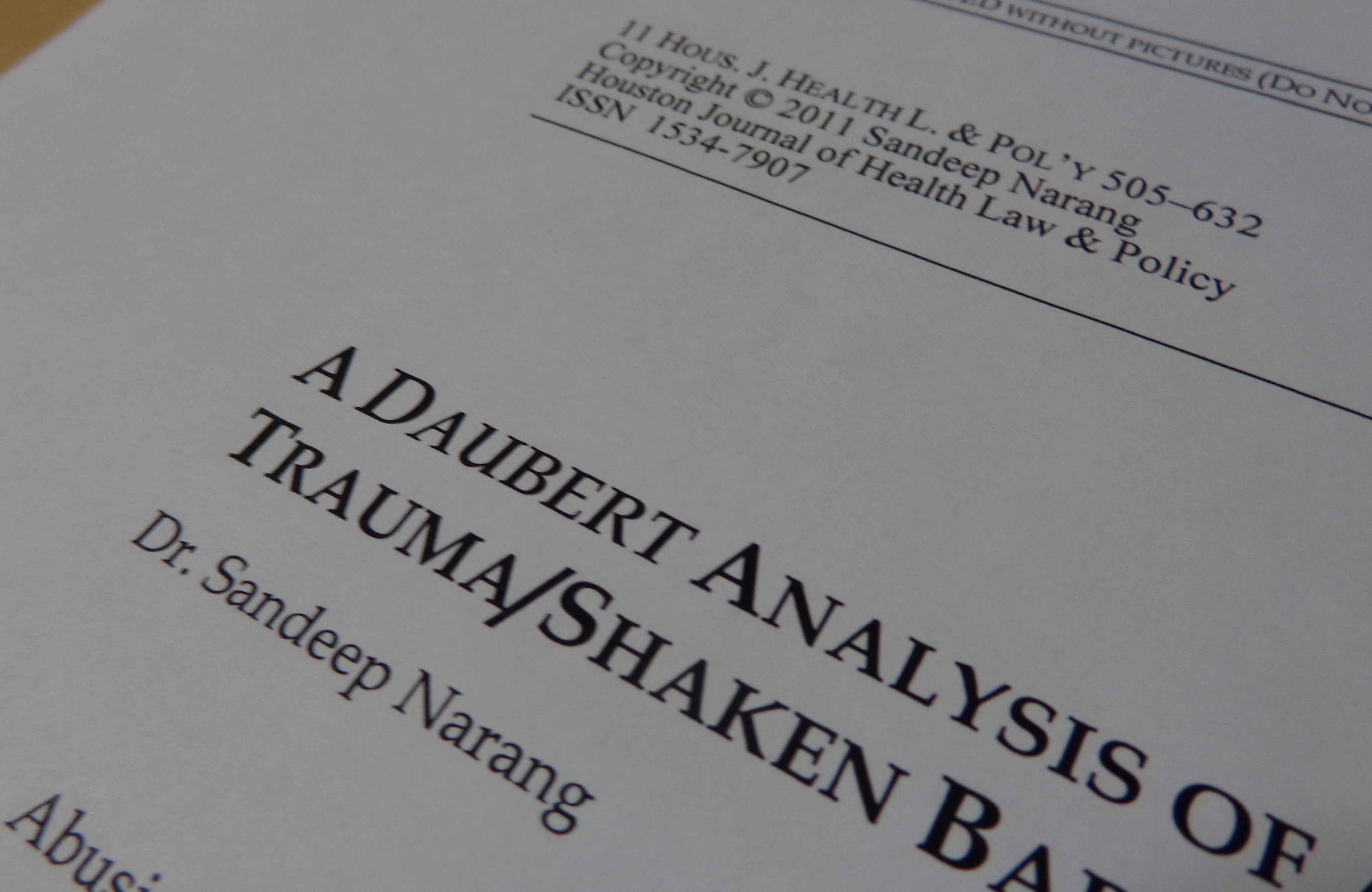
In the original paper (“A Daubert Analysis of Abusive Head Trauma/Shaken Baby Syndrome,” Volume 11, issue 3), attorney and child-abuse pediatrician Dr. Sandeep Narang rejected the mounting criticism of classic SBS theory and argued that, in the absence of a clear alternative diagnosis, the courts should rely on child-abuse experts to tell them whether the presence of the triad represents abuse.

Findley’s response—written with pediatric radiologist Dr. Patrick Barnes, pediatric neuropathologist Dr. Waney Squier, and law professor David Moran from the Michigan Innocence Clinic—is a must-read for anyone facing or defending an SBS accusation. You can download the unpublished draft of “Shaken Baby Syndrome, Abusive Head Trauma, and Actual Innocence: Getting It Right” at http://papers.ssrn.com/sol3/papers.cfm?abstract_id=2048374.

Winter 2013 update:  Dr. Narang’s paper is now available at http://www.law.uh.edu/hjhlp/volumes/Vol_11_3/Narang.pdf, and the response from Findley et al. is now available in situ at http://www.law.uh.edu/hjhlp/volumes/Vol_12_2/Findley.pdf

Past Convictions

The University of Wisconsin Journal of Law Reform, meanwhile, has published a careful analysis that calls for a review of all past convictions in shaking cases. Senior law student Rachel Burg opens her article with the story of Julie Baumer, who was featured in Emily Bazelon’s New York Times Piece in 2010. Baumer served four years in prison before a pro bono attorney brought in new experts, who unanimously and independently diagnosed venous sinus thrombosis. Burg writes, accurately, I’d say:

The truly heartbreaking stories, however, are those that are not told—the innocent people currently in prison, convicted of seriously injuring a child that they loved, based on a medical diagnosis that has become scientifically questionable.

You can download a .pdf of Burg’s article from the journal’s web site, http://www.mjlr.org/2012/05/volume-45-issue-3-spring-2012/

SBS as Established Mistake

In 2011 the Brigham Young University Law Review published a reasoned article calling for bone-density testing before fractures are considered pathognomonic for abuse. Author Matthew B. Seeley, a recent law school graduate, cited shaken baby syndrome as an example of past judicial mistakes. He reviewed the history of the syndrome, including recent rethinking about both the specificity and the timing of the symptoms, and wrote:

There are many lessons to be learned from the history of shaken-baby syndrome, not all of them within the scope of this Comment. One lesson, though, is clear: a misappraisal of whether a certain injury or combination of injuries is pathognomonic can lead to the conviction and imprisonment of innocent caretakers.

Although I’d expect that article to be heading to the archives soon, it is currently available through the Current Issue tab on the journal’s web site, at http://lawreview.byu.edu/issue.php

Shaking as First-Degree Murder

Practicing attorney Derick Vollrath in North Carolina has published an intriguing analysis in the Campbell Law Review, arguing that the prevalence of anti-shaking campaigns is inconsistent with his state’s policy of prosecuting shaking deaths as first-degree murder. Vollrath writes:

These campaigns share a common assumption: a significant number of Shaken Baby Syndrome deaths are not the intended result of a caregiver’s premeditated design.

Caregivers just lose it. They snap. They don’t know any better.  At the same time, North Carolina’s criminal law allows the state’s district attorneys to prosecute these caregivers for first-degree murder,  the most serious criminal charge available.

Although I regret that Mr. Vollrath seems to accept the specificity of the triad, I do appreciate his careful analysis and thoughtful position.  The article is in the current issue of the Campbell Law Review, available at  http://law.campbell.edu/lawreview/

Professor Deborah Tuerkheimer, De Paul University College of Law

The Classic

My files contain a handful of older papers, but the first highly publicized law journal article critical of infant shaking convictions was Professor Deborah Tuerkheimer’s 2009 critique in the Washington University Law Review.

She has since published a follow-up article in the Alabama Law Review addressing the lag in courtroom policy despite the evolving science.

Both Professor Tuerkheimer and Audrey Edmunds—the Wisconsin babysitter whose vacated conviction in 2007 marked the beginning of the Innocence Network’s success with shaking cases—will have books on the shelves soon.  The tide is turning.

©2012, Sue Luttner

4 Comments

Filed under abusive head trauma, AHT, keith findley, narang, SBS, shaken baby syndrome

Exonerations: Brian Banks Didn’t Do It; The Dingo Did

“A Dingo Took My Baby.”  Photo courtesy of http://www.australian-wildlife.com/Dingo-information.html

Two high-profile exonerations have brought criminal injustice into the headlines this summer:  In southern California on May 24, a judge cleared the record of football player Brian Banks, after the woman who accused him of rape recanted. And in Australia on June 11, authorities officially declared that a dingo really did kill Azaria Chamberlain, the infant whose 1980 disappearance on a family camping trip led to a media frenzy and the mother’s murder conviction.

Brian Banks

On the advice of his attorney, Banks plea bargained ten years ago when charged with rape, rather than risk a possible 25-year sentence if convicted at trial. He had already spent more than five years in prison and was on probation with an ankle monitor when he was contacted by his former accuser, who was ready to recant.

The California Innocence Project helped with Banks’s appeal, which associate director Jeff Chinn says has generated more publicity by far than any other case they’ve worked on. The office had no trouble keeping up press files on Ken Marsh, released in 2004 after serving 21 years in a child-death conviction, and even Shirley Ree Smith, whose infant-shaking conviction reached the U.S. Supreme Court last year, but “Brian Banks was next to impossible,” Chinn told me last week.

In the wake of the exoneration, Nancy Petro at the Wrongful Convictions blog published an insightful observation about plea bargaining by innocent people. A subsequent post by Phil Locke about how false confessions can happen criticized the interrogation strategy known as the The Reid Technique®, which is commonly employed with suspects in shaken baby cases. Locke’s blog triggered a fascinating response from Joseph P. Buckley, president of John E. Reid & Associates, the firm that’s trained investigators across the country in the technique.

On the day of Banks’s dismissal hearing, an Associated Press report quoted him making a comment that contains a double meaning for parents accused of abusing their children:

“I know the trauma, the stress that I’ve been through, but I can’t imagine what it’s like to have your child torn from you,” he said. “I don’t know what I would have done without my parents.”

Lindy Chamberlain

When Azaria Chamberlain disappeared from her family’s tent on a camping trip in 1980, her mother Lindy Chamberlain said she had seen a dingo running off with something when she went to check on the baby. Extensive searching produced no body, only the child’s torn jumpsuit. Investigators concluded that the rips had been caused by a knife, not teeth, and accused Lindy Chamberlain of murdering her daughter in the front seat of the family car before raising a false alarm near the tent. After two years of sensationalized press coverage, Lindy Chamberlain was convicted of murder and sentenced to life in prison. Three years later, however,  police searching for a hiker found the child’s missing jacket in a dingo lair, supporting the mother’s original story. The case was re-opened and Lindy Chamberlain was released from prison.

Last week, coroner Elizabeth Morris issued an amended death certificate that officially declared Azaria’s cause of death as a dingo attack. Australian journalist Julia Baird wrote in an editorial in the Australian edition of the New York Times:

We assumed an innocent woman was guilty. We threw rocks at a grieving mother. And a nation founded by convicts somehow forgot the presumption of innocence.

The case had stayed in the news in Australia for years, with early coverage that suggested the Chamberlains had sacrificed their child in a cultish ceremony followed by criticism of the mother for appearing too “icy” and dressing too well.

Public opinion went from hostility to sympathy, however, after Chamberlain’s conviction was reversed and her story told in the successful 1988 film “Evil Angels”—released outside of Australia and New Zealand as “A Cry in the Dark.” Meryl Streep received her eighth academy award nomination for her portrayal of Lindy Chamberlain.

In an article last week in the Australian edition of the New  York Times, reporter James Gorman said the coroner teared up during the presentation of the new death certificate, telling the parents:

“Please accept my sincere sympathies on the death of your special daughter. I am so sorry. Time does not remove the pain and sadness of the death of a child.”

For a time after her release from prison, Lindy Chamberlain, now Lindy Chamberlain-Creighton, lived in New Zealand, where Matthew Theunissen at the New Zealand Herald reported on her new project, a book about forgiveness. Like so many people who’ve been falsely accused of killing or injuring children, she says she would like the people who press these cases to stop. “I doubt that it’s ever going to happen,” she conceded, but:

“I’ve got a punishment I’d like to see for certain individuals who have been involved with this case, deliberately misconstruing the truth. I reckon it would be really nice not to do it again, to see them have to pay in a charitable fund for other victims for where the system had gone wrong.

“If they did that I’d know that they’d put their bad behaviour behind them and really meant they were sorry.”

®The Reid Technique is a registered trademark of John E. Reid & Associates.

Leave a comment

Filed under "A Cry in the Night", abusive head trauma, AHT, Azaria Chamberlain, Brian Banks, dingo, Evil Angels, Lindy Chamberlain, parents accused, SBS, shaken baby syndrome

Coming This Summer: A Conference at the Front Lines

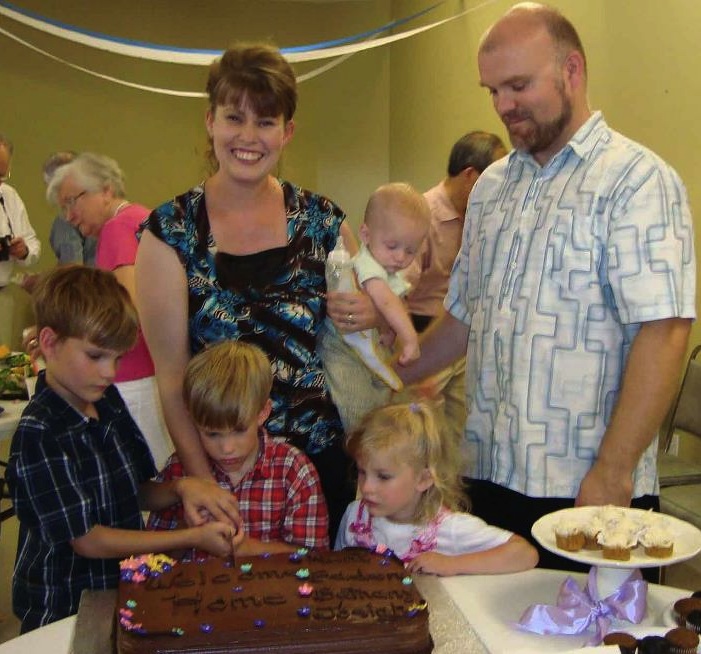
The Bayne family, celebrating their reunion in August of 2011

Paul and Zabeth Bayne spent four years fighting accusations that they’d shaken their infant daughter, four desolate years in the lives of their children. They won their battle in August of 2011, when all four of their children were returned home, including the baby, who had been removed from his parents at birth and then spent the first six months of his life in foster care.

From the beginning, Paul and Zabeth Bayne took their struggle to the public. Reporter Kathy Tomlinson with the Canadian Broadcasting Company wrote baldly last winter in a summary news story, “In 2008, after the parents protested publicly about the baby’s removal, the government seized their two boys, then about four and three years old, for involving them in the publicity.”

But Zabeth Bayne kept speaking out, and she started organizing: By chance, in the same month that her children returned home last summer, she was also hosting her first conference for professionals and parents fighting false accusations of child abuse.

Having survived that logistical challenge, she’s organized another conference this summer, August 3 & 4 in Vancouver, British Columbia, Canada. Her list of speakers includes forensic pathologist extraordinaire Dr. John Plunkett; attorney Mark Freeman, who has been suing hospitals and counties on behalf of falsely accused parents; head-injury researcher John Lloyd; and me.

Zabeth says she wants the conference to both improve professional understanding of shaken baby syndrome theory and foster individual connections:

“We encourage a case history upon registration. Last year we had medical records available to be given to the experts, who were able to provide a review of the files. We have also invited advocates and any other persons interested in the issues the conference will be discussing. It is really a unique merging of both professional and client, as both for reasons of their own are seeking information and connections.”

The Bayne family on a precious visitation in 2008

For more information, check out the conference web site: <no longer on line>.

Last year’s conference was filmed by the Canadian news magazine the fifth estate, which featured the Baynes family in an excellent program on shaken baby syndrome, “Diagnosis Murder.”

I’m encouraged. When I started this blog a year ago, I’d never heard of Paul and Zabeth Bayne; I missed the news last summer when their children came home; and I only stumbled on their conference web site a few months ago. Now here I am, thrilled at the prospect of meeting in person various people I’ve been chatting with online for months to years.

The community is building. The story is breaking. Together we are going to make a difference.

-Sue Luttner

6 Comments

Filed under abusive head trauma, AHT, SBS, shaken baby syndrome

“Back Door” Tactics Show Through

March 16, 2012, BBC One

Tensions have been mounting among the pathologists on the medico-legal drama Silent Witness, and now the doctors are finally speaking frankly. No, the head of the lab assures his young colleague, there is no conspiracy against Dr. Helen Karamides, the prominent pediatric neuropathologist whose maverick views on shaken baby syndrome have made her a lightning rod for criticism. He is double-checking Karamides’s work not because of a political witch hunt, he explains, but because the pathologist has been accused of conducting her research with illegally acquired brain tissues.

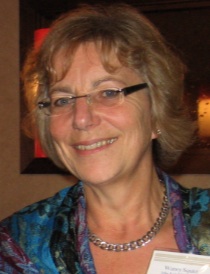
Pediatric Neuropathologist Dr. Waney Squier
At the Evidence-Based Medicine Symposium in Denver in 2009

To anyone familiar with the career of pediatric neuropathologist Dr. Waney Squier, the parallels were obvious:  Like the Karamides character, Squier has testified for the defense in infant-shaking cases, in the face of harsh criticism from her peers and even from the bench—as in the courtroom scene in the opening episode of the two-part show, titled “Paradise Lost.”

Unlike Karamides, however, Squier has published her infant-brain research in the peer-reviewed literature, and she was quickly cleared when accused of violating the human-tissue laws.

The irony is that the conclusion of “Paradise Lost” actually adds to the evidence for a conspiracy of sorts against doctors who question the prosecution model of shaken baby syndrome:  By the end of the wrap-up segment, the Karamides character has videotaped her own suicide, confessing that, “as you correctly alleged,” she had conducted her research on illegally harvested baby brains. Autopsy reveals that she was an alcoholic. The packet that I’d hoped would document her research contains only extensive interviews with a serial killer, who seems to have turned himself into a psychopath by head-banging as a lonely, unloved child.

Anyone who questions the classic model of shaken baby syndrome would be discouraged by the fictional outcome, but Waney Squier has filed a complaint, with both the BBC and Ofcom, an entity that describes itself on the web as an “independent regulator and competition authority for the UK communications industries.”

Dr. Squier declines to talk about the situation, saying only that she trusts the BBC will do the right thing. Her complaint was leaked to the magazine Private Eye, however, which claimed to be quoting from her letter to the two agencies:

“While the storyline portrayed my unique professional circumstances in some detail, it deviates from the truth with respect to an accusation of retaining baby brains for research without permission. Such action would be gross professional miconduct and a criminal offence.”

Squier’s complaint allegedly described the character’s suicide as “disturbing to me and my friends” and “extremely painful to my daughters and my close family.”

The coverage in Private Eye, which doesn’t seem to be posted publicly, also included this observation about the BBC’s embarrassment:

One of the many factors that make the Beeb’s position extremely dicey is that none of the dirt previously directed at Squier by her enemies has stuck, thrown as it was by parties with an obvious axe to grind.

Squier was one of the doctors deeply involved in the response to the Alder Hey organ retention scandal in Liverpool 12 years ago which, ironically, led to the Human Tissue Act three years later and the setting up of the HTA to police it. She now believes she has been depicted as in the mould of Professor Dick Van Velzen, the rogue pathologist at the centre of the Alder Hey scandal.

One of the other factors that “make the beeb’s position extremely dicey” is that Squier had received a call from Silent Witness about a year before the “Paradise Lost” show aired, in which she learned they were doing a program on shaken baby syndrome.

The London Evening Standard published this piece on the complaint, seemingly picked up from Private Eye. 

Heather Kirkwood in 2015

Heather Kirkwood in 2015

What fascinates me about this story is that the BBC faux pas illustrates the kind of “back door” campaign that attorney Heather Kirkwood alerted me to two years ago, between sessions at the Eleventh International Conference on Shaken Baby Syndrome/Abusive Head Trauma, in Atlanta, Georgia.

I happened to catch Kirkwood not long after she’d attended a talk, by Detective Inspector Colin Welsh from New Scotland Yard, with the title “A National Co-ordinated Approach to Cases of Non-Accidental Head Trauma in the UK.” Kirkwood knew complaints had been filed with the General Medical Council (GMC) against Dr. Squier and a colleague of hers, histopathologist Dr. Marta Cohen, based on their courtroom testimony in shaken baby cases. She had just learned why.

“I don’t believe this,” she said, her incredulity tinged with indignation. “Their entire coordinated plan was to keep Dr. Squier and Dr. Cohen off the stand.”

According to Kirkwood’s transcribed notes, D.I. Welsh’s talk had detailed a strategy for improving the conviction rate in shaking cases by neutralizing the “handful of experts” who testify  for the defense and whose role, according to Welsh, is to confuse the jury with the complexity of the science and provide possible alternative causes without explaining why the child died.

In a witnessed statement drafted after the conference, Kirkwood wrote that she had gone to the session expecting to hear about coordination among different arms of law enforcement but realized several minutes into the presentation that “the ‘national coordinated approach’ referenced in the title of the talk was essentially a description of the joint efforts of New Scotland Yard, prosecution counsel, and prosecution medical experts to prevent Dr. Squier and Dr. Cohen from testifying for the defense on their findings in specific cases as well as on their published and peer-reviewed research.”

Welsh’s talk also addressed the problem of “judicial inexperience,” Kirkwood’s notes report. His advice for influencing judges who’ve been listening to SBS critics was not to address the debate in argument, but to work through the “back door,” reaching judges informally outside of court and explaining the prosecution point of view without the opposition present.

Kirkwood’s notes also quote Welsh as advising police to “seek maximum publicity for convictions” and to relay to the press that “shaking undoubtedly causes injuries and in some cases death.” Welsh reported that his team had scheduled SBS training courses for police officers and first responders, and that his agency makes itself available to “offer advice to senior investigating officers.”

Squier and Cohen have so far weathered the complaints lodged against them, but the campaign is having its effect. Last year Squier told the Canadian Broadcasting Company that attacks motivated by her position on shaken baby syndrome threaten her ability to work, and she hesitates to continue testifying.

Presumably the editors at “Silent Witness” consulted one or more child-abuse experts to advise them on their story about shaken baby syndrome. I hope they take a second look at the sources who not only approved such a dismissive treatment of a real problem—the overdagnosis of infant shaking—but also planted a personal attack on one of the rare, courageous physicians willing to rely on scientific evidence instead of popular opinion.

-Sue Luttner

7 Comments

Filed under abusive head trauma, AHT, SBS, shaken baby syndrome

Arizona Father Freed: Dawn of a Sunnier Era?

Drayton Witt and his wife
Courtesy Arizona Justice Project

After four years of hard work by a team of pro bono attorneys and physicians, the state of Arizona agreed last week to vacate the second-degree murder conviction of Drayton Witt, a young father whose 5-month-old son Steven had suffered a lifetime of medical problems before his final, catastrophic seizure in June of 2000.

Witt’s case was way beyond a triad-only conviction:  Not only did the autopsy reveal no abrasions, grip marks, fractures, or other signs of assault, but the child had been born in respiratory and neurological distress, with the umbilical cord wrapped tightly around his neck, followed by a relentless series of infections, fevers, and bouts of vomiting. A month before his meltdown, Steven spent 6 days in the hospital because of seizures that were never explained, and incompletely controlled with medication.

Prosecution doctors at Witt’s 2002 trial rejected the importance of Steven’s medical history, however, and testified that the presence of the triad proved he had been shaken immediately before he fell unconscious while in the care of his father.

Last year the Arizona Justice Project showed Steven’s medical records to other experts,* who unanimously rejected the shaking diagnosis. Several of them independently noted evidence of venous thrombosis.

Then the attorneys showed these reports to the medical examiner who conducted the original autopsy, and asked him to reconsider his 2002 testimony. In a declaration submitted in February of 2012, Dr. A.L. Mosley noted that medical thinking has changed about the significance of the triad and concluded:

Steven had a complicated medical history, including unexplained neurological problems. He had no outward signs of abuse. If I were to testify today, I would state that I believe Steven’s death was likely the result of a natural disease process, not SBS.

Prosecutors could still recharge Witt, but he has been released from prison for now, with no bail, house arrest, or electronic monitoring.

The vacation of Witt’s conviction joins a handful of other victories for the doctors and lawyers who are fighting for justice in SBS cases, beginning with the reversal of the Audrey Edmunds conviction in 2008 and including the commutation of Shirley Smith’s sentence earlier this year. Witt’s case was pressed by the Arizona Justice Project, a member chapter of the Innocence Network, which has started looking at child-death cases within the past few years. I look forward to more successes.

Emily Bazelon published this article in Slate about Drayton Witt while the case was still under appeal. The Wrongful Convictions Blog posted this item that names the attorneys.

*Forensic pathologist Dr. John Plunkett, pediatric radiologist Dr. Patrick Barnes, neuropathologist Dr. Waney Squier, pediatric opthalmologist Dr. Horace Gardner, biomechanic John Lloyd, PhD, and retired pediatric neurosurgeon Dr. A. Norman Guthkelch, the first person to suggest in writing that shaking an infant could produce subdural hematoma, in a 1971 article in the British Medical Journal. The Witt case is the one Dr. Guthkelch was talking about in the interview on NPR a year ago, when he said, “I wouldn’t hang a cat on the evidence of shaking as presented.”

If you are not familiar with the debate surrounding shaken baby syndrome, please see the home page of this site.

-Sue Luttner

18 Comments

Filed under abusive head trauma, AHT, SBS, shaken baby syndrome, Uncategorized

Chasm Between Sides Yawns Wide

A touching feature story out of New Zealand highlights the lack of communication between the two sides in the shaken baby debate.

Sunday Star-Times reporter Tony Wall writes about a stay-at-home father who was found innocent at trial of a shaking assault on his 4-month-old daughter, the younger of his two children—the defendant was toasted by incredulous jury members at a nearby pub after the verdict. Quoted in the article with the pseudonym “David,” the father describes his treatment by the staff at Starship Children’s Health as “bloody awful.” He is pushing for a review of how the Te Puaruruhau child-protection unit handles cases like his.

Last week’s coverage follows up on a 2010 Star-Times investigation, which “revealed concerns that the unit was acting like a police station, treating parents as guilty until proven innocent and mis-diagnosing accidental head injuries as assault.”

The child-protection team stands by its diagnosis, Wall reports:

Patrick Kelly, Te Puaruruhau’s clinical director, believes his staff got it right and rejects the need for a review.

“We remain of the view that the diagnosis of non-accidental head injury was the correct diagnosis,” he said. He said the case was independently peer reviewed by Ken Feldman of the paediatrics department at the University of Washington, who gave evidence for the prosecution.

Kelly said only 56 per cent of cases where non-accidental head injuries in children were diagnosed led to criminal trials, and of those only 66 per cent ended in a conviction, illustrating the high standard of proof required in such cases.

“Given these statistics, the [not guilty] outcome in this case is not unexpected and does not require a review of clinical practice at Starship.”

The not-guilty verdict seems not to have swayed social services, either.  “David’s battle is not over,” Wall  notes, “He now has to convince Child, Youth and Family to let him have access to his two kids, including the girl, who has fully recovered. He has the support of his partner, the mother of the children.”

The Sunday Mercury in Britain, meanwhile, has revisited the Alan Cherry case, which was identified as problematical in a 2005 review of child-death convictions in England. The court declined to reverse the judgment at that time, or again in 2007, but Cherry is asking for another review. In a feature story earlier this month, reporter Adam Aspinal writes :

Now a growing number of people, backed by changing scientific opinion on so called ‘shaken baby syndrome’, have begun to doubt [Cherry’s] conviction.

They include Home Office pathologist Prof. Helen Whitwell.

In a 2007 report for the CCRC, she said she was no longer certain that Sarah’s injuries – brain swelling, bleeding in the tissue between the brain and the skull, and bleeding behind the eyes – proved that she was shaken violently.

She concluded that the injuries were more likely to have been brought about due to a previous injury.

‘Shaken baby syndrome’ remains the subject of fierce debate in medical circles and the courts.

Another high-profile child-death case has resurfaced in Texas, where a judge has recommended overturning the 1995 murder conviction and death  sentence of Cathy Lynn Henderson. Ms. Henderson claimed the infant she was watching slipped from her arms and fell about 4 feet onto a concrete floor. She panicked, buried the infant, and fled to another state, where she was arrested 11 days later—the search, arrest, and trial received prominent news coverage. Prosecution doctors testified that an accident would not account for the child’s injuries, which must have been inflicted.

Ms. Henderson came within days of execution in 2007, but a state court of appeals voted 5 – 3 to stop the proceedings, based on the growing debate surrounding infant head-injury and the consequent recantation by a premier prosecution witness. Former medical examiner Dr. Roberto Bayardo had testified in 1995 that the child would have had to fall from “higher than a two-story building” to receive the head injury that killed him. In 2007, however, according to a recent story in the Statesman by Chuck Lindell, Bayardo submitted an affidavit and testified that “recent advancements in the understanding of pediatric head injuries indicates that relatively short falls onto a hard surface could produce similar injuries to those he found on Brandon during a 1994 autopsy.”

The StandDown Texas Project offers historical coverage of the case beginning at this link.

Finally, a court in Florida has convicted a mother of murder in the death of her toddler, as reported by Vishal Persuad at the Ocala Star-Banner.

Even as old cases drag on in the appeals courts, new cases accumulate.

4 Comments

Filed under abusive head trauma, AHT, SBS, shaken baby syndrome

Florida Conviction Brings Out the Worst in Human Nature

These tragedies trigger such hatred.

A father in Florida, 28-year-old Jonathan Gelb, has been convicted of aggravated child abuse for a presumed shaking assault on his son in 2008, when the boy was only two months old. Young Lukuz developed breathing problems while in the care of his father, and at the hospital was found to have a broken leg and brain injuries “consistent with shaken baby syndrome.” The child had no bruising or other external signs of assault.

What dismays me right now is the comments posted on the internet following the Tampa Bay Times coverage of the conviction. We are all horrified at the notion of shaking and battering a helpless baby, but these cases seem to encourage people to celebrate other forms of  violence. “Put him in a paint shaker for 30 years” is unsettling, but it didn’t bother me as much as, “Ha, ha, dirtbag. Can’t wait until you get shaken by your booty in prison! Better yet, kill yourself and make the world a better place.”

In their defense, these people have been told that this father is guilty of a heinous crime. We are the heretics, those who understand how wrong a diagnosis of infant shaking can be. Still, I can’t help feeling like we’re tapped into some direct line to human blood-lust. The hatred comes quickly and unfettered.

The case coverage earlier in the week received fewer comments, and two of them were from our side, but I haven’t yet figured out how to respond to yesterday’s article and comments. Good luck to us all.

2 Comments

Filed under abusive head trauma, AHT, SBS, shaken baby syndrome