Tag Archives: Shaken Baby Syndrome

Shaking Theorists Repel Criticism

PBSNewsHourSBSWhile ripples persist in the wake of last month’s news stories questioning shaken baby syndrome in the courtroom, innocent parents and babysitters are still going to prison and most press coverage still treats shaking theory as established fact. Now the news magazine of the American Academy of Pediatrics, AAP News, has published a  commentary that dismisses the controversy as a “false debate” and criticizes The Washington Post coverage in March as “unbalanced, sowing doubt on scientific issues that actually are well-established.”

The commentary’s authors, Drs. Howard Dubowitz and Errol R. Alden, argue that both the Post article and the PBS NewsHour segment that ran the same week make too much fuss over the views of only a few doctors:

What are the facts? Similar to the so-called debate over climate change, it involves a tiny cadre of physicians. These few physicians testify regularly for the defense in criminal trials — even when the medical evidence indicating abuse is overwhelming. They deny what science in this field has well-established. They are well beyond the bounds where professionals may disagree reasonably. Instead, they concoct different and changing theories, ones not based on medical evidence and scientific principles. All they need to do in the courtroom is to obfuscate the science and sow doubt.

globalWarmingI’m not sure which side is supposed to be which in the climate change reference. In the fall of 2014, at the conference of the National Center on Shaken Baby Syndrome, law professor Joëlle Anne Moreno closed her talk with a clip from comedian John Oliver that I think was intended to equate the critics of shaken baby theory with the 4% of scientists who still deny that human activities affect climate change. But I remember the era, a few decades ago, when a handful of researchers was raising the alarm about climate change while mainstream scientists and public opinion dismissed them as fringe thinkers, and I just reviewed my notes from a pointed talk by forensic pathologist William R. Oliver at a 2013 pediatric head-injury conference organized by the publishing arm of the National Association of Medical Examiners, in which Dr. Oliver criticized the tactics and intellectual rigor of both sides in the climate debate, while drawing parallels with the struggle over shaken baby.

The AAP commentary joins the statement from the National Center on Shaken Baby Syndrome criticizing The Washington Post and PBS NewsHour coverage, as well as a posting to the National Association of Counsel for Children (NACC) listserve from law professor Frank Vandervort, who called the Post coverage “slanted and misleading” and criticized the American Bar Association for publishing a piece on its web site about shaken baby by Innocence Network attorney Katherine Judson. Attorneys Diane Redleaf and Melissa Staas at the Family Defense Center in Chicago have now published, on the NACC blog, their rebuttal to that posting.

A “Classic” Case

Debates aside, shaken baby theory is still winning in court. In mid-April, after a trial covered in the national press, a New Jersey jury found child care provider Michelle Heale innocent of murder but guilty of first-degree manslaughter in the presumed shaking death of a 14-month-old boy she was watching. Heale told emergency responders that the boy had seemed to choke on some applesauce. The Asbury Park Press web page offers complementary text and video treatments, including this moving anecdote from reporter Kathleen Hopkins:

Before Heale was led out of the courtroom in handcuffs, she turned to her husband, Michael, and asked him to take care of their children, a set of 5-year-old twins.

“Don’t let them forget me,” she said to him, sobbing.

According to coverage during the trial, pediatric ophthalmologist Alex Levin told the jury that the retinal hemorrhages found in the toddler’s eyes were a “classic” example of shaking injury—he said, in fact, that the image he was showing in court was scheduled to appear on the cover of a professional ophthalmology journal.

Dr. John Plunkett

Dr. John Plunkett

Another day’s coverage, however, quoted pathologist John Plunkett, who testified that “shaking had nothing to do” with the boy’s collapse. He rejected the specificity of retinal hemorrhages and said that choking was a possible trigger for the child’s brain swelling and ultimate death.

Like so many other children diagnosed as shaken, the boy had been sick in the days before his crisis, in his case with coughing and congestion, to the point of “vomiting mucous.” He was diagnosed with an ear infection and started on amoxicillin the day before his collapse. His only visible injury was an old bruise on the right side of his forehead, suffered in a fall the week before in his own home.

Other Disturbing Cases

rosenwinkel2

Cindy Rosenwinkel with her son

In Illinois, wife and mother Cindy Rosenwinkel was sentenced in April to six years in prison for the presumed shaking and slamming of an infant she was watching in 2011. According to press coverage, the judge imposed the minimum possible sentence. Ms. Rosenwinkel reported that she had slipped on the steps and fallen onto the conrete floor of the garage while carrying the infant in his car seat. The boy survived and is now described as “an active four-year-old.” Her supporters have created this web site protesting her innocence.

In a slightly encouraging update from Boston, the trial of Irish nanny Aisling Brady McCarthy has been postponed again, this time for a review of the case by the county medical examiner. Last week’s report was that a judge had denied a defense motion to drop the charges, so a delay for a review of the evidence is progress.

May 5 update: After two-and-a-half years in jail, Aisling Brady McCarthy has been released on $15,000 bail.  http://www.bostonglobe.com/metro/2015/05/05/bail-hearing-murder-case-for-nanny/g6z1mGNt6XeJuCpHw91IgL/story.html

burnsPhilIn the media, meanwhile, Dr. Phil ran a segment this week, “Was It Abuse, or Was It an Accident?,” sympathetic to Joshua and Brenda Burns in Michigan, where supporters have rallied behind the family even after Joshua’s child abuse conviction this winter. The page about the program on Dr. Phil’s web site offers a video clip in which Dr. Phil himself runs through the commonalities between the signs of shaken baby syndrome and the side effects of vacuum extraction—during the delivery of the Burns’s daughter, doctors had applied the vacuum device four times without success before eventually performing a C-section.

Joshua reported that when the girl was 11 weeks old, he had nearly dropped her while setting down his cell phone—he said he caught her by the face and head in one hand. She seemed fine that afternoon, but over the next several days, the couple took their daughter to the emergency room twice and to the walk-in clinic once because she was vomiting and appeared ill—on one visit they described her as “pale, cold, and clammy,” for example. Each time she was examined and released. Finally, when the girl developed breathing problems and the parents called 911, doctors looked more closely and found retinal hemorrhages and subdural hematomas, but no encephalopathy.

Dr. Phil’s show featured Dr. Robert Block, former president of the American Academy of Pediatrics, who had not reviewed the Burns case but said that critics of shaken baby “are absolutely wrong.” The program included no doctors who doubt the theory, but Dr. Phil was clear in his support of both Brenda and Joshua Burns. While Joshua serves his sentence, supporters maintain a web site at http://tornfamily.com/. The little girl seems to have recovered fully.

Fox news reported a different story this month, about doctors in Atlanta, Georgia, who accepted a father’s report that his 10-month-old son had fallen backwards while pulling himself up on a chair the day before his collapse. Surgeons removed a blot clot from his brain, and the boy has apparently recovered with no long-term effects and no child abuse accusations against the family. It’s hard to know from the news report what made the difference.

Meanwhile, the publicity for Child Abuse Prevention Month, April, has inspired news stories referencing children diagnosed as shaken in the past, such as this piece about a fund-raising race in South Dakota, this touching moment with a mother whose infant son was presumed shaken to death by his babysitter, and this feature about a loving family who adopted a child believed to be shaken by his maternal grandfather. With no details, it’s hard to know how accurate these stories are. I do believe that shaking a baby is dangerous and unacceptable, but I’ve seen so many dubious convictions that I find myself skeptical, of either the diagnosis or the correct identification of the perpetrator.

I feel like I’m back where I started in 1997, when a child care provider I knew was convicted of child abuse because a baby collapsed in her care, even though the child had been dropped off that morning with “a touch of the flu” and brain imaging showed old bleeding as well as new. In the Burns case, the prosecutors seemed to be arguing that Joshua abused his daughter the day he was alone with her and reported the near fall, but the breathing problems didn’t emerge until three days later. In a letter reproduced on the home page of my blog, a pathologist reported the case of a toddler hospitalized with vomiting for some 18 hours before the symptoms of an ultimately fatal head injury emerged. So why are the experts still saying that the symptoms are always immediate? In his appearance on Dr. Phil’s show, Dr. Block made the point, “In almost every one of these cases, the baby changes from being well to being in trouble when alone with a caregiver,” the same guideline that informed my 1997 case and that seems to be behind the accusations against another child care provider now on trial in Michigan. According to the press report of that case, the babysitter says the infant seemed to have a seizure, and she denies hurting the child in any way. Based on the brain injury, though, she is accused of “inflicting abusive head trauma, possibly by shaking the child.”

When is someone from the justice system going to stop and notice that the symptoms can evolve slowly over time? Or that there are other causes than abuse for subdural hematoma, retinal hemorrhages, and encephalopathy?

copyright 2015, Sue Luttner

If you are not familiar with the debate surrounding shaken baby syndrome, please see the home page of this blog site.

2 Comments

Filed under abusive head trauma, AHT, American Academy of Pediatrics, parents accused, SBS, shaken baby syndrome

The Word Is Out

WashPostTitleAfter 30 years of occasional, isolated coverage, both the national and the local media are starting to take a serious look at the debate about shaken baby theory—even as the accusations and convictions continue.

This past weekend Debbie Cenziper at The Washington Post published what I think qualifies as an exposé of shaking theory, the result of a full year of research that brought together the work of other Post staffers as well as students and teachers at half a dozen universities, including the Medill Justice Project at Northwestern University.

Dr. A. Norman Guthkelch

Dr. A. Norman Guthkelch

Shaken Science: A Disputed Diagnosis Imprisons Parents” offers a thorough but engaging analysis of the issues, including  helpful diagrams and the most accessible press treatment I’ve seen yet of the biomechanics. Cenziper opens, of course, with the story of one accused caregiver and interweaves more cases along the way, so that the piece is not only informative but also readable. She also reports the thoughts of several physicians, including Dr. A. Norman Guthkelch, the first person to propose in print, in the British Medical Journal in 1971, that shaking an infant could cause subdural bleeding.

The National Center on Shaken Baby Syndrome (NCSBS) has released a response to the Post piece, listing the professional organizations that have endorsed shaken baby theory and protesting:

 The Washington Post article portrays a “dispute” in the medical community as to the existence of SBS/AHT. There is a very small minority of proponents for the position that shaking cannot harm an infant, but this position is not supported by the science.

Like the letters protesting the film The Syndrome, the NCSBS response to the Post says that critics of shaking theory think that shaking a baby is not dangerous, although I don’t see anyone in the article making that statement. I think the question is whether the presence of the brain injury proves that a child was violently assaulted.

Cenziper’s article has been picked up in a number of regional newspapers, including the Hamilton Spectator in Ontario, the Daily Herald in Illinois, and the Dallas Morning News in TexaPBSNewsHours.

Then on Monday of this week, PBS NewsHour ran a segment on the shaking debate, a report titled “A disputed diagnosis that sends parents to prison for abuse.” The piece includes a look at the case of Drayton Witt in Arizona, whose appeal drew Dr. Guthkelch back into the arena, as well as interviews with child abuse pediatrician Dr. Lori Frasier—the author of a book on abusive head trauma written “for clinicians, investigators, prosecutors, and social workers”—and Katherine Judson from the Innocence Network.

Josh Burns with his daughter Naomi

Josh Burns with his daughter

Even before these national treatments emerged, regional news outlets had started giving sympathetic coverage to local cases. Last week in Michigan, Heather Catallo of ABC affiliate WXYZ  led off her video report about convicted father Joshua Burns with images of Burns’s supporters proclaiming their faith in his innocence at his sentencing hearing. The prosecutor argued for a harsh sentence, calling Burns a “danger” and objecting, “He’s not admitting that he did it. He’s still maintaining full innocence.” But the judge handed down the minimum sentence, a year in jail. Yesterday, WXYZ reported that prosecutors say they are not moving to terminate Joshua’s parental rights.

Also in early March, the Bennington Banner in Vermont ran a feature story by Keith Whitcomb Jr. about accused father Russell Van Vleck, found innocent by a jury in 2011 after a two-year nightmare for his entire family. Van Vleck’s son Colin, 5 weeks old the evening he quit breathing while lying on the couch next to his father, had been born with a skull malformation that had complicated his delivery.

TheSyndromeAnd the film exposé The Syndrome, which premiered in the fall of 2014, is being accepted at film festivals across the country (coming up: the (In)justice for All Film Festival in Chicago, April 13, and the Arizona International Film Festival in Tucson, April 18), staying in the news and triggering more coverage of the topic.

Outside of the mainstream press, web sites targeted to attorneys are also addressing shaken baby syndrome. On Wednesday of this week, the American Bar Association published an article in its Children’s Rights Litigation section by Katherine Judson at the Innocence Network, titled “What Child Welfare Attorneys Need to Know About Shaken Baby Litigation.” In February, the site LLRX.com, which describes itself as a web journal offering resources for legal professionals, published a valuable review of the debate, “Shaken Baby Syndrome: A Differential Diagnosis of Justice,” featuring live links to court decisions, journal articles, and other resources, by attorney, librarian, and writer Ken Struton, and the National Association of Public Defenders published an essay by public defender Jill Paperno, “Another Step Away From Bad Science – a Review of the  History and Science of Shaken Baby Syndrome in People v. Rene Bailey (December 16, 2014, Monroe County, NY).”

Still, the community of child abuse experts and the justice system remain committed to shaken baby theory. Yesterday in South Carolina, an 18-year police veteran was in court, accused of shaking his 3-month-old son into permanent brain damage. According to the local news report, the prosecutor told the judge that the boy’s injuries “could only have been caused by a violent shaking or by a fall of 20 feet or more.”

oklahomaChildrensIn Oklahoma last week, a step-father was charged with abuse after reporting that the baby fell from a bed. According to the News 9 coverage:

Detectives said they knew [the stepfather] was not being honest about what happened after doctors said the baby’s injuries weren’t consistent with his story. “The baby had to be violently shaken for him to have these injuries,” [Det. David] Thompkins said.

And this week in New York, detectives revisiting an old case charged a mother’s ex-boyfriend with manslaughter for the 2010 death of a 13-month-old boy who suffered injuries “consistent with shaken baby syndrome.” According to the report in The Buffalo News, detectives had acquired a more definitive medical opinion and carried out an additional interview with the suspect:

“In questioning Gonzalez, detectives were able to confirm a few things, though he didn’t confess, but it helped our case,” [Homicide Capt. Joseph] Gramaglia said. “We also obtained a medical opinion that bolstered the case.”

I don’t know what it will take to stop the ongoing tragedy of shaken baby theory in the courtroom. I have taken one small step, though. I’ve signed the Protecting Innocent Families petition, which asks for an objective, scientific review of the evidence behind today’s guidelines for diagnosing child abuse.

If you are not familiar with the debate about shaken baby syndrome, please see the home page of this blog.

copyright 2015, Sue Luttner

8 Comments

Filed under abusive head trauma, National Center on Shaken Baby Syndrome, SBS, shaken baby syndrome

Shaking: “A False and Flawed Premise”

Kristian Aspelin and his son Johan

Kristian and Johan Aspelin

February opened with a pair of important and complementary postings, a bold academic statement signed by 34 physicians, attorneys, and child-protection professionals with “deep concerns” about shaken baby theory in the courtroom, and a beautifully written examination of the Johan Aspelin case that illustrates why the experts are so concerned.

Published in the British journal Argument & Critique, the Open Letter on Shaken Baby in the Courts: A False and Flawed Premise argues that a diagnosis of shaking “risks blurring the line between diagnosis and verdict,” and that “SBS has never been proved as anything more than an hypothesis.” Citing the dearth of scientific research underlying the theory, the authors write:

Noticeably, the requirement for scientifically based evidence is far more rigorous in medical negligence cases than in the family or criminal courts where believing something to be true appears to have achieved sufficient evidential value to sway the determinations of the court.

The letter also notes that the justice system has tended to suppress arguments about shaken baby syndrome:

One of the consequences has been the vilification of experts prepared to advance competing theories and the suppression of sensible debate.

Dr. Waney Squier

Dr. Waney Squier

One example of such vilification is unfolding now in England, where pediatric neuropathologist Dr. Waney Squier is facing a challenge to her license triggered by complaints to the General Medical Council (GMC), reportedly from the Metropolitan Police, that her courtroom testimony exceeds her area of expertise and ignores the opinions of her peers. Dr. Squier has been testifying on behalf of accused parents for about the past decade, since her own research, clinical experience, and reading of the literature convinced her that the prevailing model of shaken baby syndrome is flawed.

My favorite report about Dr. Squier’s GMC hearings, which opened in the fall and continue intermittently, is a legal-training company’s blog posting that features praise from readers for her intellectual honesty in the face of peer pressure. A general practitioner offered this striking parallel with an historical report to the GMC:

Surely the Met investigating a Dr who happens not to agree with the consensus — and holds an expert view — is a little like the tobacco companies (circa 1960s) reporting Sir Richard Doll to GMC for his novel theory that tobacco caused lung cancer.

WhatRealllyHappenedJohan copyIn the U.S., meanwhile, an in-depth treatment of the Johan Aspelin case published last week on Medium by reporter Elizabeth Weil also reveals striking new facts, like the botching of Johan’s initial intubation at San Francisco General, which caused the complete collapse of one lung and serious damage to the other. And that Johan received several times the recommended dosages of two different sedatives, which, Weil writes, “left him essentially paralyzed and unable to communicate distress as air was pumped into his compromised lungs.” The article notes:

Nowhere in the police investigation transcripts does it suggest that doctors considered Johan had a brain injury and retinal hemorrhaging due to low blood-oxygen levels and high carbon dioxide pressure, problems that may result from faulty intubation.

Johan’s mother Jennie Aspelin learned about the error and resulting crisis only because she’d contacted the organ-donation agency to find out why there had been no recipient reported for Johan’s lungs, as there had been for his other organs. Even then she received only the oblique message that it was “a matter of function,” enough to send her on a focused search for the full medical records.

Johan

Johan Aspelin

In November of 2010, Johan’s father Kristian Aspelin told emergency responders that he had fallen in the kitchen while holding 3-month-old Johan, but child-abuse expert Dr. Chris Stewart rejected that explanation and told police that the boy had been violently shaken to death.

In December of 2012, the county dropped murder charges against Kristian, after defense attorney Stuart Hanlon turned over a collection of exonerating reports from outside experts as well as a carefully assembled medical time line that included the hospital’s mistakes. By that time, the family had lived apart for two years, when they’d  lost their baby and needed each other more than ever. They’d sold their house and taken on a staggering debt to cover legal bills, and they’re not slated for any compensation from the state.

Dr. Mark Feingold

Dr. Mark Feingold

But the people who train child abuse physicians continue to teach that children seldom if ever suffer serious injury in short falls, and that only abuse causes severe retinal hemorrhages. In a January, 2015 lecture titled “Is There a ‘Shaken Baby Syndrome’?,” for example, which earns the medical viewer one continuing education credit, child abuse pediatrician Dr. Mark Feingold reported that hypoxia does not cause “macroscopic subdurals” and that children do not suffer serious injury in short falls:

A lot of our opponents say, “Well, the child died. That’s too bad. But it was a short fall, just like Mom said. He fell from Mom’s arms.” The evidence shows that children who fall more than 20 feet can die, but children who fall less than 3 feet almost never die, and when they do, it’s a different kind of accident. It’s a playground accident. It’s an older child. They die of a large subdural that causes lots of pressure. And the RH if present are not the kind we see in abuse cases (emphasis added). But nonetheless, different versions of “I was carrying the baby and I tripped and fell” are often offered.

Slipping and falling with the baby is the explanation Kristian Aspelin offered, like countless parents and caretakers before him and countless more to come, while pediatricians are being trained to reject that story, and to dismiss the hypoxia that frequently accompanies head injury as a source of compounding symptoms.

The retinal hemorrhages in Johan’s eyes were widespread and multi-layered, the kind that child abuse pediatricians insist do not result from short falls or lack of oxygen to the brain. So were the hemorrhages in the eyes of the toddler in the care of René Bailey, who said the little girl had fallen off a chair—Bailey’s murder conviction was vacated in December. Doctors also pointed to extensive retinal hemorrhages when diagnosing shaking injuries in the cases of exonerated babysitters Jennifer Del Prete and Audrey Edmunds and exonerated father Drayton Witt, and in an exasperating case local to me in which paramedics pulled a rubber band from the child’s throat during resuscitation and the only physical evidence of abuse was the triad. It seems to me that the world now offers quite a few examples of extensive retinal hemorrhages from plausible, non-abusive accidents and medical conditions.

RHKelloggWhen I started researching shaken baby theory more than 15 years ago, I routinely read in trial transcripts that doctors considered the presence of retinal hemorrhages a sure sign of child abuse, but since then the situation has grown more complicated. When researchers started looking systematically, they rediscovered that retinal hemorrhages have a long list of non-traumatic causes, including diabetes, anemia, bleeding disorders, increased intracranial pressure, increased intrathoracic pressure, and certain types of infections. A startling one quarter of neonates born spontaneously arrive with retinal hemorrhages, more in deliveries that involve instruments. In light of this new understanding, child abuse experts now recognize other causes of retinal hemorrhages but insist that most of them result in only a few small hemorrhages near the optic nerve, not in widespread, multi-layer hemorrhages, which they continue to interpret as evidence of whiplash shaking.

I don’t know how we will move forward, but I welcome the growing chorus of voices in the journals, in the press, and in the courtroom, who demonstrate through their work and their testimony that the Open Letter on Shaken Baby is representing the situation correctly in its message to the courts:

In short, we would inform members of the judiciary and legal profession in those countries which utilise the SBS construct, that it does not have the undivided support of the relevant professional community, an essential consideration in the assessment of expert testimony.

The letter was edited by Argument & Critique’s managing editor Dr. Lynne Wrennall, whose doctorate is for work in child welfare, from a draft prepared by solicitor Bill Bache and veteran child social worker Charles Pragnell. The signers include 16 physicians, a handful of scientists, and a variety of social work professionals, from both academia and the field.

For the observations of Phil Locke at the Wrongful Convictions Blog, see his posting about the Open Letter.

The film company Mighty Myt is making a film about Johan Aspelin’s case, In a Moment: The Johan Aspelin Story.

copyright 2015, Sue Luttner

If you are not familiar with the debate about shaken baby syndrome, please see the home page of this blog site.
10 Comments

Filed under abusive head trauma, AHT, Falsely accused, parents accused, SBS, shaken baby syndrome

Sweden Searches for the Truth

babySilhouetteA recent decision from Sweden’s  Supreme Court is changing the landscape for Swedish citizens fighting misguided accusations of infant shaking.

An English translation of the decision has been posted by Riksförbundet För Familjers Rättigheter (RFFR, translated as the National Association for Families’ Rights), a union of families and their supporters created in 2013 so its members could approach the government as a coalition rather than as individuals. The ruling, from October of 2014, sets aside the June 2012 conviction of  a father for presumably shaking one of his twin sons in 2009, with the explanation:

It can be concluded that, in general terms, the scientific evidence for the diagnosis of violent shaking has turned out to be uncertain.

As in so many of these cases, the infant collapsed at home and was found at the hospital to have both fresh and aging subdural bleeding, as well as retinal hemorrhages and brain swelling. The doctors concluded that the boy was the victim of abusive head trauma, and the prosecution seems to have offered a range of possibilities for how the injuries were actually inflicted. From the court’s summary of the prosecution’s position:

On 14 May 2009 in his home in Kungsbacka, MM did assault his son OM by shaking him vigorously or directing blows at his head, banging his head against something or using other violence against his head… In the alternate, MM did by shaking O vigorously or directing blows at his head, banging his head against something or using other violence against his head cause O’s injuries through carelessness.

In  reviewing the father’s appeal, the Supreme Court listened to testimony from two physicians, Prof. Anders Eriksson, a forensics expert and an advisor to the National Board of Health and Welfare, and Prof. Peter Aspelin, a radiologist and a former chair of the Scientific Advisory Council of the Swedish Council on Health Technology Assessment (SBU). Both physicians told the court that the SBU, concerned about the reliability of a shaking diagnosis, has now launched a systetwoDucksmatic study of the literature regarding infant shaking, an effort that is expected to take at least two years.

In October of 2013, Dr. Eriksson had told the Legal Advisory Council that “the probability that O’s symptoms had arisen in some other way than through the intentional actions of an adult person is very small.” When he later testified in front of the Supreme Court, however, Dr. Eriksson had changed his position. In the words of the translated decision:

[Dr. Eriksson] based the conclusion in the opinion to the Legal Advisory Council on the fact that O presented three symptoms (a triad) that, if they occur at the same time, have been held, according to the traditional view, to strongly indicate that there has been violent shaking if it is not the case that the child has been subjected to some other form of “high-energy violence” such as a traffic accident or a fall from a high height. The symptoms included in the triad are  haemorrhaging under the dura mater, haemorrhaging in the fundus of the eyes and swelling of the brain. However, this diagnosed model has been criticized. The point of the criticism is that the symptoms given can have other causes . . .  So it is not possible to say today that the occurrence of the triad means that violent shaking has been proved. Instead, it must be concluded that we do not know; we are in a quagmire.

And Dr. Aspelin told the court:

The controversy is not about whether it is harmful to shake a child violently. The issue under discussion is with what scientific certainty it can be established how various injuries found in a child have arisen. The claim that the occurrence of the triad is strong evidence that violent shaking has occurred goes back to the late 1960s; however, the medical evidence for it was relatively thin. But the claim became generally accepted and grew into medical truth over several decades, even though the situation in terms of evidence did not change. It is known that a very large share of fundus haemorrhages are not linked to violence and arise in another way. Nor has it been shown that nerve fibers are torn, and that the brain therefore begins to swell, in connection with violent shaking. It can also be asked whether violent shaking can occur without neck injuries arising… To sum up, it can be said that the scientific support for the diagnosis of violent shaking is uncertain.

The twins had been born by scheduled Caesarean section, apparently without complications. When less than a month old, however, both boys were hospitalized for two weeks with respiratory infections. At that time, medical workers noted that O had a a couple of bruises on one cheek and bruising on the front of his lower legs.

Six weeks later, the parents brought O to the child healthcare center with a report that he had been “vomiting torrents” for two straight days.  Apparently he was treated and releasescalesd, but that afternoon the boy began screaming during a diaper change, and then suddenly fell silent. The child’s mother heard both the screaming and the sudden silence, but did not see what happened. The father reported that when the child fell quiet, he became unconscious and “loose-limbed” and started to “roll the whites of his eyes.” The father said he was “gripped with panic” and that he shook the boy gently in an attempt to resuscitate. The Supreme Court reviewed a video recording of the father’s statement and noted, “The shakes appear fairly cautious and by no means match the description of shaking violence.” Looking at the bigger picture, the court concluded:

It has not emerged that the facts in this particular case are such that it can be established… that O’s injuries were caused by violent shaking or other violence on the part of MM. On the contrary, certain facts, including the facts that O had previously had RS virus and that there were signs of older haemorrhaging under the dura mater, indicate that there is another explanation for the symptoms that O had.

The RFFR web site, which posted both the original decision and the English translation, also offers links to Swedish news coverage of the topic as well as an English-language commentary by pediatric neuropathologist Dr. Waney Squier in Britain and television news coverage out of Dallas, Texas, of a family accused of assault when their daughter’s genetic disorder was misdiagnosed as abuse.

A doctor in Sweden reports that since the Supreme Court’s decision, two convicted fathers have been freed on appeal after years in prison and a third has won in court and is now home with his family.

Fall 2016 update: The SBU has published its review of the shaken baby literature, as reported in this blog posting.

Summer 2017 update: The journal Acta Paediatrica has devoted an issue to the debate that following the SBU’s report, as reported in this blog posting.

If you are not familiar with the debate surrounding shaken baby syndrome, please see the home page of this site.

10 Comments

Filed under abusive head trauma, AHT, shaken baby syndrome

Light Breaks in New Mexico

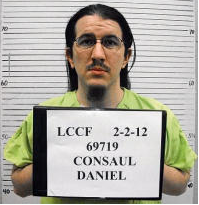
danielConsaulAlthough the case doesn’t involve shaken baby syndrome, a  decision last week by the New Mexico Supreme Court addresses a fundamental issue in shaking cases, the reliability of expert medical opinion in child abuse prosecutions.

The decision freed Daniel Consaul, convicted in 2008 of “intentional and negligent child abuse resulting in great bodily harm to an infant,” for what the local child abuse team had concluded was the intentional suffocation of his 10-week old nephew Jack. The court vacated Consaul’s conviction “with prejudice”—meaning he cannot be re-tried—citing insufficient evidence. The opinion notes in the introduction:

Child abuse prosecutions are unusual in that sometimes medical-opinion testimony provides the only evidence that a wrongful act occurred or that the accused committed a wrongful act…

Our review here focuses on whether this expert testimony alone—testimony in this case based solely on a deduction from an absence of other causes that a certain event likely occurred—is sufficient to support a criminal conviction

Consaul lived with his sister and her baby, and had been caring regularly for the boy since his birth. He told detectives he had checked on his nephew at 1:30 in the morning after hearing the child cry out and found that Jack had vomited and seemed stiff. He called his sister at work, and with a neighbor they took the baby to the hospital in Las Cruces, where the boy arrived shivering and lethargic but breathing and “appropriately responsive.” Unsure of the underlying problem, doctors administered fluids and performed lab tests. A few hours later, Jack was airlifted to the University of New Mexico Hospital, where he began seizing. CT scans then revealed brain swelling apparently triggered by insufficient oxygen.

swaddle

From the Mayo Clinic swaddling instructions

In his first police interview, Consaul said he had swaddled Jack and placed him in his crib that night at about 11:30 pm. He did not specify the position, and the police did not ask. In a more pointed interview the following day, he said he had swaddled the boy more tightly than usual and laid him face-down in his crib. He conceded he was frustrated with Jack’s crying. The subsequent indictment charged that Consaul had endangered his nephew ‘s life and health “by swaddling Jack …tightly and leaving him unattended for an extended period of time.” At trial, the prosecution also argued that Consaul had intentionally suffocated the boy.

Refreshingly, the judges made a careful examination of the Child Abuse Response Team (CART) report that informed that conclusion, writing:

While proof beyond a reasonable doubt is not required for admissibility of an opinion, it is essential to support a jury’s finding of guilt. As a reviewing court, we must decide whether a reasonable jury could “reason” from the available evidence to the point of finding guilt beyond a reasonable doubt.

In this case, there was no substantial evidence pointing to Daniel’s guilt other than whatever could be said of the medical testimony, and when that evidence is analyzed, it falls short of establishing proof beyond a reasonable doubt.

Critical care specialist Dr. Mary Johnson had testified, for example, that one of her reasons for concluding that Jack had been intentionally suffocated was that his uncle had made a “calculated” change in his story. She said that Consaul had first reported putting Jack down on his back, but then claimed he’d placed the child on his stomach, after learning that doctors suspected suffocation. Dr. Johnson was apparently relying on the CART report, which did not include an interview with Consaul but quoted Jack’s mother Heidi as saying that the boy was usually put down on his back and that Consaul had told her he found Jack on his back after his cry in the night. Like the initial police report,the CART report contained no statement from Consaul about how he placed the boy in his crib that night. The court notes:

The assertion of a “change of story” was based on what Heidi recalled Daniel telling her, which she then repeated to Dr. Coleman, which was then transmitted via the CART report as tertiary hearsay to Dr. Johnson. It is difficult to know how to interpret this so-called contradiction or assess its reliability. Even if Heidi accurately recounted what Daniel had told her, it was that “Daniel found Jack on his back [and] had vomited,” not that he had put Jack to bed in that position. (Emphasis added.)

Although not a perfect analogy, this slurring of details echoes a sequence I’ve seen routinely in hospital records: An initial assessment raises the suspicion of inflicted head injury. During interrogation, a caregiver admits to some kind of shaking, usually mild, often in the course of attempted resuscitation. The detectives report back, and subsequent doctors’ notes include a phrase something like, “consistent with admitted shaking by caregiver.”

In another parallel with shaking diagnoses, Dr. Johnson testified that she had reached her conclusions partly because Jack’s body showed no signs of trauma:

After prompting by the district court, the State asked Dr. Johnson what physical manifestation from her examination led her to believe that Jack had been smothered. Dr. Johnson responded that Jack’s seizures were an indicator, as was the lack of any other physical manifestations. “There is often nothing that can be seen, nothing on the face, no bruises, no bleeding. No petechiae. Greater than 50 percent of the time, there is absolutely nothing on the skin or on the baby that would indicate a problem.”(3)

This observation inspired the best line in the decision, footnote 3:

  1. We leave for another day an examination of how the lack of any physical evidence of child abuse can somehow become probative of the crime of child abuse.

In addition to criticizing the evidence, the opinion condemns the trial court’s decision to issue one set of jury instructions for the separate charges of negligent child abuse and intentional child abuse:

Defendant was entitled to separate jury instructions for negligent and intentional child abuse resulting in great bodily harm given that the State’s theories of how that harm occurred were different and inconsistent; for negligent child abuse, the state told the jury that defendant put the baby to bed carelessly, tightly swaddled and placed face down on a pillow, and argued that this act of negligence caused baby’s injuries, and for intentional child abuse the state hypothesized that defendant did not just put baby to bed carelessly, but that defendant actually used a pillow or his hand to suffocate baby so he could not breathe, and jury was never asked to specify which criminal act defendant committed.

The judges quote from the prosecution’s final argument that a juror might think Consaul “did it on purpose” or might think “he’s just an idiot” who put the baby down negligently, “but everybody knows, and we know he knew better than to do that.” The court’s response:

The prosecutor invited the jury to convict Daniel of child abuse whether or not the jury agreed on what criminal act Daniel actually committed. Jurors should not be left free, let alone encouraged by the prosecutor, each to go his or her own way when it comes to determining what criminal conduct —if more than one act is alleged—caused the child’s harm. The jury needs to agree unanimously on what conduct caused harm to the child.

While addressing the many issues raised by the case, the opinion criticizes the state legislature for its ambiguous definition of “negligence” in its child abuse guidelines. Noting that the law recognizes a distinction between civil versus criminal negligence, the opinion observes:

We note, however, that in Section 30–6–1(A)(3) the Legislature appeared to capture two standards of mens rea in one sentence when it defined “negligently” as meaning “that a person knew or should have known of the danger involved and acted with a reckless disregard for the safety or health of the child.” § 30–6–1(A)(3) (emphasis added). The Legislature joined these two distinct states of mind with the conjunctive “and.” Taken literally, the text of the statute refers to both ordinary negligence and criminal recklessness all in a single legislative breath. The Legislature cannot rationally have intended such self- contradiction.

The opinion also contains an educational discussion of the difference between the medical concept of the differential diagnosis—“the determination of which of two or more diseases with similar symptoms is the one from which the patient is suffering, by a systematic comparison and contrasting of the clinical findings”—and the legal concept of the differential etiology—”a process that identifies a list of external agents… that potentially caused the disease.” Quoting another case opinion, the justices note:

“[P]hysicians receive more formal training in differential diagnosis than in differential etiology…. [P]racticing physicians have more experience working with the differential diagnosis technique, since in many cases the cause of an illness is irrelevant to the patient’s treatment.”

The child abuse team’s conclusions about intentional suffocation would seem to fall into the area of “etiology,” since there are countless ways for oxygen flow to be interrupted.

This case is cleaner than a shaking prosecution, because there were no subdural hematomas and no retinal hemorrhages, and therefore no presumption of violent assault, but I believe the same underlying issues apply. I hope to see more judges taking such a careful look at how the child protection teams reach their conclusions and recognizing the difference between sincere medical opinion and proof beyond a reasonable doubt.

copyright 2014, Sue Luttner

If you are not familiar with the debate surrounding shaken baby syndrome, please see the home page of this site.

2 Comments

Filed under abusive head trauma, AHT, SBS, shaken baby syndrome

New Cases Keep Coming, And So Do the Appeals

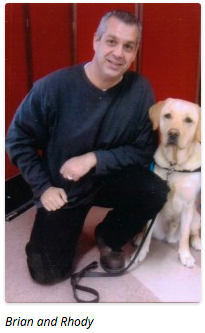
brianPeixotoThe action in the shaken baby arena seems to be ramping up, maybe because a few successful appeals have breathed new hope into old cases. This site is receiving not only the usual traffic from newly accused families looking for answers but also messages from supporters on the outside renewing their commitment to prisoners convicted years ago—like Brian Peixoto, who has been such an exemplary inmate during 18 years of incarceration that he was chosen to train service dogs at one facility, although he’s since been transferred.

Brian’s most recent appeal was turned down this past fallbut his case has been taken on by both the innocence arm of his state’s public defense committee and the New England Innocence Project, and his supporters have just this winter put up an ambitious web site.

Closer to the public eye, judges have granted new hearings in two old cases, reopening the convictions of child care providers Jennifer Del Prete in Illinois, whose case I looked at in a posting last month, and René Bailey in New York, featured briefly in a posting last summer. In Bailey’s case, the appeal brief offered a new report from a child care provider who said she had seen a 2-year-old boy who was at Bailey’s home on the crucial day re-enacting with stuffed animals a sequence that matched Bailey’s description of an accidental injury to a little girl. Both that boy and another child had confirmed Bailey’s report at the time, but were deemed too young to be reliable witnesses.

ReneeBaileyThe decision in Bailey’s case, issued by Monroe County Court Judge James J. Piampiano, limits the new hearing to the question of whether the defense has really produced “new evidence” with its proffered testimony from experts about a change in medical thinking regarding shaken baby syndrome and from the boy’s care provider about her observations.  Reporter Steve Orr wrote in the Democrat Chronicle:

At the time of her conviction, nearly all physicians and other experts believed that symptoms such as those displayed by [the toddler] could be caused by violent shaking, and conversely that nothing other than shaking or throwing a child could cause them.

But some experts now argue that those conclusions were based on shaky science. They say new research shows falls or illnesses can cause some of the symptoms traditionally ascribed to shaking.

The Criminal Justice Center Blog at Pace Law School posted this commentary on the case.

jhavardIn Mississippi, meanwhile, where Jeffrey Havard waits on death row, his supporters have created a thorough new web site that includes the text of his most recent appeal, filed in November of 2013. The appeal is based on both a new set of expert opinions and the 2009 recanting by the state’s star witness, Dr. Steven Hayne, of the sexual abuse diagnosis that made Havard eligible for the death penalty. Arguing that testimony about shaken baby syndrome at Havard’s 2002 trial has also not withstood the test of time, attorney Graham P. Carner quotes, among others, the affidavit of biomechanical engineer Chris Van Ee, PhD:

It would be biomechanically incorrect to dismiss the history of fall as a causal factor resulting in the findings described at autopsy. Shaking is a less likely explanation for these findings…
The rotational forces attained in manual shaking cannot be equated to those occurring as a result of a multistory fall or a high speed motor vehicle accident. To suggest otherwise is without scientific foundation.

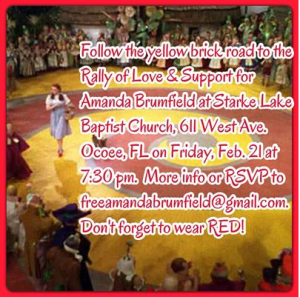
amandaRallyFeb2014And in Florida, friends and family are regrouping in support of Amanda Brumfield, convicted in the 2008 death of her best friend’s one-year-old daughter. Brumfield reported that the baby had fallen and hit her head while climbing out of a portable playpen. Supporters are launching their new campaign with a rally next Friday at the church Amanda attended before her incarceration.

Supporters of child care provider Marsha Mills in Ohio have had their site up since 2007, within months of Mills’ conviction in another toddler-fall case. The site shows fundraisers for her defense as recently as November of 2013. They are now awaiting the results of the most recent appeal.

Finally, in Canada, Onatario Court of Appeal Judge Marc Rosenberg has authorized appeals by two shaken baby defendants who have already served their time but want to clear their records. The decision cites the lessons of the Goudge hearings in 2012.

All of this appeal activity would feel like progress, except that the other kind of story keeps coming as well. Just in the past two days I’ve seen news reports of shaking allegations against a father in Wisconsin, a young mother in Pennsylvania, and the boyfriend of the child’s mother in Ohio.

Note:  A number of support sites have remained in place for years but are not mentioned in this posting because they are holding steady, not surging. Still, it feels incomplete not to mention here the The Amanda Truth Project, which contains many family vignettes. For a  list of individual support sites, petitions, and Facebook pages, please see the lower portion of the Cases page on this blog.

If you are not familiar with the debate surrounding shaken baby syndrome, please see the home page of this blog.

copyright 2014, Sue Luttner

4 Comments

Filed under abusive head trauma, AHT, Brian Peixoto, Falsely accused, Jeffrey Havard, Jennifer Del Prete, Renee Bailey, SBS, shaken baby syndrome

“Dissent Into Confusion:” The Supreme Court, Denialism, and Shaken Baby

Atlanta, Georgia, September 2010

Atlanta, Georgia
Site of the 11th International Conference on Shaken Baby Syndrome/Abusive Head Trauma
September 2010

bold article in the Utah Law Review by Prof. Joëlle Anne Moreno at the Florida International University College of Law and prosecutor Brian Holmgren in Tennessee not only dismisses the debate about shaken baby syndrome as a “false controversy” but also labels SBS defense experts as “mercenaries” and roasts Supreme Court Justice Ruth Bader Ginsburg for her dissenting opinion when the court reinstated the vacated conviction of grandmother Shirley Ree Smith in 2011.

Dissent Into Confusion:  The Supreme Court, Denialism, and the False ‘Scientific’ Controversy Over Shaken Baby Syndrome” explores a couple of topics I’ve heard Holmgren address in the past, and it reminds me of his rollicking presentation in Atlanta in 2010, which I will get to later in this posting. The Dissent paper correctly identifies the 1997 trial of British au pair Louise Woodward as a  milestone in the arena, achieving far more than just bringing the syndrome into the headlines. Their analysis:

“The hotly contested trial also brought national attention to the use of highly paid defense medical witnesses to challenge the accuracy of a child abuse diagnosis and to advance outlier and highly controversial ‘alternative theories’ of causation… Woodward marks the origin of the false AHT/SBS controversy—at least in part because the defendant, who was convicted of second-degree murder by a jury, was later freed by the judge.  This fact alone could explain the resulting public uncertainty regarding the weight of the prosecution’s medical evidence. Irresponsible journalists, however, including Mike Wallace of 60 Minutes, exacerbated the confusion.”

scalesI agree that the Woodward trial brought a new kind of medical evidence to the courtroom, but I would call it a vital counterbalance to the common knowledge. The au pair agency that had placed the nanny, or possibly their insurance company, paid for first-rate attorneys who brought in experts with impeccable credentials. In his decision to set Woodward’s sentence at time served, Judge Hiller Zobel cited the nanny’s confusion, inexperience, and immaturity. I have to wonder if he wasn’t also influenced by the testimony of witnesses like biomechanics pioneer Lawrence Thibault, ScD, who had designed the experimental mannequins for the Duhaime research that raised the first scientific questions about shaking theory in the 1980s, and pioneering neurosurgeon Ayoub Ommaya, who had collaborated with Thibault long before the Duahime study. The televised trial certainly featured a more organized and  better articulated defense than the 1997 trial that drew me into this arena, or any of the others I’ve researched from that era, especially Shirley Ree Smith’s.

As in Woodward, the prosecution prevailed in Smith, only to see the defendant released after all, amid media coverage that seemed to imply innocence. Smith was convicted in 1997 but released in 2006, after the Ninth Circuit  Court of Appeals vacated the jury’s decision. The Supreme Court reinstated her conviction in 2011, but the following spring California Gov. Jerry Brown issued a pardon, so Smith was not required to return to prison and finish her sentence. Moreno and Holmgren promise to set the record straight by dispelling what they see as two fundamental errors in the dissenting opinion to the Supreme Court decision:  that Smith’s grandson Etzel Glass showed “few signs of SBS” and that “doubt has increased within the medical community regarding SBS.”

“Few signs of SBS”

-photo by Julia Catron

-photo by Julia Catron

As the Dissent paper concedes, the autopsy report says Etzel had subdural and subarachnoid bleeding but no brain swelling and no retinal hemorrhages. Doctors also found blood in the optic nerve sheaths, most of it “recent in origin” but with “occasional hemosiderin pigment deposits” that implied decomposed blood. Only one of these signs—subdural hematoma—is technically on the short list of defining SBS symptoms, although some sources include “subdural or subarachnoid” bleeding, as both are a common result of impact injury, except that subarachnoid bleeding has more known non-traumatic causes than subdural bleeding.

At Smith’s trial, forensic pathologist Dr. Stephanie Ehrich, her supervisor Dr. Eugene Carpenter, and child-abuse pediatrician Dr. David Chadwick all testified that Etzel had died of a shaking assault that tore his brainstem, causing death so immediate that there was no time for the usual signs of SBS to develop. But autopsy revealed no evidence of any tearing, which apparently Erlich believed to be within the brainstem, which she didn’t examine. Moreno and Holmgren write:

“Dr. Erlich noted that she did not submit sections of Etzel’s brainstem for microscopic examination because injury would not be evident on microscopic examination if the child died quickly, and this would not have assisted in her diagnosis because the examiners ‘wouldn’t have found anything anyway.'”

The authors note that the “medical construct” of AHT “can include subdural hemorrhage, retinal hemorrhage, encephalopathy, and often evidence of previous trauma or other bodily injury.” Granted that Etzel had two items on this list, subdural hematoma and evidence of previous trauma, the overall picture is still short two out of three defining features for SBS. The authors do convince me that they and the prosecution experts all sincerely believe Etzel was shaken to death, but I can identify only one leg of the triad and no reason to conclude that Shirley Smith was responsible for her grandson’s collapse. Did Etzel really cry long and hard enough that his grandmother snapped and shook him to death while his mother, asleep in the next room, never heard a thing?

“Doubt Has Increased”

The Dissent paper also blasts the Edmunds decision, which triggered the 2009 critique of shaken baby in the courtroom by law professor Deborah Tuerkheimer and appears in articles like the 2012 paper by Keith Findley et al. The authors explain:

“Justice Ginsburg notably did not cite any of these law review articles. However, because her opinion closely mirrors these works, she grants an unwarranted imprimatur of legitimacy to legal academic arguments that SBS ‘quite possibly does not exist,’ may be ‘junk science,’ that ‘SBS science in its current conflicted state . . . does not support criminal convictions,’ and that the medical community has ‘deliberately discarded a diagnosis defined by shaking.'”

Moreno and Holmgren attribute the imaginary debate about shaken baby syndrome to a small cadre of “self-interested and highly-paid defense witnesses” who “fundamentally misconstrue and misstate the basic science involved in the medical diagnosis of child abuse” and whose views are then parroted by academics:

“The academics cite the same handful of defense medical witnesses, the media cites both, the defense medical witnesses benefit from the publicity and are hired in more cases, and the cycle begins anew.”

Holmgren elaborated on this theme at the 2010 NCSBS conference, in a multimedia presentation that illustrated how effective he must be in front of a jury. He projected a series of quotes from defense expert testimony while Pinnochio’s nose grew on a larger screen behind him. He charged the witnesses with giving conflicting opinions at different times, misrepresenting their qualifications, misquoting the literature, publishing case studies without revealing their roles as defense witnesses, publishing cases of alleged mimics without revealing that abuse was confirmed by a conviction, and “making blatantly false statements.” scarecrow

The session ended with a sing-along, led by guitar-playing child-abuse pediatrician Dr. John Stirling from Santa Clara County. The song was “If I Only Get Ten Grand” (words here), sung to the tune of “If I Only Had a Brain,” with the message that defense experts are in it for the money. I can speak only from my own experience, but the professionals I know who defend against shaking allegations could be earning a lot more and enduring a lot less flak by staying away from the controversy. And most defendants are having trouble paying the rent in the face of lost income and unexpected legal costs, let alone finding the money for expensive experts.

Holmgren also foreshadowed parts of the Disssent paper in his presentation on the Smith case at the 2012 NCSBS conference, “SBS and the Supreme Court,” in conjunction with child-abuse pediatrician Dr. Randell Alexander. Holmgren opened his segment with a review of the appeals:  Smith was convicted in 1997, and her first appeal was rejected in 2000. Her 2006 habeas petition was denied by a district court, but the Ninth Circuit Court of Appeals reversed that decision. “This always bothers me,” Holmgren said about multiple appeals, “as if the jurors are too stupid to get it right, as if the district attorney is too stupid to get it right.” The Supreme Court reversed the Ninth Circuit twice, in 2007 and 2010, but the Ninth Circuit stuck by its decision. “The Supreme Court keeps slapping them down like an unruly child,” Holmgren noted.

Finally, in 2011, the Supreme Court definitively reversed the Ninth Court’s 2006 ruling, and Smith’s conviction was reinstated, but with the problematic minority opinion. Holmgren stepped through the literature cited in the footnotes—Donohoe 2001, Bandak 2005, Leestma 2006, and so on—dismissing each in turn, and indignant that a justice of the supreme court would be getting her information from defense experts. His conclusion with Moreno in the Dissent paper confirms that Holmgren is holding strong to that position:

“The Smith dissenters’ myopic view of the evidence muddies their analysis of the legal and scientific questions and raises real concerns about the message sent to future courts, the media, and the public.”

I don’t see how the Dissent paper is gong to enhance either understanding or justice in these cases, as I think we need to be learning more about infant head injury, not setting up barricades against further discussion. ©2014 Sue Luttner If you are not familiar with the debate surrounding shaken baby syndrome, please see the home page of this site.

8 Comments

Filed under abusive head trauma, AHT, Falsely accused, Innocence Network, keith findley, National Center on Shaken Baby Syndrome, parents accused, russell maze, SBS, shaken baby syndrome

Medill Database Opens With a Geography Lesson

medililMap

2020 Update:  The Medill Justice Project has reorganized and refocused, eliminating the shaken baby project.

This post is the only record I can find of the statistics published in 2012. The links on this page that no longer work have been deactivated.

A year and a half after calling for cases to build a database of shaken baby syndrome accusations, the Medill Justice Project has published a thin slice of its data, in conjunction with its analysis of how cases are distributed across the country. The view into the database is very narrow, but the county-by-county searches can be fascinating.

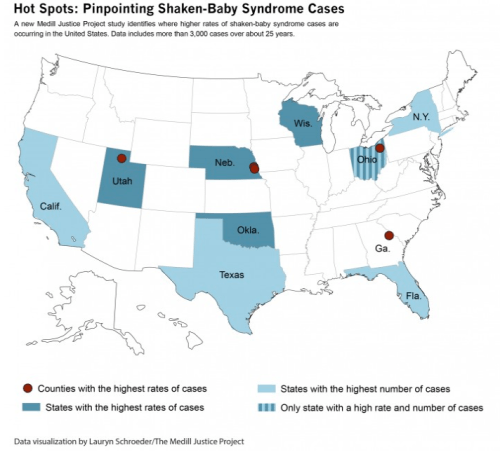
As Lauryn Schroeder writes on Medill’s SBS site, the rates of reported baby-shaking vary widely across the country. She offers a map of SBS hot spots and examines the situations in the states and counties with the highest concentrations, which seem to this reader to correlate with regional child-protection strategies that encourage police and hospitals to work together. The county that prosecuted immigrant father Hang Bin Li last year, for example, makes Schroeder’s list:

Queens County, N.Y., which lies southeast of Manhattan, has the 10th largest population by county in the United States and ranks third in the nation for total number of shaken-baby syndrome cases. After adjusting for population, it ranks 36th in cases by county per 100,000 people. Experts said the Queens County District Attorney’s Office is nationally known for aggressively prosecuting shaken-baby syndrome cases. The office also co-sponsors an annual conference with the county medical examiner’s office on abusive head trauma that invites medical and legal professionals nationwide to learn about the diagnosis, investigation and prosecution of these cases.

“A poor investigation doesn’t help anyone,” said Queens County Senior Assistant District Attorney Leigh Bishop. “I wouldn’t have a job if there was just a formula to prosecuting these cases. They’re all different.”

Two of the four counties with the nation’s highest rates of reported shakings lie adjacent to each other in Nebraska, where state law mandates multidisciplinary teams that include police, social services, and medical professionals for investigating child abuse. Schroeder quotes a prosecutor in Sarpy County, just south of Omaha, who explained that the different agencies on the team “review the cases together and if they need help they assist each other… [The law] added continuity and consistency in the area instead of having multiple agencies try and tackle a problem independently.”

medillBars

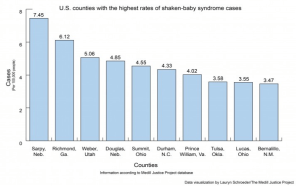
For a readable image, see the Medill web site: http://www.medilljusticeproject.org/2013/12/10/hot-spots/

Medill has posted only the barest data about each case:  the sex of the presumed perpetrator, the state, and the county. I tried searching my own county, which is reported to have had a population of 1.84 million in 2012. The Medill database, available directly at http://www.medilljusticeproject.org/visualization/, lists four cases.

Tipped off by Schroeder, I then searched on Queens County, with a reported population of 2.27 million in 2012. Medill lists 28 cases in Queens, literally seven times as many as in my county, for a population not quite twice the size.

When I searched for Middlesex County, Massachusetts, where Louise Woodward was prosecuted in 1997, with a 2012 population of 1.54 million, just a little smaller than my 4-case county, Medill reported 18 cases—and Middlesex didn’t even make the cut for the story.

It’s hard to know, of course, how accurately the Medill numbers reflect the true incidence of SBS reports, given the lack of any national mechanism for tracking them, but the students seem to be doing a reasonable job, as reported in this posting last February.

The introduction to the database invites us in:

The Medill Justice Project hopes the public will use this database to better understand this largely opaque issue, which affects families throughout the nation. The information may be used for independent research and reporting as long as The Medill Justice Project’s database is credited.

The data now available reflect the information the project has reported on  so far: A posting in August revealed that men are much more likely to be accused of shaking infants than women:  http://www.medilljusticeproject.org/2013/08/27/the-gender-gap/  I’m hoping the students will make additional fields visible as they complete future analyses.

7 Comments

Filed under abusive head trauma, AHT, SBS, shaken baby syndrome, Uncategorized

Jury Frees Accused Father, and More

Richard Britts and his daughters-courtesy of Richard Britts

Richard Britts and his daughters
-courtesy of Richard Britts

Illinois father Richard Britts has been cleared of shaking accusations, two years after his younger daughter, three months old at the time, suffered a seizure while in his care. Jurors acquitted him earlier this month after hearing testimony from both prosecution doctors and forensic pathologist Dr. John Plunkett. The child seems to have fully recovered from the incident.

Reporter Patrick Yeagle’s touching and insightful treatment in the Illinois Times makes this observation: 

It’s the latest case calling into question “shaken baby syndrome” – a triad of symptoms that some doctors say can only be caused by violent shaking. Other doctors, however, say existing medical problems can cause the same symptoms, casting doubt on a diagnosis that has landed several people nationwide behind bars.

A Twin Case in Jersalem

A report in The Jersalem Post (“Israel’s best-selling English daily and most-read English website”) offers an unusual slant on a shaking diagnosis with this statement:

Shaken baby syndrome is an intermediate condition between an accident and physical abuse of children.

In the article’s focus case, a father is facing a manslaughter charge in the death of his 4-month-old son, who with his twin sister was rushed to the hospital in January with “internal injuries,” including bone fractures.

The news report explains the prosecution’s thinking:

The state said it will argue that the death was caused unintentionally, but that the father did intentionally commit acts of violence against the baby who died and that those acts of violence did cause the baby’s death, making an allegation of manslaughter appropriate.

A Successful Appeal

An appeals court in Florida has partially reversed a shaking conviction, ordering a new trial because the first judge had excluded biomechanical testimony. The published opinion focuses on what Florida law allows in the testimony of a biomechanics expert. The key paragraph opens:

Kieran Lloyd, who at 7 months eagerly provided data on repetitive bouncing motions by playing in a commercial jumping toy.

Florida courts have held that a biomechanics expert is not qualified to give a medical opinion regarding the extent of an injury. Stockwell v. Drake, 901 So. 2d 974, 976 (Fla. 4th DCA 2005); Mattek v. White, 695 So. 2d 942, 943 (Fla. 4th DCA 1997). However, it has been recognized that a biomechanics expert is qualified to offer an opinion as to causation if the mechanism of injury falls within the field of biomechanics. See Houghton v. Bond, 680 So. 2d 514, 521 (Fla. 1st DCA 1996) (holding that the defense’s biomechanics expert was qualified to testify that 90% of the plaintiff motorist’s injuries were caused by his hitting the dashboard as a result of his failure to wear a seatbelt because the expert was not offering a medical opinion based on brain anatomy and function); Behn v. State, 621 So. 2d 534, 536 (Fla. 1st DCA 1993) (recognizing that an expert in the field of biomechanics would be qualified to testify that a delay in an automobile accident would have altered the fatal consequences)..

The expert whose opinion was prohibited is biomechanic John Lloyd, PhD, whose most recent paper I described in this blog posting. The key paragraph of the opinion concludes:

In this case, Dr. Lloyd was not offering a medical opinion as to the extent of the victim’s brain injury, a matter which was not in dispute. Rather, based upon his biomechanical studies, he opined that (1) a child of the victim’s height and weight could have sustained similar brain injuries by falling out of a day bed; and (2) shaking alone could not have caused such injuries. We conclude Dr. Lloyd was qualified to offer these opinions as to causation because the mechanism of injury (falls and shaking) fell within the field of biomechanics

A Suicide Attempt

Finally, after a preliminary hearing that lasted four days, a California judge has ordered a foster father to stand trial for murder and child abuse in an especially murky case. The defendant called 911 in November of 2010 with a report that a baby was choking on milk. During interrogation later he said he had accidentally knocked the child from the table in his bouncy chair.

Vacaville Reporter Ryan Chalk summarized the medical testimony in a news story, no longer on line, in The Reporter:

Wednesday saw the conclusion of testimony from Dr. Michelle Jorden, a forensic neuropathologist.

Jorden testified that it was her opinion that Buddy had suffered a traumatic brain injury leading up to his choking episode.

“I think it’s a combination of shaking and impact,” Jorden testified as to the cause of the injuries.

And from another day’s coverage:

Dr. Rachel Gilgoff, a child abuse pediatrician, testified that “both sides of his brain were extremely compromised,” as tests revealed he was suffering from significant bleeding and swelling in the brain.

“His injury is extremely consistent with abusive head trauma, or shaken baby syndrome,” Gilgoff testified.

I’m guessing there was  no evidence of impact, because there’s none mentioned in the articles.

The defendant, Reginald Tanubagijo, attempted suicide at some point before the preliminary hearing, according to The Reporter:

Tanubagijo had already been arrested and released on bail, and during that time, Officer Michael Shephard responded to the Tanubagijo home for a report of a suicide attempt.

Shephard testified that he found Tanubagijo slumped over with a bloody towel over his arm and a very large laceration to his wrist.

Inside the kitchen, Shephard testified that he found a note that read, “I killed Buddy.”

Other notes found at the home read, “I did killed Buddy,” and “Tell the judge I did killed Buddy,” the officer further testified.

The child’s biological mother has filed a civil lawsuit charging negligence by the county and others who allowed the defendant to be a foster parent, the most recent coverage reports.

The unnecessary pain of it all makes me sad.

5 Comments

Filed under abusive head trauma, AHT, Gregory Council, PhD, Richard Britts, SBS, shaken baby syndrome

“Back Door” Tactics Show Through

March 16, 2012, BBC One

Tensions have been mounting among the pathologists on the medico-legal drama Silent Witness, and now the doctors are finally speaking frankly. No, the head of the lab assures his young colleague, there is no conspiracy against Dr. Helen Karamides, the prominent pediatric neuropathologist whose maverick views on shaken baby syndrome have made her a lightning rod for criticism. He is double-checking Karamides’s work not because of a political witch hunt, he explains, but because the pathologist has been accused of conducting her research with illegally acquired brain tissues.

Pediatric Neuropathologist Dr. Waney Squier
At the Evidence-Based Medicine Symposium in Denver in 2009

To anyone familiar with the career of pediatric neuropathologist Dr. Waney Squier, the parallels were obvious:  Like the Karamides character, Squier has testified for the defense in infant-shaking cases, in the face of harsh criticism from her peers and even from the bench—as in the courtroom scene in the opening episode of the two-part show, titled “Paradise Lost.”

Unlike Karamides, however, Squier has published her infant-brain research in the peer-reviewed literature, and she was quickly cleared when accused of violating the human-tissue laws.

The irony is that the conclusion of “Paradise Lost” actually adds to the evidence for a conspiracy of sorts against doctors who question the prosecution model of shaken baby syndrome:  By the end of the wrap-up segment, the Karamides character has videotaped her own suicide, confessing that, “as you correctly alleged,” she had conducted her research on illegally harvested baby brains. Autopsy reveals that she was an alcoholic. The packet that I’d hoped would document her research contains only extensive interviews with a serial killer, who seems to have turned himself into a psychopath by head-banging as a lonely, unloved child.

Anyone who questions the classic model of shaken baby syndrome would be discouraged by the fictional outcome, but Waney Squier has filed a complaint, with both the BBC and Ofcom, an entity that describes itself on the web as an “independent regulator and competition authority for the UK communications industries.”

Dr. Squier declines to talk about the situation, saying only that she trusts the BBC will do the right thing. Her complaint was leaked to the magazine Private Eye, however, which claimed to be quoting from her letter to the two agencies:

“While the storyline portrayed my unique professional circumstances in some detail, it deviates from the truth with respect to an accusation of retaining baby brains for research without permission. Such action would be gross professional miconduct and a criminal offence.”

Squier’s complaint allegedly described the character’s suicide as “disturbing to me and my friends” and “extremely painful to my daughters and my close family.”

The coverage in Private Eye, which doesn’t seem to be posted publicly, also included this observation about the BBC’s embarrassment:

One of the many factors that make the Beeb’s position extremely dicey is that none of the dirt previously directed at Squier by her enemies has stuck, thrown as it was by parties with an obvious axe to grind.

Squier was one of the doctors deeply involved in the response to the Alder Hey organ retention scandal in Liverpool 12 years ago which, ironically, led to the Human Tissue Act three years later and the setting up of the HTA to police it. She now believes she has been depicted as in the mould of Professor Dick Van Velzen, the rogue pathologist at the centre of the Alder Hey scandal.

One of the other factors that “make the beeb’s position extremely dicey” is that Squier had received a call from Silent Witness about a year before the “Paradise Lost” show aired, in which she learned they were doing a program on shaken baby syndrome.

The London Evening Standard published this piece on the complaint, seemingly picked up from Private Eye. 

Heather Kirkwood in 2015

Heather Kirkwood in 2015

What fascinates me about this story is that the BBC faux pas illustrates the kind of “back door” campaign that attorney Heather Kirkwood alerted me to two years ago, between sessions at the Eleventh International Conference on Shaken Baby Syndrome/Abusive Head Trauma, in Atlanta, Georgia.

I happened to catch Kirkwood not long after she’d attended a talk, by Detective Inspector Colin Welsh from New Scotland Yard, with the title “A National Co-ordinated Approach to Cases of Non-Accidental Head Trauma in the UK.” Kirkwood knew complaints had been filed with the General Medical Council (GMC) against Dr. Squier and a colleague of hers, histopathologist Dr. Marta Cohen, based on their courtroom testimony in shaken baby cases. She had just learned why.

“I don’t believe this,” she said, her incredulity tinged with indignation. “Their entire coordinated plan was to keep Dr. Squier and Dr. Cohen off the stand.”

According to Kirkwood’s transcribed notes, D.I. Welsh’s talk had detailed a strategy for improving the conviction rate in shaking cases by neutralizing the “handful of experts” who testify  for the defense and whose role, according to Welsh, is to confuse the jury with the complexity of the science and provide possible alternative causes without explaining why the child died.

In a witnessed statement drafted after the conference, Kirkwood wrote that she had gone to the session expecting to hear about coordination among different arms of law enforcement but realized several minutes into the presentation that “the ‘national coordinated approach’ referenced in the title of the talk was essentially a description of the joint efforts of New Scotland Yard, prosecution counsel, and prosecution medical experts to prevent Dr. Squier and Dr. Cohen from testifying for the defense on their findings in specific cases as well as on their published and peer-reviewed research.”

Welsh’s talk also addressed the problem of “judicial inexperience,” Kirkwood’s notes report. His advice for influencing judges who’ve been listening to SBS critics was not to address the debate in argument, but to work through the “back door,” reaching judges informally outside of court and explaining the prosecution point of view without the opposition present.

Kirkwood’s notes also quote Welsh as advising police to “seek maximum publicity for convictions” and to relay to the press that “shaking undoubtedly causes injuries and in some cases death.” Welsh reported that his team had scheduled SBS training courses for police officers and first responders, and that his agency makes itself available to “offer advice to senior investigating officers.”

Squier and Cohen have so far weathered the complaints lodged against them, but the campaign is having its effect. Last year Squier told the Canadian Broadcasting Company that attacks motivated by her position on shaken baby syndrome threaten her ability to work, and she hesitates to continue testifying.

Presumably the editors at “Silent Witness” consulted one or more child-abuse experts to advise them on their story about shaken baby syndrome. I hope they take a second look at the sources who not only approved such a dismissive treatment of a real problem—the overdagnosis of infant shaking—but also planted a personal attack on one of the rare, courageous physicians willing to rely on scientific evidence instead of popular opinion.

-Sue Luttner

7 Comments

Filed under abusive head trauma, AHT, SBS, shaken baby syndrome