Category Archives: AHT

Steps Forward, Steps Backward, Part II

The second half of a posting started on March 7
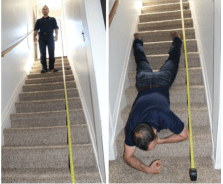
Re-creation of the reported fall

In another small step forward, a father in Michigan has been found not guilty of murder or abuse in the death of his 11-week-old son, after spending 16 months in jail waiting for trial.

Mark Hontz had reported falling down the basement stairs with the boy in his arms, landing on the infant when they reached the floor. Doctors at the University of Michigan, however, rejected that explanation for the child’s injuries. At the preliminary hearing, forensic pathologist Dr. Jeffrey Jentzen pointed to anterior rib fractures and neck damage, which he said were “more consistent” with the compression and whiplash that occur during squeezing and shaking than with a fall down stairs.

Dr. Jentzen’s testimony reflected an opinion I’ve heard before about pediatric stairway falls:

“Well actually, going down stairs is not a single fall down, for example, ten feet. It is ten individual falls down a single foot, so there’s not the long distance fall that you would expect.”
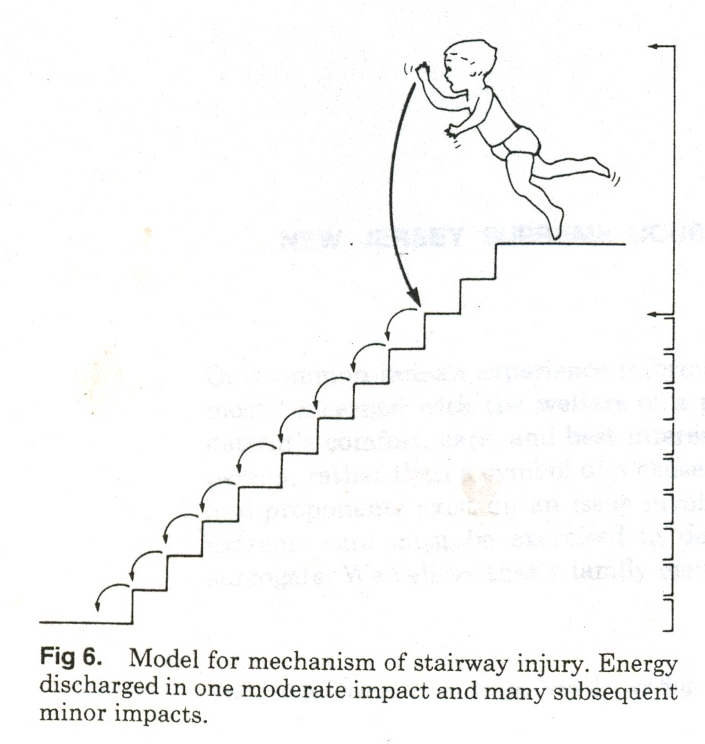
In the journal Pediatrics in 1988, Drs. Mark Joffe and Stephen Ludwig at the University of Pennsylvania proposed that model in their paper “Stairway Injuries in Children,” illustrating their point with the figure to the right. That paper had concluded that “nonaccidental injury should be suspected” when children receive serious injuries in an alleged stairway fall.

The photos at the top of this page show the stairs to Mark Hontz’s basement, with the figure at the starting and landing spots he reported. A biomechanical engineer brought in by the defense pointed out that an adult falling forward down stairs does not fall one step at a time, as the feet are no longer under the center of mass. Instead, the body falls forward, propelled by the force of gravity, until the motion “is arrested by contact with the ground or steps.” The engineer calculated that the infant experienced a vertical fall of 9 feet, landing with an approximate speed of 16 miles per hour.

Investigators conducted a series of interviews with Mark Hontz, finally confronting him with the medical opinion that his son did not die from a fall down the stairs. “Hontz offered no other explanation,” the police report says, which is another way of saying that, even under intense pressure during repeated interrogations, the father never changed his story.

Illustrating the value of a thorough defense, attorney Sharon Clark Woodside also called in a forensic pathologist, a child abuse pediatrician, and a pediatric radiologist to rebut the prosecution theory.

Witnessed Shakings

Two witnessed shakings in separate hemispheres this winter seem to have produced no injuries, nor any questioning of shaking theory.

Dismayed diners at an Australian cafe called authorities about a man shouting and shaking his 5-month-old daughter, according to a news story by reporter Allison Harding. After paramedics checked the child and cleared the father to take her home, Harding wrote, other patrons attempted unsuccessfully to block his car. The father later pled guilty to unlawful assault and has sought treatment for “long-term mental health issues.” His wife reportedly stood by him in court, calling him a responsible and loving father.

cottonwoodaz

Cottonwood, Arizona

Concerned bystanders in Cottonwood, Arizona, called police and recorded video of a 19-year-old mother shaking and slapping her 10-month-old daughter at a street corner, according to coverage in the Verde Independent. Responding officers arrested the mother, a transient already known to local police and described as “combative.” Authorities later discovered that the child was missing from foster care in another state, kidnapped by her parents during a family visit. The Independent’s coverage quoted Cottonwood Police Sergeant Tod Moore, who said, “I have seen too often in shaken baby cases where permanent brain damage or death occurs. We appear to be very fortunate this time.” I note that Sgt. Moore has probably seen serious injury in cases where the doctors diagnosed shaking. In the one witnessed case he’s probably handled, doctors at the local hospital found no injuries.

More Fathers in the News

Convictions of and accusations against fathers continue to pass through the headlines.

One case in Pennsylvania has it all: no external signs of assault, the presumption of immediate symptoms, and a retreat from the term “shaken baby syndrome”—but with a computer animation shown at trial illustrating the presumed effects of a violent shaking. From an article before the verdict by reporter Laurie Mason Schroeder of The Morning Call:

Prosecution expert Dr. Debra D. Esernio-Jenssen, medical director of the Child Advocacy Center at Lehigh Valley Hospital, testified that Quinn suffered from symptoms of abusive head trauma, formerly called “shaken baby syndrome.”

Using a computerized animation, Esernio-Jenssen demonstrated how, she said, a baby’s brain would hemorrhage from being snapped back and forth in the hands of an angry adult.

On the subject of timing, Leigh Valley Live reporter Sarah Cassi wrote in an article reporting the conviction:

[Dr. Esernio-Jenssen] testified the baby would have shown immediate symptoms following the “severe, lethal episode of head trauma” she suffered, meaning the injuries occurred while [the father] was alone with the child.

Depressingly, the father’s defense attorney seems to have focused on blaming the child’s mother, arguing only that the injury had been inflicted before the girl was left in his client’s care.

A father in Tennessee has been sentenced to 15 years for aggravated child abuse, convicted after a 4-day trial, according to coverage in the Johnson City Press. The child’s mother still insists her husband is innocent—in a moving clip from the trial posted by WCYB, she said, regarding her son, “We wanted a real answer because we knew he wasn’t abused.”

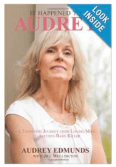
The story of a young father accused in Wisconsin, meanwhile, received mixed coverage in a single treatment, with a headline about possible doubts but six opening paragraphs focused on the prosecution theory of shaken baby syndrome—the unfolding article then cites the Audrey Edmunds case and reveals that the defense attorney is fighting hard against the diagnosis.

Foster Mom Charged

And in Florida, investigators have reached the improbable conclusion that a 43-year-old mother and foster parent—active in the local child protection community—became enraged enough to batter a 17-month-old to death in the 7-minute gap between the time a social worker left her home and the time she dialed 911 for help with an unconscious toddler. Coverage in the Tampa Bay Times describes a boy with a complex medical history, including developmental delays and physical signs of early neglect. The child used a feeding tube, and he had been discharged from the hospital just a few hours before his collapse, after three days of treatment following a choking incident. Faith in the diagnosis of abusive head trauma, with a guarantee of immediate symptoms, apparently overrides the logical assessment of established medical facts.
Sam Stone

Sam Stone

This story reminds me of Quentin Stone in California, a father acquitted in 2014 by jurors in Yolo County who accepted that the child’s fatal collapse had resulted from an evolving head injury suffered in an accidental fall. Stone had taken his son to the hospital several months before his medical crisis, just to make sure he was OK, he said, after the boy had rolled off a bed. Doctors found no injuries and released him, but over the following weeks, the Stones had sought medical advice repeatedly for their son’s ongoing vomiting and apparent “breath holding.” Despite that well documented history, the prosecution charged Stone with murder after the boy’s fatal collapse, based on medical opinion that the brain findings proved abuse and the symptoms would have been immediate.

Also in Yolo County,  a public invitation this winter to the annual Rotary Club of Davis fund-raising dinner noted that a team of Rotarians had taken a trip three years ago to Kenya, East Africa, “to educate physicians, medical students and nurses on how to identify abusive head trauma in children.” The article did not say where the Rotarians got their own medical training, but it reported that the team “trained nearly 1,200 professionals throughout Kenya.” According to the shaken baby page on the web site for Rotary District 5160 (northern California), the Davis chapter also provides shaken baby simulator dolls to schools and hospitals.

Fractures in the News

Finally, a television station in Indiana ran a provocative segment on a family trying to regain custody of their two sons, removed because of fractures discovered in their first-born when he was four months old. “I understand them getting involved at that point,” says mother Ally Allen on camera, “The frustration came in that they never tried to find an answer.”

Knowing they had not abused their son, Ally says, she and the child’s father started looking for another doctor who could give them an accurate diagnosis. They found Dr. David Ayoub, a pediatric radiologist in Illinois who determined that the infant suffered from rickets, a lack of mineralization in the bones that predisposes to fractures. Once considered a disease of the past, rickets remains “a significant cause of nutritional disease for infants,” according to the American Academy of Pediatrics.

The family’s second child was removed from them at birth because of the pending charges. While they wait for their case to work its way through dependency court, Ally and her partner can see their sons only for a few hours at a time during scheduled visitations.

If you are not familiar with the debate about shaken baby syndrome/abusive head trauma, please see the home page of this site.

copyright 2017 Sue Luttner

7 Comments

Filed under abusive head trauma, AHT, parents accused

Shaken Baby Debate: Steps Forward, Steps Backward

jasonschneider

Jason & his son

Part I of II

Amid a winter of murky news coverage and disappointing developments, an encouraging story comes out of Colorado, where the state dropped charges in January against father Jason Schneider after a mistrial due to a hung jury in December. Schneider, an EMT and former volunteer firefighter, has enjoyed the support of his family and community since the accusations last winter.

“There’s been so much rebuilding, and lots of celebration,” Jason reported, although his family is still reeling from a year of lurid press coverage, hardly balanced out by a couple of brief articles after the fact. “My wife and I know we are blessed,” he said, “but we are disillusioned with the justice system and the media,” and they worry about other accused families with fewer resources.

Jason had called 911 after his son seemed to choke on a bottle and quit breathing and Jason’s own efforts failed to revive him.

The state’s motion to drop the case—which was based on the triad with no other findings—referenced three letters written to the prosecutor after the trial from jurors, two urging the state to drop the charges. The jury had deadlocked 10-2, with the majority advocating for acquittal. In light of the juror input, the motion declared:

“…undersigned counsel simply does not believe there is a realistic likelihood of a jury composed of 12 different members of the community reaching a unanimous decision finding the defendant guilty.”

The Schneider family

The Schneider family

The judge placed one of the letters in the case file, from a panelist who wrote that many jurors thought the trial was a “poor prosecutorial decision” and the case should be dismissed. He attributed the hung jury to two jurors who approached deliberations “with a presumption of guilt instead of a presumption of innocence.”

The letter-writer, who said he had no preconceptions going into the trial, criticized some of the prosecution’s tactics, including the marginalizing of defense witnesses. He observed that the defense experts had years of experience and knew the research in their specialties, in contrast to the local experts called by the state:

“The inexperienced doctors at Children’s Hospital… believe the triad is gospel as far as Shaken Baby Syndrome/NAI [non-accidental trauma] is concerned. That is what they were taught… The specialists that the defense brought in are far from the only ones that share an alternate view. It was disgusting to hear you refer to them as ‘fringe.'”

Defense attorney Kathryn Stimson had brought in a pediatric ophthalmologist who specializes in retinas, a pediatric neurologist, a neuropathologist, a radiologist, and a biomechanical engineer. She said her team was devastated that the jury didn’t acquit after such a strong defense. “These cases are incredibly difficult,” she reflected. “Even with amazing expert and character witnesses, they are still so very hard.”

evaserenden

Eva Amurri Marino

Indeed, these cases are hard, even without devastating accusations of abuse, a point made by actress and blogger Eva Amurri Martino, daughter of Susan Sarandon and mother of two. Eva revealed in a January posting on her blog Happily Eva After that two months earlier, when her son Major was only a month old, the night nurse had fallen asleep while holding the baby, who had slipped off her lap and onto the hardwood floor.

At the hospital, doctors found a depressed skull fracture and “localized” brain bleeding. Eva and her husband hovered over their precious baby for “two harrowing days” of treatment and tests. “To say these were the most traumatic and anxious two days of my life is an understatement,” she wrote. But their son was then released with a glowing prognosis, and, indeed, he seems to be fine.

She didn’t write about the incident when it happened, Eva explained, because she wanted to wait until they knew Major was OK, and also:

“The second reason I chose not to share was fear of judgement… I know that this news might reach many, and of those many there will always be the people who say that this accident was my fault. That if it had been me in there holding him instead of a Night Nurse, that this never would have happened. That I deserve this for allowing my child to be in the care of somebody other than me. Well, let me tell you–the guilt I bore in the days and weeks after this accident was more intense and more damaging than anything I would wish upon my worst enemy. I had all those same thoughts and more. I wept in the hospital, telling anyone who would listen that it should have been me. That I was to blame. The truth is, even this woman who came so highly recommended, with a perfectly clean track record, could make a very human mistake. It “could happen to anyone”, and as they told me repeatedly in the hospital, it DOES happen to anyone. More often than you’d like to hear. Obviously, the (extremely upset and remorseful) nurse is no longer working for our family, though we forgive her. And even though I finally made peace with the fact that this freak accident could not have been avoided by me, it has continued to effect me to my core and in all aspects of my daily life.”

happilyevafamily

Major with his family

What dazzles me about this case is that the doctors seem to have accepted that a fall from a caretaker’s lap can produce a depressed skull fracture and, I’m extrapolating, subdural hematoma. In 2006 in San Mateo County, I watched a nanny convicted of child abuse and sentenced to years in prison based on those symptoms, also with no underlying brain damage. I have to wonder what made the difference—nothing in the posting implies there was ever any question of abuse.

Disappointment at Retrial

A jury in Maryland, meanwhile, has found child care provider Gail Dobson guilty in a second trial, nearly three years after her first conviction was reversed on a finding of ineffective assistance of counsel. Her attorney in 2010 had failed to call any medical experts to dispute the state’s theory, a strategy a 2014 appeals court labelled “deficient” after hearing testimony from two critics of shaking theory. News coverage of the second trial implies that the judge excluded defense expert testimony based on pretrial hearings, so jurors seem to have heard again from only one side in the debate.

Leo Ackley's Facebook profile shot not long before the accusations

Leo and Baylee

The Dobson conviction echoes the outcome this past fall in Michigan, where Leo Ackley was also found guilty at a second trial, after his first conviction was vacated on appeal in 2013. Both the appeal court and the second jury heard from defense experts brought in by the Michigan Innocence Clinic. Leo’s family insists he is innocent and says they are pushing for another appeal. I reached out to Leo, who wrote a long reply, including these thoughts:

“It’s really the hardest time of my life… I don’t know where to begin after being convicted for a second time, and knowing how long and hard it was to make it back the first time. Just preparing for another long appeal process and praying for a miracle.”

I am still hoping for a better outcome in the upcoming retrial of care provider René Bailey, whose conviction in a toddler’s death was vacated in 2014.  Jury selection begins September 5.

I have another thousand words queued up about this winter’s developments, but I think this first half is plenty for one blog posting. More soon.    -Sue

For Part II of this posting:  https://onsbs.com/2017/03/10/steps-forward-steps-backward-part-ii/

If you are not familiar with the debate about shaken baby syndrome, please see the home page of this site.

copyright 2017 Sue Luttner

15 Comments

Filed under abusive head trauma, AHT, parents accused

Shaking debate back in the courts and in the news

uphill-gunnThe landscape in the shaken baby debate is shifting again, with a series of developments that have locked in gains, slowed losses, and even claimed new ground in the struggle against unproven science in the courtroom.
In New York state last week, an appeals court affirmed the 2014 reversal of the murder conviction of care provider René Bailey, who said she was out of the room when a little girl jumped or fell from a chair. Prosecution experts had testified, however, that only shaking could explain the brain findings, and that children don’t die from short falls. In his decision reversing the conviction, Judge James Piampiano accepted the argument by Bailey’s appeal attorneys that changes in medical thinking since her 2001 trial constituted new evidence.

Last week’s ruling rejected an appeal by the state, noting that “advancements in science and/or medicine may constitute newly discovered evidence” and explicitly mentioning the evolving SBS research. Coverage in the Democrat and Chronicle led with the optimistic proclamation:

“For the first time, a New York appellate court has ruled that evidence once used to convict people in shaken-baby cases may no longer be scientifically valid.”

That same evidence failed earlier this month to convince a South Dakota jury, which found Aaron Bruns innocent of murdering his 3-month-old son Levi in what appears to be a pure shaking case. Coverage in The Daily Republic offers this summary of the father’s report:

During the trial, Bruns said he thought Levi was choking, so he quickly picked him up and tipped him upside down to clear his airway. Five minutes later, according to Bruns, Levi turned pale, and his eyes rolled to the back of his head, leading Bruns to run him to a nearby hospital.

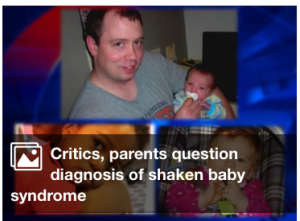
fox9Other individual victories seem to have triggered a resurgence of press coverage highlighting the controversy. In Minnesota, for example, reporter Tom Lyden at Fox 9 pulled together a provocative treatment with the title “Critics, parents, question diagnosis of shaken baby syndrome,” featuring a local father acquitted at trial; a family whose own experts convinced the county to drop charges; and a mother now fighting the loss of her son. The treatment closes with a statement from the American Academy of Pediatrics (AAP), which persists in shifting the question from whether the brain findings prove abuse (No, they do not) to whether shaking is even dangerous (Yes, of course it is):

“There is no legitimate medical debate among the majority of practicing physicians as to the existence or validity of AHT/SBS…  Claims that shaking is not dangerous to infants or children are not factual and are not supported by AAP policy, despite being proffered by a few expert witnesses in the courtroom.”

presidentialsealThe assertions of the AAP notwithstanding, the real uncertainties about shaken baby theory were acknowledged this fall, briefly but officially, in a presidential report on forensic sciences in the courtroom, undertaken in the wake of the 2009 study that found “serious deficiencies” and called for “major reforms” of the nation’s forensic science system. The follow-up report, published this fall by the President’s Council of Advisors on Science and Technology (PCAST), notes that DNA evidence has disproved past forensic techniques like bite-mark matching and visual hair analysis, and it recommends strategies for bringing courtroom testimony in line with scientific knowledge. Footnote 15 cites an “urgent” need to examine shaken baby theory, which has not been addressed in past studies:

“PCAST notes that there are issues related to the scientific validity of other types of forensic evidence that are beyond the scope of this report but require urgent attention—including notably arson science and abusive head trauma commonly referred to as ‘Shaken Baby Syndrome.'”

For my posting on arson science, please see “Bad Science Goes Up in Smoke.”

SquierProfileNoCaptionAll these developments come in the same season as the decision to reinstate Dr. Waney Squier’s right to practice medicine, and the release of a literature review by a panel of Swedish scientists who concluded that shaken baby theory has not been proven, both of which have generated international news coverage. New Scientist, for example, published a news report about the Swedish study, with a sidebar on Dr. Squier’s case and a promo that nailed the character of the debate, calling it “toxic and polarised.”
The ripples are still spreading in the wake of Dr. Squier’s reinstatement. Even non-subscribers can give a thumbs-up to the letters to the BMJ in support of her, submitted by Michael Birnbaum, QC, and, further down the page, Dr. Jennian Geddes. I’m told our clicks will help the editors understand the scope of the problem. (If you haven’t done so yet, you can also go give a thumbs-up to the earlier letters from a group of more than 250 professionals and from pediatric radiologist David Ayoub.)

The Sunday Times last week published a more detailed treatment of Dr. Squier’s story than appeared in the early news reports—you have to register with the Times to see the article, but the process is free and reasonably painless.

Leo Ackley's Facebook profile shot not long before the accusations

Leo Ackley

The past few weeks have also brought a number of disappointments—in Michigan, a second trial resulted in another guilty verdict against Leo Ackley, whose first conviction had been vacated on appeal, and an appeals court affirmed the conviction of Joshua Burns, who has served his jail time and reunited with his family, although he remains on probation. Both appeals had been pressed by the Michigan Innocence Clinic, which has been focusing on shaking cases.

Leo Ackley’s family insists they will keep fighting for him, and last month the Michigan Innocence Clinic won a grant to help defend clients who may have been wrongfully convicted in shaking cases. Despite two disappointments this season, the clinic will surely keep up the pressure against a flawed theory that’s been winning in court way too long.

I hope the press, the public, and professionals in the arena stay tuned as the debate unfolds.

copyright 2016, Sue Luttner

If you are not familiar with the debate surrounding shaken baby theory, please see the home page of this blog.


8 Comments

Filed under abusive head trauma, AHT, shaken baby, shaken baby syndrome, Uncategorized

Dr. Waney Squier Reinstated

SquierProfileNoCaption

Dr. Waney Squier

A British High Court judge has reinstated Dr. Waney Squier’s right to practice medicine, in a decision that dismissed as “unsustainable” a number of findings by a tribunal appointed by the General Medical Council (GMC) in 2015 to investigate her testimony in a series of shaken baby cases. A well respected pediatric and perinatal neuropathologist, Dr. Squier has questioned shaken baby theory in the medical journals and has testified to her opinions in court. After the tribunal’s findings were issued last spring, the GMC removed her from the medical registry.

Justice Sir John Edward Mitting explicitly rebutted the tribunal’s conclusions that Dr. Squier had acted dishonestly, noting at one point that “her views were genuinely held.”

Despite his harsh criticism of the tribunal’s report, Justice Mitting upheld their finding that Dr. Squier had practiced outside her field of expertise. He has prohibited her from giving expert testimony in British courtrooms for three years.

The GMC’s actions against Dr. Squier were based on a complaint lodged in 2010 by the National Policing Improvement Agency (NPIA), a government body disbanded in 2013 only a few years after it was created “to support police by providing expertise in such areas as information technology, information sharing, and recruitment.” The agency seems to have acted on a broad interpretation of its charter, supporting the police by attempting to silence one of the few physicians in Great Britain willing to testify against the prosecution model of shaken baby theory.

waneyPlanoProfile

Justice Mittering, who heard a week of testimony on Dr. Squier’s appeal last month, had clearly studied the transcripts from a series of hearings held by the tribunal, because he identified a number of factual errors in their report—such as their finding that Dr. Squier had proposed choking in a case with no evidence to support that conclusion, even though a 7-year-old witness had told an investigator the baby “was trying to vomit and was choking” and the clinical notes included repeated references to “gastro-oesophageal reflux disorder,” a condition consistent with choking.

I was relieved to see that the judge had also read much of the medical literature, and so recognized some of the tribunal’s misunderstandings and mischaracterizations of her citations. The tribunal had found, for example, that Dr. Squier had “completely misinterpreted” the Duhaime 1987 paper and had misrepresented both it and the Cory 2003 follow-up study under oath. Comparing her testimony with the published papers, however, Justice Mitting noted the tribunal’s error:

This was a good example of her giving evidence outside her expertise, but, properly stated, both reports were not inconsistent with, and were to an extent supportive of, her hypothesis that a fall from a low height could cause fatal head injuries in small babies.

The institutional  insistence that Dr. Squier gave evidence outside her expertise continues to strike me as ironic. In a tortured qualification to his endorsement of that finding, Justice Mitting recognized that medical specialists evaluating the triad would necessarily be expressing opinions outside their own disciplines, but he still seemed to agree with the tribunal that Dr. Squier had crossed a line:

The qualification is that, when the triad fell to be considered, any specialist, with the possible exception of a forensic pathologist, who supported or doubted the triad as indicative of NAHI [non-accidental head injury], would be bound to be expressing an opinion outside his specialism. There can be no proper criticism of a neuropathologist, neuroradiologist or ophthalmologist/ophthalmic pathologist for explaining why he supports or doubts the majority view and in doing so, expresses a view about symptoms or pathological findings outside his own discipline. It is neither improper nor professional misconduct for an expert in one specialism to do so. The boundary line between a proper explanation of support or doubt and trespassing impermissibly outside the expertise of the witness is imprecise and difficult to identify in any particular case. It would have been better if the [tribunal] had acknowledged that difficulty; but, with that qualification, there is and can be no justified criticism of its conclusions about the limits of Dr. Squier’s expertise.

I don’t understand how either the tribunal or Justice Mitting can object to Dr. Squier’s expressing her opinions about short falls but still accept the opinions of physicians who diagnose shaking injury, a proposition that implies a level of biomechanical understanding not included in anyone’s medical education.

Stepping through the dozens of charges and sub-charges, Justice Mitting determined that Dr. Squier had correctly cited not only Duhaime and Cory but also Arbogast 2005, Rooks 2008Oehmichen 2008, and others, noting in one case that the tribunal had relied on the testimony of  neuropathologist Prof. Colin Smith, who himself had misrepresented the paper in question:

Professor Smith stated, in evidence accepted by the [tribunal], that the authors could discriminate between traumatic and ischaemic causes of axonal injury. In fact they only did so in 2 out of 18 cases. Unfortunately, this proposition was not put to Professor Smith in cross-examination. As a non-expert, I set out my understanding of the passage on which he relied with some diffidence, but it does, in the end, seem to me to be reasonably clear. It supports rather than undermines Dr. Squier’s opinion. The [tribunal] was wrong to find this sub-charge proved.

Still, Justice Mitting agreed with the tribunal that Dr. Squier had “cherry-picked” from her sources and had at various points misrepresented Arbogast and others, and he seems to have accepted some common misunderstandings about shaking injuries. The tribunal had found, for example, that Dr. Squier was untruthful and “evasive” in her testimony in front of them, citing four specific instances in which they found her statements unbelievable. In one of their examples, she gave inconsistent answers to the question of when she had suggested a child had experienced a “lucid interval”—in her written report or in her oral testimony at either the civil or the criminal trial. Evaluating that exchange, Justice Mitting wrote:

Her explanation for the difference was that she was confused. Her answers read like an attempt to justify an opinion about lucid intervals which she realised was difficult to support. The [tribunal]’s finding that her explanation of confusion was “incredible” was justified if, by it, they meant that she was struggling to justify an unsustainable opinion. To that extent, her answers were evasive.

Myself, I endorse Dr. Squier’s opinions about the lucid interval, which I think are well supported by the published literature—please see, for example, the letter to the American Journal of Forensic Medicine and Pathology from Dr. Robert W. Huntington III, on the home page of this blog.

After last week’s decision was released, including the restriction on Dr. Squier’s giving court testimony, intensivist and shaken baby critic Dr. Steven Gabaeff observed that even with the reinstatement, proponents of shaken baby theory have achieved their goal of “suppressing defense testimony.” If no one who doubts shaken baby theory is allowed to testify, then accused parents have no chance to argue their innocence at trial.

heather2015

Heather Kirkwood

Detective Inspector  Colin Welsh from New Scotland Yard articulated the suppression strategy in 2010 in Atlanta, Georgia, at the biannual conference sponsored by the National Center on Shaken Baby Syndrome, in a talk with the title “A National Co-ordinated Approach to Cases of Non-Accidental Head Trauma in the UK.” According to attorney Heather Kirkwood, who attended the session, Welsh reported that his team had been facing a “systemic failure” of shaken baby prosecutions and the primary cause was that “juries were being confused by defense witnesses.” He recommended intense scrutiny and criticism of experts for the defense, and he mentioned his partnership with NPIA, the agency that filed the the complaint against Dr. Squier. Kirkwood later made her notes public, along with a deposition that offered this summary of Welsh’s presentation:

“Shortly into the talk, I realized that the ‘national coordinated approach’ referenced in the title of the talk was essentially a description of the joint efforts of New Scotland Yard, prosecution counsel, and prosecution medical experts to prevent Dr. Squier and Dr. [Marta] Cohen from testifying.”

For more about professional harassment of Dr. Squier, please see my blog postings “Back Door Tactics Show Through” and “When Pie in the Sky Turns Out to Be Dawning Knowledge.”

On October 7 of this year, just before the appeal hearings opened, the BMJ published a letter of support for Dr. Squier from more than 250 physicians, attorneys, and others protesting that the GMC’s sanction was depriving patients of her skills and expertise—if you have not yet done so, you can go to the letter site and click the thumbs-up button to add your vote of support for Dr. Squier.

Last week’s decision reinstating Dr. Squier brought her story back into the headlines, including treatments by the BBC, the Daily Mail, and The Justice Gap, an on-line magazine about justice and the law aimed at the public.

The GMC’s decision last spring to remove Dr. Squier from the medical registry triggered immediate outrage from her defenders, followed by continuing coverage within the U.K. justice community, which recognized the chilling effect of the medical council’s actions on any physicians who dare to disagree with mainstream thinking.

Inside Justice, an investigative group that looks into alleged miscarriages of justice, published a series of insideJusticeHeaderdocuments and commentaries about Dr. Squier’s case, including a collection of careful and articulate rebuttals to the tribunal’s report written by Michael Birnbaum, QCDr. Michael Powers, QC; U.S. attorney Randy Papetti; and veterinarian Nicholas Binney, who is working on a graduate thesis on diagnostic practices. The rebuttals received coverage in the popular magazine Private Eye as well as in forums like The Justice Gap, where founder Jon Robins wrote in an essay titled “The Silencing of Dr. Waney Squier“:

In a forensic analysis of the judgment, Michael Birnbaum QC, who gave evidence on behalf of the doctor, pulls few punches accusing the tribunal’s reasoning of being ‘largely formulaic and frequently illogical’ as well as being littered with ‘howlers’. ‘In my 43 years of practice at the Bar I have rarely read a judgment of an English Court or Tribunal so deeply flawed and unfair as this,’ he begins.

‘Given this bizarre combination of the apparently one-sided and the obviously inept, I cannot make up my mind whether the tribunal was actually biased in the sense of being actively prejudiced against Dr Squier or whether it was just not up to its task,’ he writes. ‘Whatever view one takes on its impartiality, the tribunal’s presentation of the evidence is so inadequate and its conclusion so poorly reasoned that its determination lacks all credibility.’

I am gratified that Justice Witting also recognized some of the many objective errors in the tribunal’s report, and I am pleased that Dr. Squier is allowed to practice again. I wish that someone at the GMC would also read the report carefully and realize that the organization has imposed professional sanctions based on a series of misinterpretations and fundamentally flawed conclusions.

In fact, I wish someone at the GMC would also read the shaken baby literature carefully, because they would be forced the reach the same conclusions as Dr. Squier and the team of Swedish scientists and physicians who last month published their review of the shaken baby literature, that is, that shaken baby theory has never been proven. For my personal analysis of the medical literature, please see Shaken Baby Syndrome: Medico-Legal Miscommunication.

Like the tribunal’s report, the published literature in support of shaken baby theory does not hold up under careful scrutiny.

copyright 2016, Sue Luttner

If you are not familiar with the debate around shaken baby syndrome, please see the home page of this site.

6 Comments

Filed under abusive head trauma, AHT, SBS, shaken baby

Swedish Review Declares Shaken Baby Theory Unproven

sbuheaderSwedish agency charged with assessing health technology and social services has published a review of the shaken baby literature declaring the scientific evidence for shaking theory “weak” and noting that a number of other medical conditions can cause the findings typically used to diagnose shaking injury.

The posted report from the SBU (Statens Feredning för Medicinsk Och Social Utvärdering) is in Swedish, so I am relying on a Google translation and private email exchanges with native Swedish speakers for this summary.

Feb. 2017 update: The report is now available in English

babySilhouetteThe SBU team looked only at cases of pure shaking, without evidence of impact, in children younger than 12 months, and they set standards regarding sample size, study design, and more.  Their literature search strategies yielded 3,773 abstracts, and they screened 1,065 of the articles in full text. Only 30 of the papers met their reliability guidelines. The authors ranked two of those papers as medium quality, designating 28 of them low quality and none of them high quality.

The report identifies the recurring problems with the published research, especially the circular reasoning introduced when shaken infants are identified by the criteria being studied. The two papers that passed the quality review are both from France, Vinchon 2010 and Adamsbaum 2010:

  • Vinchon M, de Foort­Dhellemmes S, Desurmont M, Delestret I. “Confessed abuse versus witnessed accidents in infants: comparison of clinical, radiological, and ophthalmological data in corroborated cases.” Childs Nerv Syst 2010;26:637­45
  • Adamsbaum C, Grabar S, Mejean N, Rey­Salmon C. “Abusive head trauma: judicial admissions highlight violent and repetitive shaking.” Pediatrics 2010;126:546­55

Both papers used confessions to identify abused children—the report noted that neither paper provided details of the circumstances in which the confessions were obtained.

The SBU report follows a Swedish Supreme Court decision last year that overturned the conviction of a father with the observation (from the English translation of the decision):

It can be concluded that, in general terms, the scientific evidence for the diagnosis of violent shaking has turned out to be uncertain.

This week’s report, which confirms the court’s conclusion, has made a splash in the Swedish press, with headlines like “Shaky support [skakig bevisning] för shaken-baby-syndrome.” Google translates the introductory paragraph of that piece as:

The diagnosis of “shaken baby syndrome” has previously been questioned both medically and legally. Now comes the SBU and Smers investigative report argues that the evidence of [shaking violence] not measure up.

Mats Hellberg, a board member of the Swedish group RFFR (Riksförbundet För Famijers Råttigheter, or National Association for the Rights of Families), reports that the Swedish child protection teams are objecting that the SBU’s conclusions will make it harder for them to protect children in the future. “Positions are extremely polarized and group thinking is strong,” he wrote.

In addition to criticizing the existing literature, the report suggests the kinds of research that would help resolve the ongoing debate about shaking theory. I hope the SBU analysis, which I’m told is now being translated into English, will trigger more reflection, more rigorous research, and more clear thinking about shaken baby theory.

Oct. 29 update:  With thanks to readers who alerted me:  The American Academy of Pediatrics (AAP), the Society for Pediatric Radiology, and a number of other professional organizations approached the SBU earlier this month, asking for input on the final report before it was published. These letters were published in the Swedish periodical Expressen, which presented them as an attempt to interfere with the independent Swedish review. There is a translation tool at the top of their on-line treatment, which includes close-ups on the letters in the photo collection. An excerpt from the AAP letter:

“Medical and biomechanical research, clinical and pathologic experience, and radiologic evidence have confirmed the understanding of the range of mechanism that contribute to brain injury from these forms of abuse.

“Because a report from the SBU could have global medical, public health, and legal ramifications, we respectfully request that you allow international peer review by AAP experts on child abuse, pediatric radiology, neurological surgery, and that you consider their feedback in the final report. In addition, we request that you promptly provide us with the draft report so that we can evaluate your  methods, sources, conclusions, and review processes and prepare a timely response if appropriate.”

I think it’s fair to assume the AAP is now working on a rebuttal.

If you are unfamiliar with the debate about shaken baby syndrome, please see the home page of this blog.

copyright 2016, Sue Luttner

17 Comments

Filed under abusive head trauma, AHT, SBS, shaken baby, shaken baby syndrome

Shaken Baby Conference 2016: Defending a Crumbling Theory

FifteenthNCSBSProgramAs registration opened this spring for the Fifteenth International Conference on Shaken Baby Syndrome/Abusive Head Trauma, coming up in September in Montreal, the National Center on Shaken Baby Syndrome (NCSBS) also revamped its web site with a dynamic new design that features bold graphics, clickable factoids, and easy access to resources for both families and professionals. The published conference program shares the new look and embraces the organization’s commitment to fighting criticism of shaken baby theory through public relations.

In a keynote address on opening day, for example, the program promises advice from an executive at the global PR firm Weber Shandwick on “How to Craft a Message,” with this elaboration:

“The media’s reporting of abusive head trauma/shaken baby syndrome (AHT/SBS) over the last several years has focused on wrongful convictions and alleged ‘new science’ that challenges the existence of AHT/SBS. Despite the efforts of many individuals and organizations to re-frame the discussion and educate the media about the realities, the press increasingly covers the subject this way. Ranny Cooper, former Chief of Staff for Senator Ted Kennedy and an expert in strategic communications, will discuss why the media reports the way that they do and what we can all do to ensure that the messages we want get to the public.”

A later keynote will deliver the NCSBS’s preferred message regarding the 2008 exoneration of child care provider Audrey Edmunds, released after 11 years in prison based on an appeal by the Wisconsin Innocence Project arguing that medical thinking about shaken baby has evolved since her 1996 trial. Assistant District Attorney Tom Fallon, from the county that convicted Edmunds, will revisit the case from this perspective:

“Some media, some legal commentators, her lawyers and Ms. Edmunds herself claim exoneration… Is that what really happened? You decide whether this is fact or whether you are being misled.”

Storytelling is a recurring theme in the conference program—another keynote, titled “Power of the Narrative,” features this description:

“In this panel presentation, three child abuse pediatricians will talk about SBS/AHT cases that have resonated with them and the importance of talking about these cases with other professionals and with the media to inform everyone about the realities and devastating consequences.”

I welcome the new note of reconciliation offered in this blurb for a plenary session by two mothers with a unique, unthinkable bond:

“Tami Revering lost her patience and reacted by shaking her best friend’s, Angela Pengelly, baby. Now, Tami and Angela work together to share their personal experience of the impact this has had on each of them and how their experience has led them to educate others about how this can happen to anyone, and that forgiveness, while not easy, can help with the healing process.”

oneshake.org

from the babble.com treatment

A treatment of the women’s story on babble.com listed a skull fracture among the baby’s injuries, which raises the question in my mind but not in the article of whether the incident the caretaker reported, shaking the boy and then throwing him on the bed, fully explains the findings. The Guiding Star Project, a holistic mothering web site, ran the care provider’s first-person account of her tale. I’m extrapolating that the NCSBS has hired a PR firm to help place these stories on the web.

The conference program also lists dozens of breakout sessions, including one that promises a case report from Australia of a fatal shaking with an independent witness. I look forward to learning more.

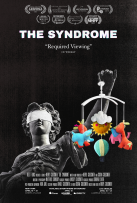
TheSyndromePoster

I am guessing that in the session “The Medium Is the Message: Journalists and Documentary Filmmakers Distort the Child Abuse Story,” law professor Joëlle Moreno will dismiss Debbie Cenziper’s 2015 exposé of shaken baby in The Washington Post as well as the documentary “The Syndrome,” which she scorned based on the trailer at the fourteenth shaken baby conference in 2014 in Denver, a few weeks before the film premiered. In her 2014 keynote, Prof. Moreno also discounted the work of law professor Deborah Tuerkheimer, who Moreno said is “confusing causation with culpability,” and pointed out that the documentary “Scenes of a Crime,” which ultimately led to a new trial and an innocent verdict for convicted father Adrian Thomas, is not about the shaken baby controversy but about the “lengthy interrogation” in that one case. “Part of our job,” Moreno said in 2014, “is to explain to the media that AHT is not newsworthy because it’s controversial. It’s newsworthy because it’s real and it’s deadly.” (For a link to Prof. Moreno’s condemnation of the minority opinion in the Shirley Ree Smith decision, please see “Dissent Into Confusion: The Supreme Court, Denialism, and Shaken Baby.”)

overcomingDefenseCloserThis fall, Maryland assistant state’s attorney Dermot Garrett is scheduled to run a session titled “Overcoming Defense Expert Testimony in Abusive Head Trauma Cases,” also the title of a document by him that’s available on the National District Attorneys Association web site. Garrett’s talk with the same title at the 2014 Denver conference focused on rebutting the jury’s innocent verdict in the 2006 trial of Miles Ferguson, an accused father who enjoyed massive support from his family and church community. Garrett argued that Ferguson’s likability had obscured the medical facts, and he criticized the “handful of defense experts” who testify in these cases for what he said are “financial incentives.”

I’ve attended nine conferences organized by the NCSBS over the past 18 years, and I have never heard a speaker revisit a lost or overturned case with the thought that the child abuse doctors might have been wrong. Instead, I’ve heard reviews of the prosecution’s case, presented with indignation at the loss. This mind-set offers no mechanism for the diagnosing doctors to even acknowledge let alone learn from past mistakes.

wheatAt the upcoming conference, Dr. Christopher Greeley is scheduled to offer his review of the published shaking research in a session titled “Demystifying the Medical Literature: Separating the Wheat From the Chaff.” I’m guessing he will include his criticism of the 2003 paper by Dr. Mark Donohoe, who reviewed the shaken baby literature through the lens of evidence-based medicine and concluded that shaken baby theory has no scientific foundation. In a keynote at the 2012 NCSBS conference, Dr. Greeley condemned the search criteria Dr. Donohoe used to identify the papers he examined, but did not offer a list of the additional papers that would have provided more scientific evidence. For a good example of Dr. Greeley’s approach to the literature, I suggest reading his analysis of Dr. Steven Gabaeff’s 2011 paper questioning the connection between the brain findings and a shaking diagnosis.
I found in the program two breakout sessions that promise to present the defense perspective. In “Cognitive Bias in SBS/AHT Diagnosis,” innocence project attorneys Barry Scheck, Keith Findley, and Katherine Judson will share the dais with Dr. Mark Graber, whose specialties include diagnostic error, and Prof. Stephen Feinberg, PhD, a statistician at Carnegie Mellon University. And the second segment of the two-part session “What Do We Do When the 911 Call Comes In?” could be lively, as it features both child-abuse prosecutor Leigh Bishop, who argued the case against Hang Bin Li in Queens, and independent attorney Heather Kirkwood, who has worked on a number of successful appeals, including those on behalf of Julie Baumer, Ernie Lopez, and Ostwelt Millien.

I also see a handful of sessions on prevention, and one on an effort to create a reliable instrument for diagnosing abusive head trauma based on evidence-based criteria. I do wish these researchers well, as I think we all share the goal of preventing abusive head trauma and improving our ability to identify it accurately.

If you are not familiar with the debate surrounding shaken baby theory, please see the home page of this blog. Sue Luttner does not believe that shaking a baby is safe, only that the brain findings do not prove abuse.

copyright 2016, Sue Luttner

Leave a comment

Filed under abusive head trauma, AHT, National Center on Shaken Baby Syndrome, SBS, shaken baby, shaken baby syndrome

Shaken: Tensions Build in Boston

bostonTeaPPhysicians and attorneys in Boston, Massachusetts, where the Louise Woodward trial brought shaken baby theory onto the national stage, are heading into another battle over infant shaking, as pediatricians clash with the medical examiner about the diagnosis and the state’s high court reconsiders past convictions.

Aisling Brady McCarthy, from the BBC coverage, http://www.bbc.com/news/world-europe-24569976

Aisling Brady McCarthy

Tensions started ramping up last summer, when the medical examiner’s office changed the cause of death in the case of 1-year-old Rehma Sabir, from “homicide” to “undetermined,” which convinced the district attorney to drop murder charges against the girl’s nanny, Irish national Aisling Brady McCarthy. Not quite a year earlier, with less publicity but for the same reason, the county had dropped charges against accused father Geoffrey Wilson. Then last December, the medical examiner’s office pulled back from a third homicide declaration in an infant death initially attributed to shaking, but the district attorney held firm and is still moving forward with charges against Pallavi Macharla, a child care provider who had been a physician in her native India.

Now the Massachusetts chapter of the American Academy of Pediatrics (AAP) has written a letter to Governor Charlie Baker calling for an investigation of the medical examiner’s office and warning that its staff might be listening to the opinions of defense experts, as quoted by Patricia Wen in The Boston Globe:

“Publicly available information questions whether individual examiners may have been influenced by participating attorneys and paid reports from defense medical experts,” according to the letter obtained by the Globe. “Sadly these extraordinary and alarming events call into question both the capacity and independence of our medical examiner’s office.”

tinyHandThis quote illustrates the kind of rhetorical thinking that can obscure logic when the topic is child abuse. Despite the implications of the phrase “paid reports from defense medical experts,” the state’s doctors are also paid for the time they spend preparing reports. The objection, then, must rest on who is paying, as if the opinions of the state’s doctors should necessarily prevail over the opinions of the defense experts. And I wonder whether the pediatricians have really thought through the question of “independence.” The medical examiner’s office is ordinarily on the same team as the detectives and the prosecutors, all agents of the state. In child abuse cases, the diagnosing pediatricians are also part of the prosecution team. In three instances in less than two years now, individual examiners have concluded that medical factors identified by defense doctors could have explained the infant deaths, putting the examiners at odds with physicians who are usually their allies. To me, that sounds like the essence of independent thinking.

The Massachusetts pediatricians seem to be asking the governor to step in and order the medical examiner’s office to follow the advice of the child abuse experts. Again from The Boston Globe coverage:

“The letter to the governor appears to represent growing frustration by the pediatricians’ organization, which had originally sought a behind-the-scenes solution to their concerns that fatalities from abusive head trauma — also known as ‘shaken baby syndrome’ — were potentially being wrongfully labeled as deaths caused by rare medical events….

“In early March, top members of the pediatricians’ group met privately with state public safety secretary Daniel Bennett and [Dr. Henry] Nields, the chief medical examiner, hoping they would agree to launch a comprehensive review of the handling of these child fatalities.

“Instead, Bennett later suggested to the pediatricians’ group that they ‘prepare a presentation’ for the pathologists at the medical examiner’s office. In response, in a letter dated April 29, the pediatricians’ group went directly to the governor demanding a review.”

In a follow-up debate on station WGBH in Boston, former Massachusetts attorney general Martha Coakley, who prosecuted British au pair Louise Woodward in 1997, insisted that the pediatricians were right in the first place, the medical examiner’s office “doesn’t have the training to make the right decision” in abuse cases, and individual medical examiners are “just not doing their jobs.” She dismissed critics of shaken baby theory as “15 to 20 people who have made a cottage industry out of attacking these diagnoses.”

Kieren wired up and ready to jump

The letter to the governor was signed by Dr. Michael McManus, president of the Massachusetts chapter of the AAP, and Dr. Stephen Boos, chairman of the chapter’s abuse and neglect panel and a proponent of shaken baby theory. In a break-out session at the 2012 conference of the National Center on Shaken Baby Syndrome, Dr. Boos criticized both the structure and the implementation of the 2011 Jumparoo study by biomechanic John Lloyd, PhD, which concluded that a child playing in a commercial jumping toy achieved the same magnitude of angular acceleration as adult volunteers shaking a biofidelic mannequin. “Shaking is no worse than a Jumparoo?” Boos jeered, “You’ve got to be kidding me.” In a review of Dr. Steven Gabaeff’s 2011 article challenging the pathophysiological connection between brain findings and a shaking diagnosis, Dr. Boos acknowledged Dr. Gabaeff’s scholarship but rejected his “teleological flights of fancy,” summarizing:

“I do not believe this paper develops a larger truth, though there are kernels of truth here and there. Instead, it displays the sorts of arguments we must refute when asserting the mainstream view of abusive head trauma.”

A month after the pediatricians’ complaint to the governor, the Massachusetts Supreme Judicial Court (SJC) recognized the reality of a debate about shaken baby theory, in its decision ordering a new trial for Oswelt Millien, a father who served five years in prison for the presumed 2009 shaking of his daughter. The court concluded that Millien’s attorney had provided ineffective assistance by failing to seek court funds to hire an expert witness for an indigent defendant, so that the opinions of the state’s experts went unchallenged at trial—that is, the same situation the pediatricians would like to see in the medical examiner’s office.

If the district attorney follows through with a trial of Pallavi Macharla, though, I expect both sides to bring experts to the courtroom. Macharla’s attorney JW Carney demonstrated in the debate with Martha Coakley that he’s already done his homework (probably when representing Geoffrey Wilson), but in case he hadn’t, he could look to the Millien opinion, which features in its footnotes a bibliography of key documents in the shaking debate. Millien’s previous appeal had been turned down by a judge who agreed he deserved a defense expert but concluded that a single expert would not have changed the outcome of the trial. In this decision, the judges conclude that the jury might have made a different decision if they had known the diagnosis is controversial:

By vacating the defendant’s convictions in this case and ordering a new trial, we do not claim to have resolved the ongoing medical controversy as to how often the triad of symptoms of abusive head trauma are caused by accidental short falls or other medical causes. We are simply recognizing that there is a vigorous debate on this subject, that arguments are being made on both sides with support in the scientific and medical literature, that this debate is evolving, and that, in the circumstances of this case, we do not have confidence in the justice of these convictions where defense counsel did not retain an expert to evaluate the medical evidence and, as a result, the jury heard only one side of this debate.

Because Oswelt Millien has already served his term, the state has little incentive to pursue a second trial, but the debate will be through the headlines again, both as the Macharla case unfolds and when the SJC reaches a decision on the pending appeal of Derick Epps, convicted in 2007 of assaulting his girl friend’s daughter.

July 2016 update: The SJC has ordered a new trial for Derick Epps, http://law.justia.com/cases/massachusetts/supreme-court/2016/sjc-11921.html

Meanwhile, the pediatricians are asking for an investigation of the medical examiner’s office. Myself, I am hoping for an investigation of the child abuse professionals who don’t understand the difference between “the mainstream view of abusive head trauma” and established scientific fact.

3 Comments

Filed under abusive head trauma, AHT

“The Syndrome” Makes a Splash

TheSyndromePosterAfter winning 9 awards from 13 nominations at independent film festivals since its premiere in the fall of 2014, “The Syndrome” by Meryl and Susan Goldsmith is now available on demand in North America, the first documentary distributed by trending Freestyle Digital Media.

“This has been an incredible experience,” says Susan Goldsmith, an award-winning investigative reporter who spent years as a print journalist before collaborating on “The Syndrome” with her filmmaker cousin. “How we tell the story is helping people figure out what’s going on. To see this kind of response is deeply gratifying.”

Sgt. Aaron Asheed, investigative reporter Susan Goldsmith, neurosurgeon Ron Uscinski

Sgt. Aaron Rasheed, investigative reporter Susan Goldsmith, neurosurgeon Ron Uscinski

Along with neurosurgeon Ron Uscinski, one of the physicians featured in the film, Goldsmith answered questions at a Maryland library in March following a screening organized by Marine Sgt. Aaron Rasheed, just weeks after Rasheed was cleared of shaking his youngest child. “A lot of people were shocked by the film,” Rasheed reports, “They didn’t know this was going on.”

Weeks before the screening, Rasheed says, he knew the event was a good idea, when he was contacted by another accused family, who had seen his publicity and wanted to know more. “And I could help them,” he beams. “My wife and I had done a lot of research, and we got to pass that along to a family that needed it.” His efforts had included reaching out to the Goldsmiths after he saw the trailer to “The Syndrome” and reading the book Flawed Convictions, by Deborah Tuerkheimer.

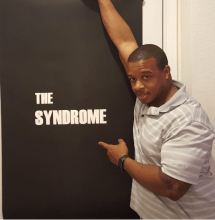
aaron.doorRasheed says the accusations started at the hospital, the day he and his wife rushed their baby to the ER with sudden, terrifying seizures. “It was shotgun blast,” he recalls. “CPS put a protective order against us. They were threatening to take all three of our children… We got busy.” They quickly discovered the controversy surrounding shaken baby and realized they had to become their own advocates, while the prosecution started narrowing its focus to Aaron, a combat veteran.

In early March, though, the court accepted a new opinion attributing the boy’s subdural bleeding to a medical condition, and the case was dropped.

Rasheed started organizing the library showing even before he knew he would be cleared. “In Tuerkheimer’s book, it didn’t seem like anyone had a good outcome,” he points out, so he figured he’d better do what he could while he was still free. “And it helped to keep my mind occupied,” he adds, “when I was worried that I would lose my family and maybe go to jail.” Now he’s planning future showings in nearby states.

Free-range parent Lenore Skenazy featured Sgt. Rasheed in the lead to an opinion piece she wrote in the Queens Times Ledger, following a showing of “The Syndrome” in Manhattan in April.

Most of the film’s reviewers have praised both its bold topic and its skillful execution. Flickfilosopher MaryAnn Johanson, for example, nailed it in her subhead:

A smartly dispassionate and skeptical look at “shaken baby syndrome,” and an accidental portrait about how science fails us when it solidifies into dogma

Daphne Howland at The Village Voice said the story is “smartly reported” and wrote:

[The filmmakers] expose the issue with depth and breadth; this well-researched investigation is loaded with credible facts and has a workaday, broadcast-newsmagazine feel.

And Maitland McDonagh wrote in Film Journal International:

[The filmmakers’] thesis is controversial, though not—as they demonstrate at some length—because the hard medical evidence is conspicuously ambiguous. Rather, it conflicts with an emotional narrative rooted in hard-wired human empathy for the weak and helpless.

But the complexity proved too much for critic Frank Scheck at The Hollywood Reporter, who opened his review, “When did it become necessary to have staran advanced medical degree in order to go to the movies?” and likened the film to “those unsettling television commercials for medications featuring an endless list of potentially harmful side effects.”

And the Los Angeles Times treatment objected to both the message and the form. The headline read, “‘The Syndrome’ takes a one-sided view of the controversy about shaken baby syndrome,” and the text charged, “The editing is shoddy and inelegant… providing both too much information and not enough.” My favorite line from the review, copied and pasted:

Though the pro-SDS doctors turned down requests for interview, it at times feels like advertising for the doctors who did participate.

I count two typos, the word “it” as the subject, and a general clunkiness, in one short sentence.

Pediatric Accountability in Central Illinois, PACI

From the PACI website

Back in the community, a screening in late April in Peoria, cosponsored by Pediatric Accountability in Central Illinois (PACI) and the Illinois Justice Project, drew its audience from both sides of the shaken baby debate. I’m told that a number of local child abuse experts and staff members from the district attorney’s office came for the film and stayed for the Q&A with a panel of two attorneys, Zack Bravos and Louis Milot; pediatric radiologist David Ayoub; and wrongly accused parent Michelle Weidner.

“The questions were good,” Bravos reported. “It was a chance to present some good information.”

In the hall outside the screening room, organizers said, polite young women, possibly college students, handed out a fact sheet listing a number of organizations that support the diagnosis of Abusive Head Trauma (AHT) and commenting:

“The validity of AHT in all of its various forms has been established and there is no debate among the majority of practicing physicians.”

Meryl and Susan Goldsmith

Meryl and Susan Goldsmith

At a pair of screenings in Bloomington Hills, Michigan, on the other hand, the crowd seemed to be entirely in support of the filmmakers, according to a friend of mine who attended. Organized by the Torn Family Trust, which came together last year around the case of Joshua and Brenda Burns, the showings featured in-person appearances by Susan and Meryl Goldsmith, the Burnses, and Julie Baumer, exonerated in 2010 after serving five years for the death of her nephew. On Friday morning before the weekend showings, Fox 2 in Detroit broadcast this interview with the Goldsmiths.

The Pediatric Justice Association in North Carolina also garnered press coverage for its April showing of “The Syndrome,” at a performing arts center in downtown Wilmington.

So “The Syndrome” has joined the debate, big time. Film critics and their readers are being exposed to a new angle on child abuse, and community showings are not only bringing affected families together but also bringing the topic into the press.

“The Syndrome” is not, of course, the final word on the subject, nor is it trying to be. “I’m not sure this was a movie about the science as much as it was about the battle,” reflected Dr. Doug Smith, a retired professor of pathology who writes occasionally about shaken baby syndrome on the Washtenaw Watchdogs blog, “but that was a choice the filmmakers made, and I respect that.”

Although I had hoped for a closer look at the science, I found the film riveting, and I’ve been gratified that so many mainstream reviewers shared that reaction. I’m not surprised, though, that some critics rejected the message or the treatment—the topic is unsettling, and “The Syndrome” is not for anyone looking for escapist entertainment.

One friend of mine, who has spent years working for justice in this arena, offered a perspective I can endorse:

I’m behind the film. “The Syndrome” is not perfect, but it’s much better than I would ever have thought we would have.  I wish it would get broader exposure.

For more press reports on “The Syndrome,” you can see:

The sympathetic Los Angeles Weekly review at http://www.laweekly.com/film/the-syndrome-exposes-the-shaken-baby-syndrome-myth-6789457

The Pacific Standard treatment, which explores the topic further, at https://psmag.com/a-new-film-challenges-shaken-baby-syndrome-and-courts-controversy-a768d2415398#.w4rydprh8

An interview on IndieWire with Meryl Goldsmith at http://blogs.indiewire.com/womenandhollywood/meryl-goldsmith-on-fighting-a-medical-standard-in-the-syndrome-20160414

A skeptical look at the film by columnist Carrie Poppy for the Skeptical Inquirer at http://www.csicop.org/specialarticles/show/does_a_new_documentary_prove_shaken_baby_syndrome_doesnrsquot_exist

The CultureFly review at http://culturefly.co.uk/the-syndrome-review/

A short, positive review on CINEMACY at http://cinemacy.com/newport-beach-film-festival-the-syndrome/

An interview with Meryl Goldsmith on Westword at http://www.westword.com/arts/the-syndrome-explores-the-shaken-baby-myth-at-sie-filmcenter-monday-6756370

And more. Slowly, slowly, the word gets out.

copyright 2016, Sue Luttner

If you are not familiar with the debate surrounding shaken baby syndrome, please see the home page of this blog site.

5 Comments

Filed under abusive head trauma, AHT

GMC Sanction Triggers Public Debate

SquierProfileNoCaption

Dr. Waney Squier

Last week’s decision by the General Medical Council (GMC) to remove pediatric neuropathologist Waney Squier from the medical register has triggered ongoing media coverage in the UK, including a number of voices speaking in her defense.

The GMC’s sanction followed a declaration earlier in the month by a tribunal that Dr. Squier was guilty of unprofessional conduct. Now she will no longer be allowed to practice or to testify as an expert witness.

Days after the tribunal announced its findings, human rights attorney Clive Stafford Smith published an opinion piece in The Guardian that likened the move to the papal inquisition of Galileo in 1615, a thought echoed a week later in the same forum, in a  letter to the editor signed by 25 medical and legal professionals in response to the GMC’s decision to strike her from the register.

Then The Guardian published a defense of the GMC process by Chief Executive Niall Dickson, who said critics had missed the point:

[T]he GMC is not and has no intention of being the arbiter of scientific opinion – the allegations we brought against Dr Squier did not rest on the validity of her scientific theory but upon her competence and conduct in presenting her evidence to the courts.

That same page contains more letters on both sides, including one by Susan Goldsmith, writer and co-producer of the film about shaking theory, The Syndrome. In another letter today, Clive Stafford Smith says that the charges were, in fact, about her opinion, not her behavior, and argues:

If we are right, then the people who mislead the court (albeit perhaps unintentionally) are those who purvey an unproven theory as fact.

Protecting Innocent Families (PIF), a non-profit that speaks on  behalf of wrongfully accused families, submitted a letter to the GMC in support of Dr. Squier, including an angle that I had not taken the time to address in my post about the decision earlier in the month:

The declaration also scolds Dr. Squier unfairly for her citations of the medical research. In one example, she cited the early biomechanical research of Dr. Anne-Christine Duhaime and colleagues (“The shaken baby syndrome: A clinical, pathological, and biomechanical study,” Journal of Neurosurgery 1987 66:409–415) to support her observation that shaking without impact has not been shown to generate sufficient forces to cause brain injury. The panel wrote that Dr. Squier had “completely misinterpreted what Duhaime had actually said,” a conclusion that baffles us. The Duhaime paper was a landmark in the field, because it was the first attempt to test shaking theory scientifically, and the results surprised even the authors, who wrote:

“It was concluded that severe head injuries commonly diagnosed as shaking injuries require impact to occur and that shaking alone in an otherwise normal baby is unlikely to cause the shaken baby syndrome.”

WindowLogoPIF also released their letter to the press, which led to some confusion, as one resulting story opened with the miscue that the PIF petition is in support of Dr. Squier: “Campaign group defends ‘dishonest’ doctor struck off medical register for ‘shaken baby’ evidence.” Christina England at Health Impact News also quoted generously, and more accurately, from the PIF materials in her treatment, “Shaken baby syndrome expert and world renowned pathologist banned from practicing medicine.” PIF has published the full text of its letter on its web site.
Both the BBC treatment of the decision against Dr. Squier and the coverage in New Scientist presented both sides of the debate, although some articles reported the GMC’s position without mentioning her supporters.

March 29 update: Columnist James Le Fanu at The Telegraph has posted an insightful item criticizing the GMC.

If you are not familiar with the debate surrounding shaken baby syndrome, please see the home page of this blog and web site.

copyright 2016 Sue Luttner

5 Comments

Filed under abusive head trauma, AHT, SBS, shaken baby, shaken baby syndrome, Uncategorized

Guilty of Intellectual Honesty

Pediatric Neuropathologist Dr. Waney Squier At the Evidence-Based Medicine Symposium in Denver in 2009In a 96-page decision packed with irony, the Medical Practitioners Tribunal Service (MPTS) in Britain has declared pediatric neuropathologist Waney Squier guilty of practicing outside her area of expertise, ignoring the opinions of her peers, and tarnishing the reputation of the medical profession with her testimony and written opinions in a series of shaken baby cases between 2007 and 2010.

“The tribunal is in no doubt you have been a person of good character and have not acted dishonestly in the past,” the statement offers, but it characterizes her opinions about shaken baby syndrome as “dogmatic, inflexible and unreceptive to any other view” and declares her work in the arena “misleading,” “irresponsible,” and even “dishonest.”

MackSquierHead2009For about the past 15 years, Dr. Squier, a consulting neuropathologist at the Oxford Radcliffe Hospitals, has been challenging the community of child abuse experts to reconsider the unproven model of shaken baby syndrome that’s been winning in court for decades. She has not only testified to her theories but also conducted research and published in the medical journals.

The charges against her were levied by the General Medical Council (GMC) at the instigation of prosecutors concerned that her testimony was impeding convictions in shaking cases, according to Dr. Michael Powers, QC, as quoted in the coverage by Robert Booth at The Guardian. The GMC will determine her penalty later in the month, possibly loss of her status as a practicing physician.

Dr. John Plunkett

Dr. John Plunkett

Dr. John Plunkett, a pathologist who has fought off charges of perjury for his testimony regarding shaken baby theory, pointed out that Dr. Squier is receiving a Champion of Justice award next month at the annual Innocence Network conference in San Antonio, Texas. “How is it that the Innocence Network can give this award to Dr. Squier if the GMC has correctly characterized her behavior as dishonest and worthy of sanction?” he asked.

Dr. Bergina Brickhouse, a psychiatrist whose husband was cleared of shaking accusations based partly on a report from Dr. Squier, wrote in an email, “If not for the strength, fortitude, and technical expertise that Dr. Squier has shown, my family would most assuredly have been ripped apart by well-meaning but ignorant medical staff.”

Developmental Medicine & Child Neurology, 2008

Developmental Medicine & Child Neurology, 2008

I would have expected adjudication of the charges to be conducted by a panel of physicians, but the MPTS set up a team of one retired psychiatrist and two lay persons—a retired Royal Air Force wing commander and a retired police officer—to evaluate the evidence against Dr. Squier. The members seem not to have read the medical literature but based their conclusions primarily on oral testimony given over several months of hearings that started in the fall. The panel’s report describes all of the prosecution’s expert witnesses as “credible” but articulates various objections to the experts called by the defense.

Forensic pathology professor Bo Erik Ingemar Thiblin of Uppsala University, for example, had explained how circular reasoning in the early shaken baby papers allowed the theory to become established without scientific proof, the same argument that convinced the Swedish Supreme Court to revisit the legal status of shaken baby theory last year. Dr. Thiblin is an expert in epidemiology, the study of patterns, causes, and effects in health conditions, a complex field that emphasizes assessment and analysis of the known facts. In a triumph for circularity, the tribunal rejected his testimony with this explanation:

“It was clear that Professor Thiblin did not believe in the concept of shaken baby syndrome, and his view of the literature was coloured by that. He was critical of the methodology of all the research literature in relation to the subject because of its perceived circularity bias. The tribunal considered that his expert opinion on non-accidental head injury lacked credibility; therefore the tribunal attached limited weight to his evidence.”

In an insightful editorial in The Guardian today, human rights attorney Clive Stafford Smith compared the tribunal to the trial of Galileo by the church for his theory that the earth orbits around the sun and not the other way around:

“I am convinced that Squier is correct, but one does not have to agree with me to see the ugly side to the GMC prosecution: the moment that we are denied the right to question a scientific theory that is held by the majority, we are not far away from Galileo’s predicament in 1615, as he appeared before the papal inquisition… It was not until 1982 that Pope John Paul II issued a formal admission that the church had got it wrong.”

Dr. Waney Squier

One of the inexplicable elements of the decision was the tribunal’s finding that Dr. Squier had erred by testifying to biomechanical issues without any expertise in biomechanics—although the prosecution experts who testified in the hearings were, like Dr. Squier, physicians with no apparent specialized training in biomechanics (Dr. Richard Bonshek, ophthalmic pathologist; Prof. Rupert A. Risdon, pediatric forensic pathologist; Dr. Neil Stoodley, neuroradiologist; and Prof. Colin Smith, neuropathologist).

Similarly, the declaration scolds her for citing the 1987 paper by Duhaime et al. to support her observation that shaking without impact has not been shown to create forces sufficient to cause the brain injury. The tribunal said she had “completely misinterpreted what Duhaime had actually said,” even though the paper’s introduction says:

“It was concluded that severe head injuries commonly diagnosed as shaking injuries require impact to occur and that shaking alone in an otherwise normal baby is unlikely to cause the shaken baby syndrome.”

In a moving one-minute interview on the BBC, Dr. Squier said she is “devastated” by the finding, which she said has “enormous implications” not just for doctors but for any experts willing to testify in court. “You can give an honestly held, well-supported opinion and find yourself out of job,” she observed.

The charges against Dr. Squier are consistent with a strategy advocated by Detective Inspector Colin Welsh of New Scotland Yard in 2010 at the 11th International Conference on Shaken Baby Syndrome for improving the conviction rate in these cases by neutralizing experts willing to testify for the defense (see “Back Door Tactics Show Through“).

Proponents of shaking theory also ridicule their critics at conferences and scorn them in print, and in 2014 they attempted to block the premiere showing of the documentary The Syndrome, which they dismissed as “a national platform for the tiny handful of well-known child abuse defense witnesses to publicize their fringe message.”

An editorial this winter in the journal Pediatric Radiology, “Child Abuse: We Have Problems” by Dr. Peter J. Strouse, declares that “child abuse denialists” now pose “a growing threat to the health care of children and the well-being of children and families,” and calls on institutional rejection of doctors who defy the common knowledge about child abuse:

The court system seems ill-equipped to properly censure the denialists in spite of their deceitful and unethical behavior. Ideally, the legal system would practice peer-review by unbiased observers, but this does not occur. Institutions that harbor denialists, whether they be private practices or esteemed academic institutions, should carefully consider their employment.

Even in this environment, Dr. Squier has been willing to say in print and in court what her own research and experience were telling her about shaken baby theory.  I am in awe of both of her intellectual honesty and her courage, and I am horrified at Friday’s decision. The only silver lining I can think of is that maybe, this time, they have gone too far. The ironically named “determination of facts” released on Friday will not hold up to the scrutiny that Dr. Squier’s own work has already survived (see, for example, “When Pie in the Sky Turns Out to Be Dawning Knowledge”).

If you are not familiar with the debate surrounding shaken baby theory, please see the home page of this blog.

Copyright 2016, Sue Luttner


11 Comments

Filed under abusive head trauma, AHT, SBS, shaken baby syndrome